Shieria
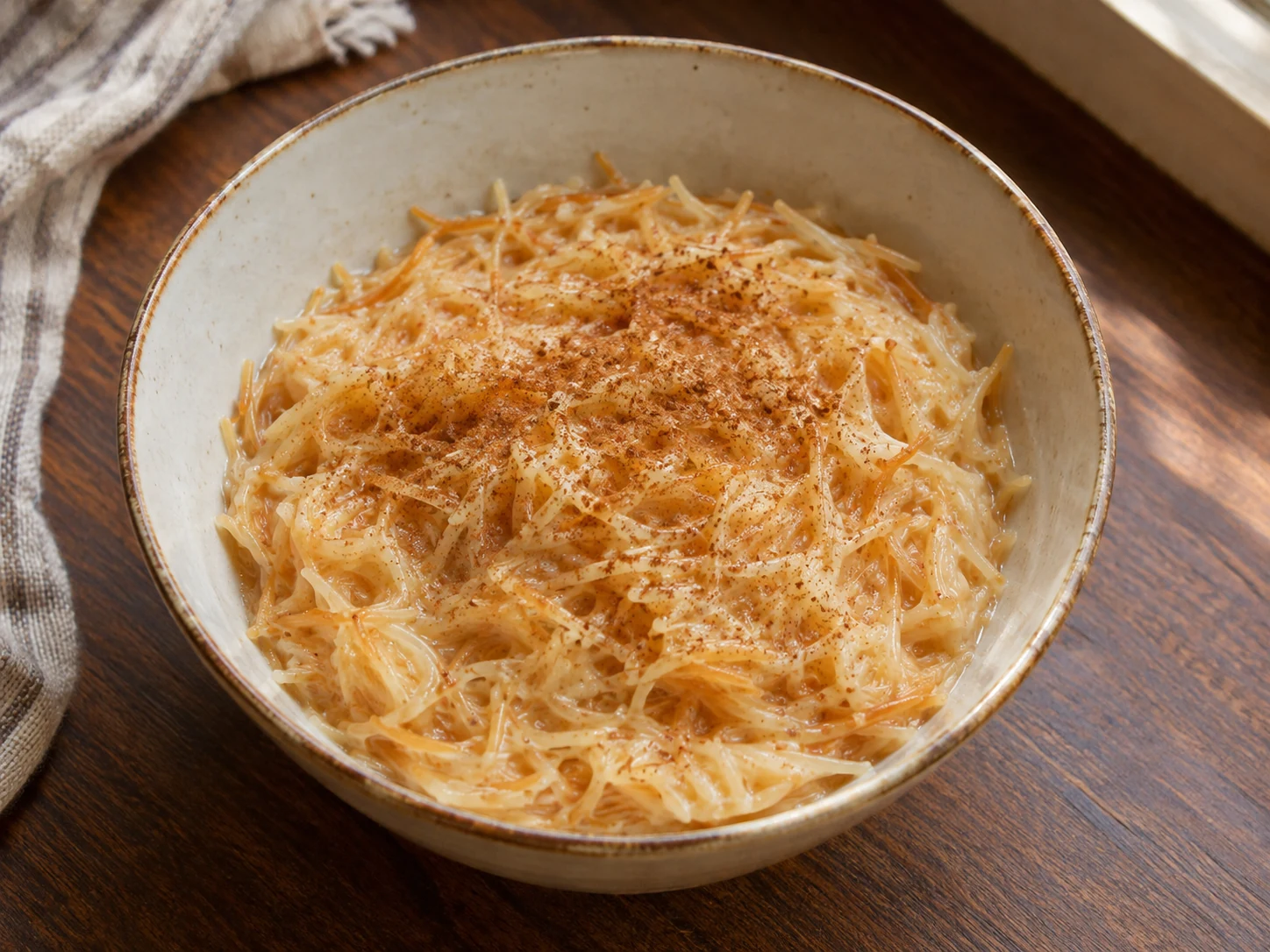
Wheat vermicelli gently toasted, then cooked in milk and lightly sweetened, with cinnamon. Four small portions.
Ingredients
- 160 g dried wheat vermicelli
- 15 g ghee
- 250 ml hot water, adjusted slightly for the pasta
- 400 ml pasteurised semi-skimmed milk
- 35 g sugar
- 1 small pinch salt
- 1/2 teaspoon ground cinnamon
Preparation
Weigh the dried vermicelli and break into manageable lengths if supplied in nests or long strands. Measure milk and water separately. Prepare a heavy-bottomed saucepan large enough to stir without spilling pasta onto the heat.
Melt the ghee over medium-low heat. Add the vermicelli and stir for two to four minutes until evenly golden. Briefly remove from the heat if some strands brown before others. Do not aim for a dark colour, which would make the dessert bitter.
Lower the heat and carefully pour in the hot water, keeping your face away from the steam. Add the pinch of salt and simmer for a few minutes. Stir gently to separate the strands without crushing them. Take their thinness into account: some cook faster than the time stated for another brand.
Once the vermicelli begins to soften, add the milk and sugar. Continue over low heat for about five to eight minutes, stirring often, until the pasta is tender and the liquid slightly reduced. The dessert should remain soft and moist rather than drying out at the bottom of the pan.
Taste a small amount cooled on a clean spoon to check texture. If the pasta remains firm and the liquid is nearly absorbed, add a little measured hot water or milk and continue gently. Divide the whole preparation between four small bowls and sprinkle with cinnamon.
Serve warm, or cool the bowls promptly if a cold dessert is preferred. Do not leave the saucepan at room temperature for several hours. As it rests, the vermicelli continues to absorb some liquid and the dessert naturally thickens.
Introduction
Shieria puts vermicelli at the centre of a sweet preparation. This version first toasts it in a little ghee, then cooks it with water and milk. Cinnamon is added at the end to keep its fragrance distinct. The result is spooned from small bowls; it should be neither dry like drained pasta nor liquid like a milk drink.
The type of vermicelli matters more than the brand. Use thin wheat pasta, rather than rice or mung-bean strands, which do not cook in the same way. The recipe states the dried weight before cooking. The pasta swells in liquid and changes weight, but the quantity of flour actually eaten still depends on the initial one hundred and sixty grams shared among four portions.
Do not add milk to a very hot saucepan that will then be left unattended. Once the pasta is wet, reduce the heat and stir regularly to prevent sticking. Sugar dissolves in the liquid; it is not meant to caramelise on the base. This gentle method gives you time to control tenderness while retaining some softness when serving.
Cultural context
Sweet vermicelli is documented in Sudanese menus under several transcriptions, including shieria and shi’eria. It also belongs to neighbouring culinary repertoires. The milk version in this recipe is a measured adaptation and does not represent every way of preparing it. Some recipes are drier, richer in fat or served with other dairy products.
This preparation differs from the suksukania already in the collection: here the pasta forms thin strands rather than small beads. That difference must remain visible in ingredients, instructions and illustration. A photograph of rice pudding or small round pasta would therefore be unsuitable, even if the dessert's overall colour were similar. The short name provides a reference and the description explains the texture.
It may accompany breakfast or be served as dessert according to habit. There is no need to reserve it for a single ceremony without evidence. References used to identify the dish: https://www.sudanese.kitchen/archive and https://www.sudanese.kitchen/culture ; milk, sugar and fat proportions are adapted here for four small portions.
Tips
Stir the vermicelli while toasting to avoid burnt strands.
Use a heavy-bottomed saucepan and reduce the heat after adding milk.
Allow a slightly softer texture when hot because it thickens on standing.
Add cinnamon sparingly so it can be adjusted when serving.
Planning
This recipe contains wheat gluten and milk, including the ghee. Check the pasta label for additional allergens and possible traces rather than assuming every brand has the same composition. Water poured onto hot pasta in contact with fat produces steam: lower the heat and pour gradually, protecting your hands. Do not fill the saucepan to the rim.
Serving
The recipe makes 4 portions; accompaniments are counted separately.
Storage
Cool promptly in small containers, cover and refrigerate until the following day. To reheat, add a small amount of milk and warm gently, stirring until thoroughly hot. The texture will be more bound after resting. Do not keep a bowl already eaten from with other portions intended to be served again.
Variations
Raisins or a little coconut can be added to a personal version, but must be weighed and included in both ingredients and nutritional calculations. Using water alone will not give the same creaminess as this milk formula. Replacing vermicelli with thicker pasta requires fresh checks of liquid and cooking time rather than automatically retaining the same guidelines.
Accompaniments
Serve in small bowls with an unsweetened drink if the meal calls for it. The proposed portion is for a dessert or breakfast component, not a large plate of pasta. Avoid routinely adding honey or syrup to a formula that already includes its sugar. Offer toppings separately if diners wish to choose.
Nutrition notes
Milk provides protein, while pasta and sugar mainly provide carbohydrates. The dessert contains wheat and milk.