Gargoush
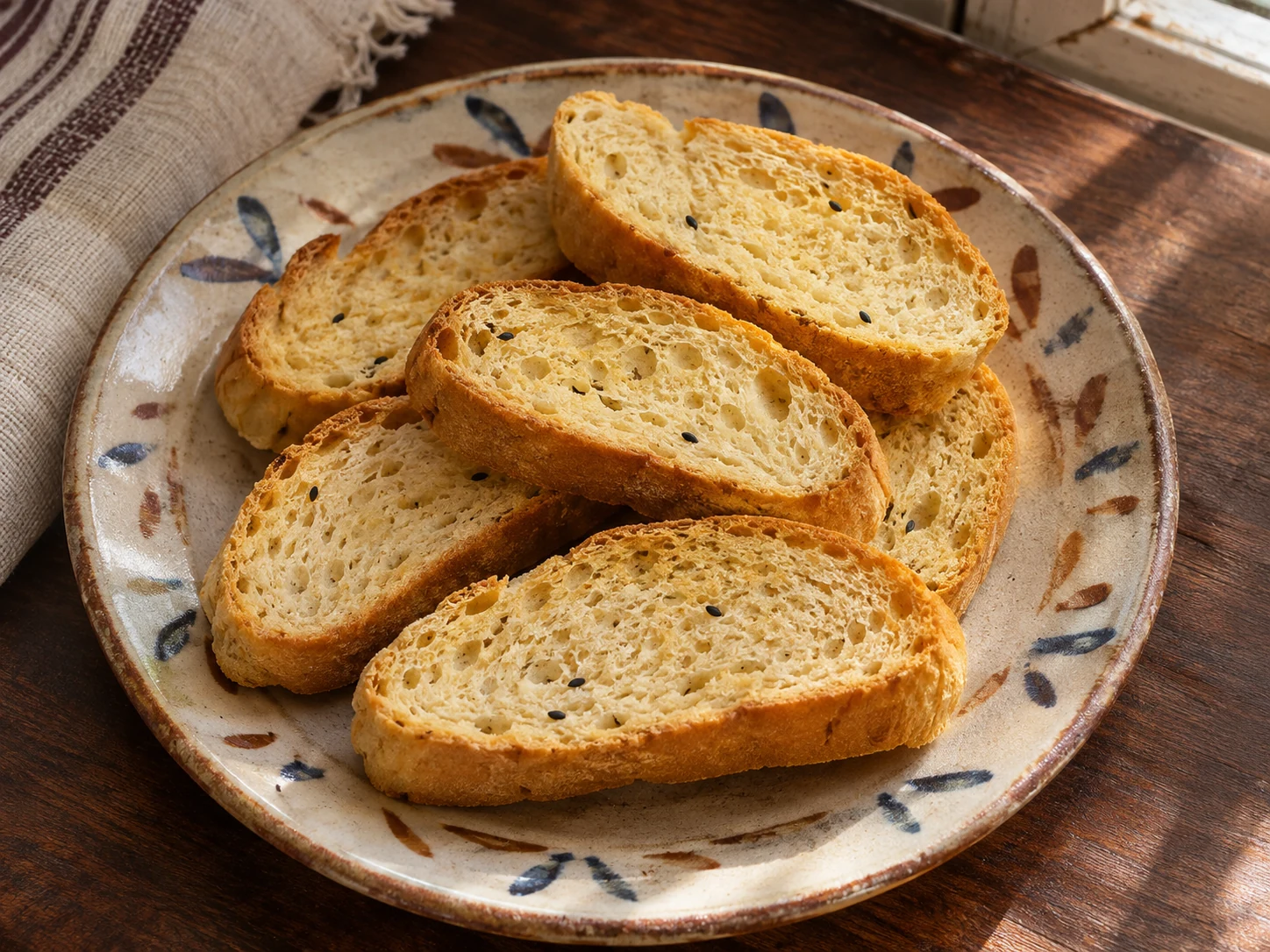
Lightly sweet Sudanese rusks made with yoghurt, baked and then dried in slices. Twenty-four small slices.
Ingredients
- 400 g white wheat flour
- 150 g plain pasteurised yoghurt
- 100 ml lukewarm water, reserving 20 ml for adjustment
- 50 g sugar
- 40 ml neutral oil
- 5 g instant dried baker's yeast
- 4 g salt
- 1 teaspoon nigella seeds
Preparation
Mix the flour with the instant yeast, sugar and nigella, then add the salt. Incorporate the yoghurt, oil and 80 ml lukewarm water. Bring the dough together and wait a few minutes before adding some of the reserved 20 ml water if necessary.
Knead for eight to ten minutes until the dough is soft and holds together. Cover in a bowl and leave to rise for about one to one and a half hours until noticeably increased in volume. The yoghurt is an already fermented product; do not leave raw milk to sour for this recipe.
Divide into two pieces and shape two small elongated loaves of equal thickness on a tray lined with baking paper. Cover and leave to rise again for about thirty minutes. Preheat the oven to 180°C and check the loaves have enough room to expand.
Bake for about twenty-five to thirty minutes until coloured and cooked through the centre. Place the loaves on a rack and allow to cool for at least one hour to make slicing easier. A still-warm crumb compresses and tears more easily beneath the knife.
Cut the cooled loaves into twenty-four slices about one centimetre thick. Lay flat on one or two trays. Set the oven to 130°C and dry for about twenty-five to forty minutes, turning the slices halfway through and watching their colour.
Cool again on a rack. The slices should be dry and brittle; if their centres remain soft once cold, extend drying in short intervals. Store only after cooling completely, then serve one or two small slices according to the meal.
Introduction
Gargoush takes the form of a rusk: bread is first prepared and baked, then cut into slices that are dried a second time. The result therefore does not resemble a biscuit individually shaped before baking. The two stages produce a toasted crumb and a firm texture that can be enjoyed as it is or briefly dipped in a hot drink. The stated formula keeps the sugar moderate.
Yoghurt is used here as an already fermented dairy ingredient. It adds moisture and slight acidity to the dough but does not replace the baker's yeast responsible for the rise. The two products have different functions. This version uses clearly identified instant yeast; if your chosen brand requires prior rehydration, follow its directions, taking the water from the total planned quantity.
The number of slices depends on loaf length and slicing thickness. To make portioning easier, aim for twenty-four slices from all the dough. A larger slice does not have the same energy value as a small one just because they share a name. The total weight of flour, sugar and oil does not disappear during drying: it is mainly water that evaporates, making the rusk feel lighter in the hand.
Cultural context
Gargoush is documented among Sudanese breads and rusks eaten with hot drinks. Sources describe variations in composition; this yoghurt-and-nigella formula is an explicitly stated home adaptation. It does not claim to establish a single recipe valid for every family. The presence of fermented milk also does not justify adding a medical story or promising improved digestion.
Its difference from the first batch's guraiba is technical and sensory. Guraiba are crumbly ghee biscuits, whereas gargoush uses a risen dough transformed into dry slices. The kaak already in the collection should not simply be replaced by the word rusk either. Describing the process allows readers to choose what they actually wish to prepare.
An accurate image shows dry slices with an open crumb and small nigella seeds, not a pile of shortbread or flatbread. References used to identify the dish: https://www.sudanese.kitchen/culture and RSI's presentation of Sudanese breads; the proportions, two small loaves and low-temperature drying are adapted to this recipe.
Tips
Let the loaves cool before slicing for cleaner cuts.
Use a bread knife and saw gently without compressing the crumb.
Arrange the slices without overlap so air can circulate.
Check the centre after cooling: hot does not necessarily mean dry.
Planning
Oven temperature can vary considerably between appliances. For drying, favour moderate heat and time over very rapid colouring at high temperature. A dark surface does not prove the centre has lost its moisture. Handle trays with dry protection. This recipe contains wheat and milk; check any extra yoghurt ingredients, particularly if a flavoured product has been used by mistake.
Serving
One portion is one slice out of twenty-four.
Storage
Store completely dry, cold slices in a clean airtight container away from moisture for five to seven days. Do not close the container on a warm batch. In very humid conditions, shorten storage and prepare fewer slices at a time. Discard any rusk with mould or a suspicious smell.
Variations
Nigella can be omitted for a more neutral version. Anise seeds change the flavour and should be identified rather than added without measurement. A substantial sugar reduction changes the flavour and colour; test it after a first reference batch. A dairy product thinner than yoghurt may require reducing the added water.
Accompaniments
Serve with tea or coffee and dip briefly if a less hard texture is preferred. The drink and any sugar added to the cup are excluded from the estimates. Avoid confusing gargoush with fresh bread intended to absorb a meal's sauce: this is a dry product portioned into small slices.
Nutrition notes
The rusks provide carbohydrates and a small amount of protein; drying concentrates nutrients per gram without creating extra calories.