Rugag
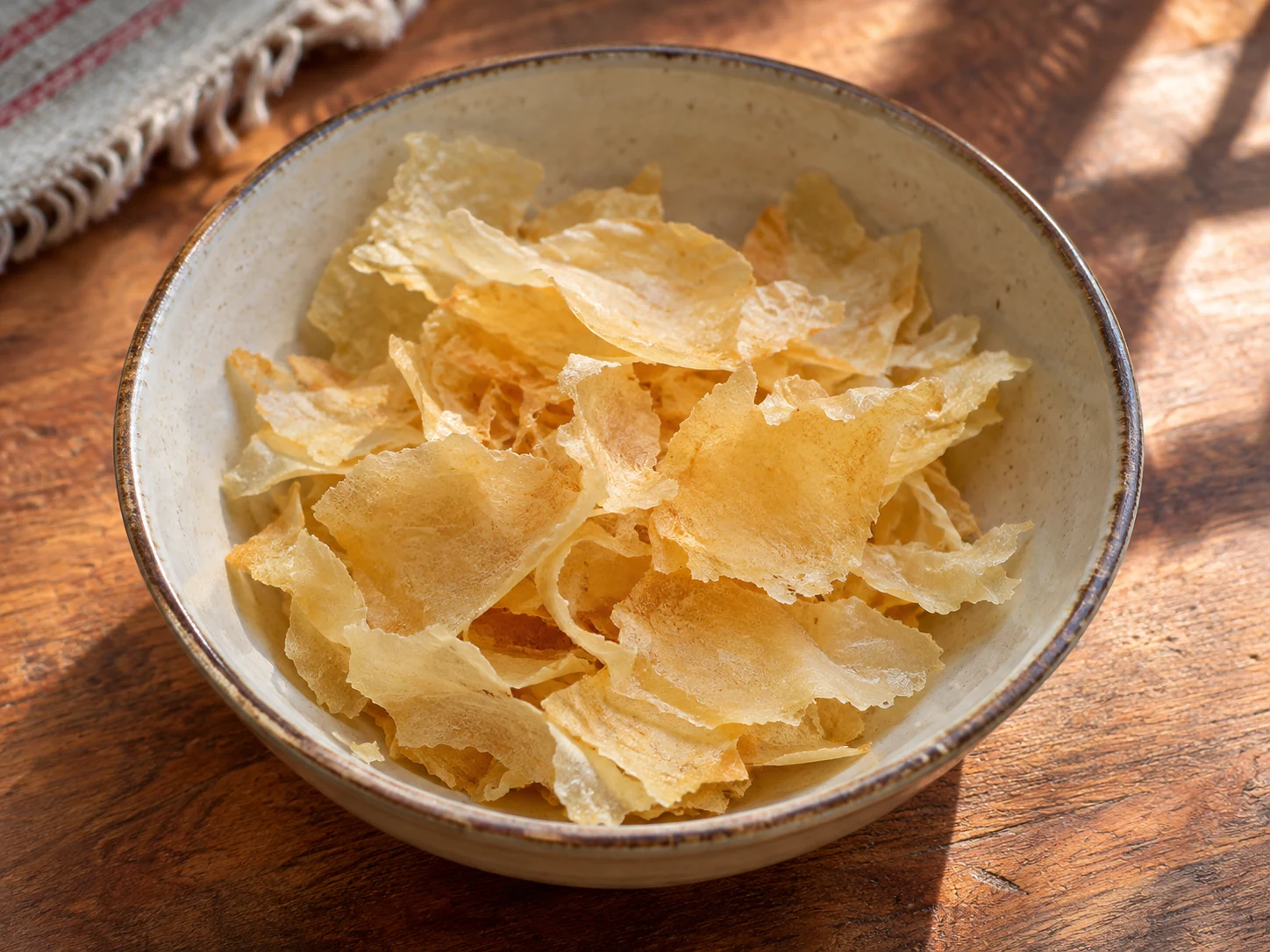
Very thin, crisp wheat-and-milk sheets broken into flakes for breakfast. A home version for six portions, excluding milk added when serving.
Ingredients
- 200 g white wheat flour
- 40 g skimmed milk powder
- 25 g sugar
- 15 g cornflour
- 450 ml drinking water, plus up to 50 ml extra depending on the flour
- 2 g baking powder
- 1 g salt
- 1/2 teaspoon vanilla extract
- 5 ml neutral oil for the pan
Preparation
Mix the flour, milk powder, sugar, cornflour, baking powder and salt in a bowl. Gradually whisk in the 450 ml water, then the vanilla. Press any flour lumps against the sides to obtain a smooth, fluid batter, without tasting it raw.
Rest for ten minutes to hydrate the flour. Stir again. If the batter will not spread into a thin layer, add the reserved water a little at a time. Prepare a large tray and wire rack to lay the sheets flat after cooking, without stacking them while hot.
Heat a non-stick frying pan over medium heat and coat with a thin film of oil. Pour in a small ladleful and quickly spread with the back of the ladle or a crêpe spreader. The layer must be very thin. A thick pancake would remain soft and produce a different result.
Cook the first side for about one to two minutes until the edge releases. Turn with a wide spatula and dry the second side for one to two minutes, watching the colour. Adjust the heat: the sheets should dry without turning brown or smelling burnt.
Place each sheet on the rack uncovered. Continue until all the batter is used. If the sheets remain flexible after cooling, spread them on a tray and place in a 120°C oven for about ten to fifteen minutes, checking frequently that they do not colour excessively.
Cool completely in the air on the rack. Check that the sheets snap cleanly, then break into flakes. Divide into six portions or store the completely dry flakes in a clean container. Any milk poured over them when serving is prepared and counted separately.
Introduction
The rugag in this recipe is a breakfast preparation made of very thin sheets that are dried and broken into crisp pieces. The initial technique resembles making a crêpe, but the final texture differs: the aim is not a soft sheet to fold around a sauce. Milk powder is included in the batter and gives a mild flavour. Liquid milk that might be added to the bowl is not part of the basic formula.
Keeping these separate helps explain the recipe and its portions. The six servings refer to the dry flakes made from all the batter. They do not represent six bowls already filled with milk. The amount actually eaten depends on the bowl size, the other breakfast foods and appetite. Nutritional values therefore refer to one sixth of the flakes alone, without a drink or additional topping.
Thickness and drying are the two main guides. A fluid batter spreads more easily, but it must not become almost transparent water that can no longer form a sheet. The reserved water allows gradual adjustment for the flour used. The brief oven stage is a home-cooking aid to finish drying; it does not replace initially cooking the flour in the frying pan.
Cultural context
Sudanese culinary repertoires mention rugag as crisp flakes eaten for breakfast or the meal before dawn during Ramadan. This place in a menu does not mean all families follow the same recipe, or that it is reserved for that period alone. This recipe describes a measured version that can be reproduced with an ordinary frying pan and domestic oven.
The term can occur in other preparations involving sheets or layers of bread. This is why the description specifies serving dry flakes. It differs from the collection's Um halibain, made with millet cakes and milk, and from soft kisra intended for sauces. The choice of cereal, thinness and dry state when served give this recipe a distinct identity beyond a simple difference in spelling.
The image should show these flakes rather than industrial cornflakes. This is a homemade preparation whose pieces are not all identical. References used to identify the dish: https://www.sudanese.kitchen/culture and the presentation of rugag by Silver Lining Fostering Agency; the proportions and final oven drying are adapted for this formula.
Tips
Have a sufficiently large rack ready before cooking.
A sheet that is soft when hot may become brittle as it cools; wait before deciding it needs more drying.
Lower the heat if the sugar colours too quickly.
Do not cover the sheets while cooling, as steam softens them.
Planning
This preparation contains wheat and milk. The milk powder should be clearly identified on its packaging and stored according to the manufacturer's directions. The flakes must be completely dry before storage; enclosing sheets while still warm causes condensation and impairs keeping quality. A non-stick pan limits the oil needed, but its coating must be in good condition. Use an appropriate spatula to avoid scratching it while spreading.
Serving
The recipe makes 6 portions; accompaniments are counted separately.
Storage
Store completely cooled flakes in a clean airtight container away from moisture for three to five days. In humid conditions, make small quantities and check crispness. Do not store leftovers already soaked in milk with the dry flakes. Discard any product with mould, an unusual smell or persistent abnormal dampness.
Variations
Vanilla may be omitted for a more neutral flavour. Adding dried fruit or nuts changes the ingredients, allergens and energy density: measure them separately. A savoury version or an assembly of soaked sheets is another use of rugag and should not automatically use the portion size or nutritional calculation for these breakfast flakes.
Accompaniments
Serve the flakes alone or with a measured amount of pasteurised milk added immediately before eating. The pieces soften in liquid; do not prepare all the bowls far in advance. Fresh fruit can complete the meal but is not included in the calculated recipe. Adjust added sugar to the rest of the serving rather than adding more automatically.
Nutrition notes
The flakes mainly provide carbohydrates, with some protein from wheat and milk. Milk added when serving is excluded.