Baleela
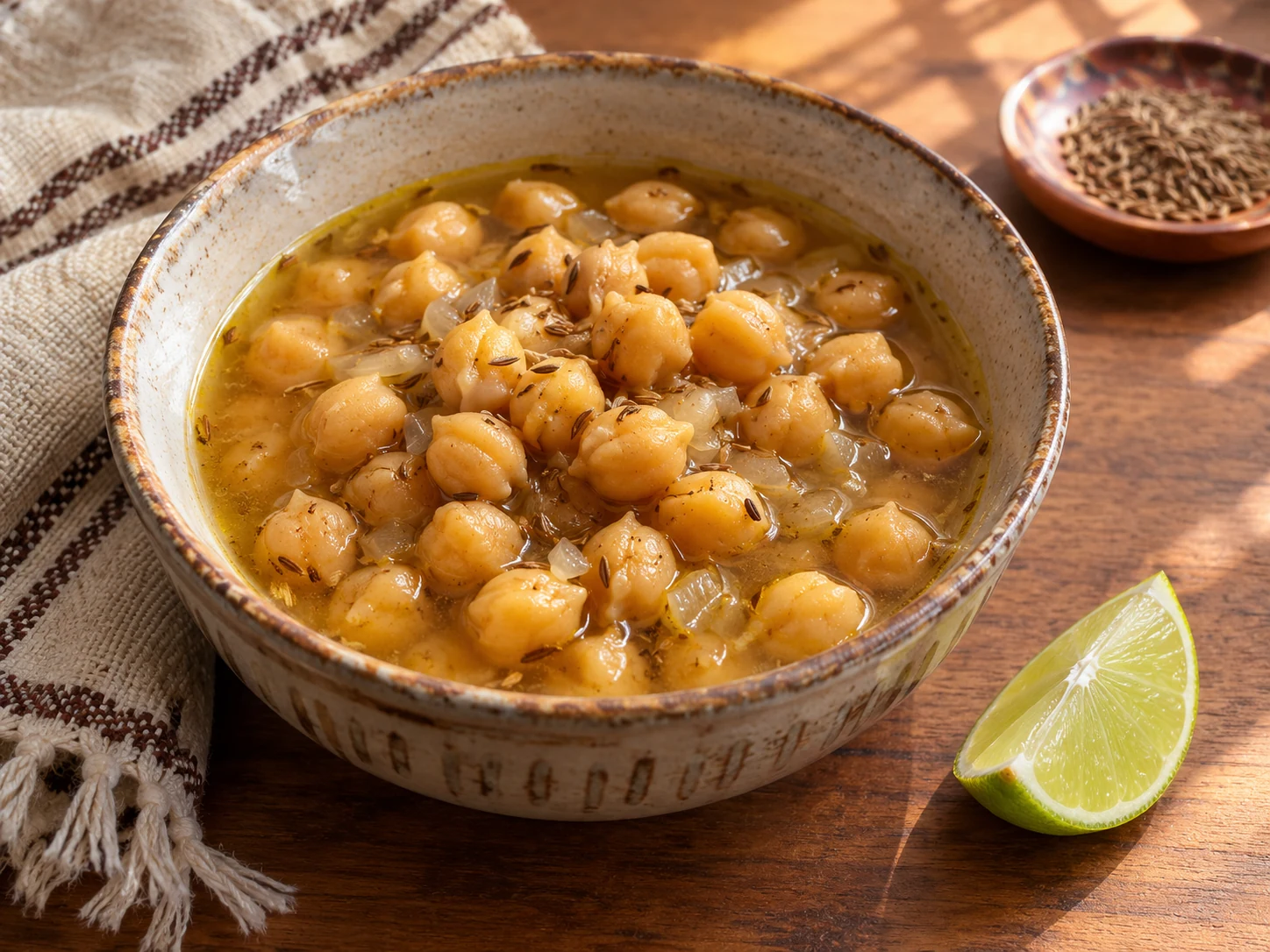
Tender chickpeas served in a light cumin and lime broth. A savoury version making four portions.
Ingredients
- 250 g dried chickpeas
- 1.5 litres water for soaking, to be discarded
- 1.5 litres fresh cooking water, adjusted as needed
- 1 teaspoon ground cumin
- 30 ml lime juice
- 3 g salt, adjusted to taste
- 1 pinch chilli, optional
Preparation
Sort the chickpeas, removing damaged grains, and rinse them. Cover with the soaking water in a container large enough to allow them to swell. Refrigerate for 8–12 hours. Their volume should increase and they should remain submerged; add a little water if necessary.
Discard all the soaking water and rinse again. Place the chickpeas in a saucepan with 1.5 litres fresh water. Bring to the boil and remove any foam with a clean spoon. Reduce the heat to maintain a steady simmer without boiling over.
Cook for about 60–90 minutes, sometimes longer depending on the age of the chickpeas. Test several grains: the centre should crush easily between a fork and a plate, with no hard core. Add hot water as necessary to keep the chickpeas covered during cooking.
Once the chickpeas are tender, remove some liquid if there is too much in the pan. Keep about 500–600 ml broth with the chickpeas for four bowls. Reserve the removed liquid until the end so you can loosen the mixture without diluting its flavour with a large amount of water.
Add the cumin and salt and simmer for 5 minutes. Taste with a clean spoon. Divide among four bowls and add the lime juice just before serving. Offer chilli separately. Adjust the quantity of broth depending on whether the baleela is served as a snack or a side dish.
Introduction
The baleela presented here is a savoury chickpea dish served with a small amount of its cooking broth. It follows a simple idea: cook the chickpeas until truly tender, then season them without turning the liquid into a tomato sauce or a purée. Cumin provides fragrance and lime adds acidity that everyone can adjust in their own bowl. Success therefore depends less on the number of spices than on cooking the chickpeas properly.
Distinguish the dried weight from the cooked weight. The 250 g specified here refers to the chickpeas before soaking. They then absorb water and yield several portions. Replacing that amount with the same weight of already cooked chickpeas would greatly reduce the yield. To use a canned product, follow the variation below and weigh the drained chickpeas. The nutritional estimates in this recipe use the dried chickpeas in the main formula.
This recipe requires neither meat nor commercial stock. The cooking liquid is enough to carry the flavour of the pulse. If you choose to add a purchased stock, check its ingredients, salt content and any animal products. A vegetable label is not sufficient if the product actually used contains chicken or beef. With water, cumin and lime, the formula given here remains vegan.
Cultural context
The name baleela can refer to different grain or pulse preparations depending on the region. The chickpea version is documented in Sudanese culinary repertoires; it does not represent every preparation bearing this name. It is therefore useful to keep the short name as the title and specify chickpeas in the description, ingredients and cultural notes. This clarification prevents a wheat version from being treated as a simple translation error.
The preparation differs from ful, which uses fava beans, and from gunzu, in which cowpeas are worked into a more uniform sauce. It is not simply a matter of renaming an existing recipe: the pulse, texture and way of serving explain its own place in the collection. Here the chickpeas remain whole in a light broth, without blending them or routinely enriching them with peanuts.
Serving in small bowls makes sharing easy and allows the lime to be adjusted at the last minute. The presentation can stay very simple; no spectacular decoration is needed to show the texture of the chickpeas. Reference used to identify the dish: https://www.sudanese.kitchen/archive ; the quantities and cooking checks above are a measured adaptation for home cooking.
Tips
Taste several chickpeas, because one tender grain does not guarantee even cooking.
Add the lime after cooking the chickpeas, especially if they are still firm.
Do not discard all the broth before deciding on the final texture.
An older batch of chickpeas may need considerably longer cooking.
Planning
Soaking is included in the total time but does not replace cooking. Use drinking water, a clean container and a cold place for the prolonged rest. If the chickpeas develop an unusual smell or suspicious texture after being forgotten in a warm place for a long time, do not try to disguise this with lime. For pressure cooking, follow your appliance's instructions and water quantities, respecting its maximum fill level for pulses.
Serving
The recipe makes 4 portions; accompaniments are counted separately.
Storage
Cool leftovers promptly in small containers, then refrigerate and consume within two days. Reheat only the amount needed until thoroughly hot. The chickpeas can also be frozen with a little of their broth. Preferably add fresh lime after reheating to control the acidity more easily.
Variations
For a quick version, use about 600 g already cooked, drained chickpeas with 500 ml water. Rinse them, heat until thoroughly hot, then season according to the main formula. This method reduces the work, but the liquid has less body than broth obtained from cooking dried chickpeas. A wheat or millet version is a different preparation and requires its own quantities.
Accompaniments
Serve on its own in a small bowl, with a portion of bread if the meal calls for it, or alongside a fresh vegetable salad. Bread is not included in the nutritional calculation. A moderate portion is enough for a snack; for a plant-based main course, complete the plate according to appetite and the other foods in the meal.
Nutrition notes
Chickpeas provide plant protein and fibre. The values cover only the chickpeas and broth, without bread.