Cintele canswi
A sauce of finely ground dried fish and roasted peanuts with tomato and onion.
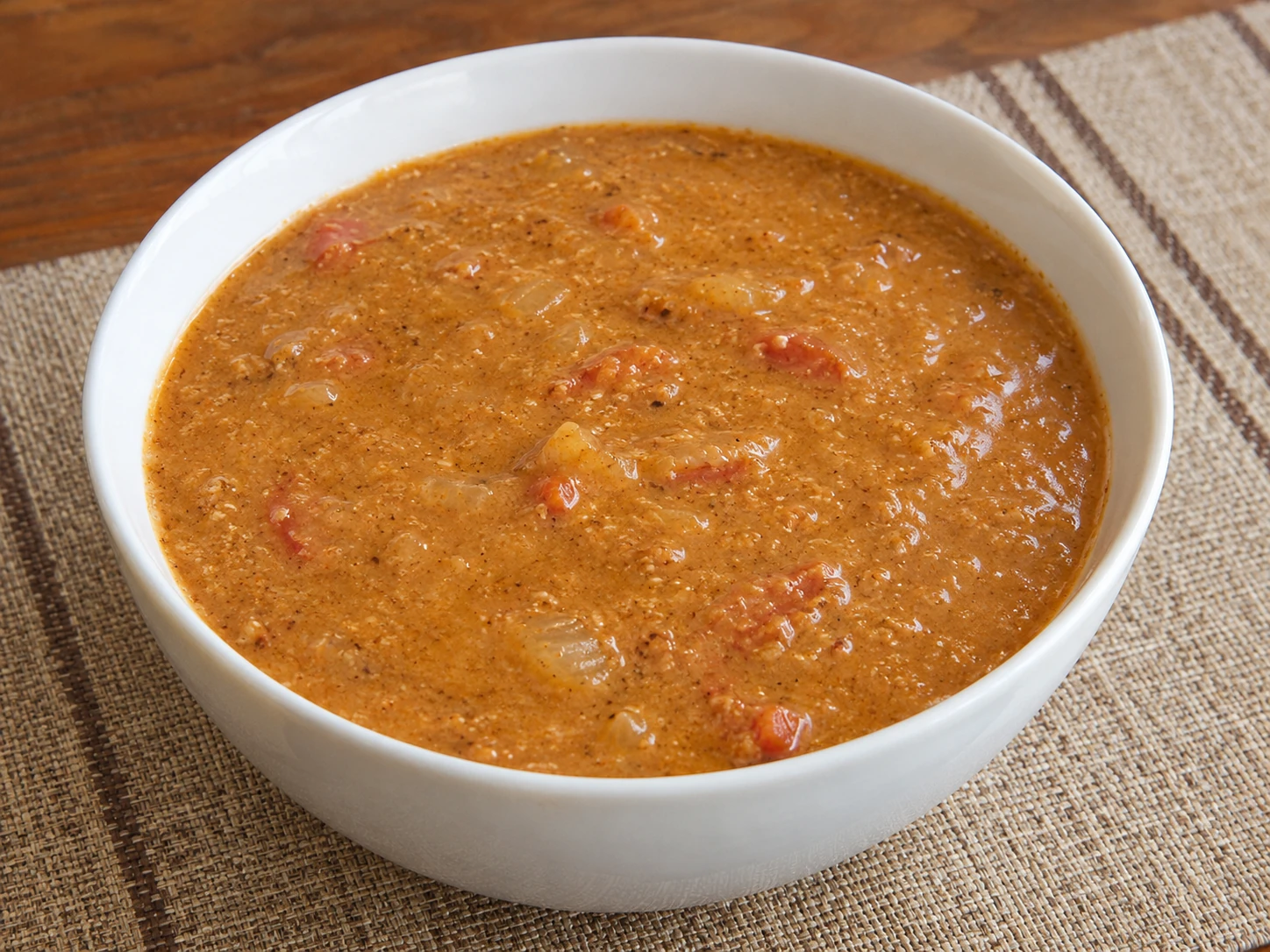
Ingredients
- 120 g food-grade unsalted boneless dried-fish powder supplied for cooking
- 100 g unsalted roasted peanuts, finely ground
- 250 g tomatoes
- 100 g onion
- 900 ml drinking water, including 300 ml for mixing powders
- 2 g salt maximum, after tasting
Preparation
Check origin and label of food-grade unsalted boneless dried-fish powder intended for cooking; discard spoiled product. Never use animal-feed fish meal.
Mix 120 g fish powder with 100 g ground peanuts. Gradually blend with 300 ml of the 900 ml water into paste without dry lumps.
Finely chop tomatoes and onion. Bring remaining 600 ml water to a simmer in a heavy pan.
Pour paste in while stirring constantly to the bottom, then add tomato and onion. Return to a simmer over about 5 minutes.
Gently cook 20 minutes, stirring regularly until sauce is even and vegetables tender; continue with hot water if needed. It must be cooked and hot at the centre, at least 63 °C.
Taste after cooking before adding up to 2 g salt. Adjust fluidity and share four relish portions; sauce contains fish and peanuts.
Introduction
Both powders are mixed before heating and retained in a flowing thick sauce. Four portions exclude nshima. This version requires a known food supplier and boneless powder, rather than assuming home grinding removes bones.
Cultural context
The Zambian ministry book documents Cintele canswi with ground dried fish, peanuts, tomato and onion. This declared adaptation starts with supplied boneless food fish powder instead of home grinding whole dried fish. It differs from whole kapenta in peanut sauce through the powdered fish and slurry method.
Tips
Use known food-grade boneless fish powder.
Blend powders before heating.
Stir the bottom and declare both allergens.
Planning
Verify human-food use, processing, unsalted composition and storage; fishing bait or animal-feed meal is unsuitable. Reject spoiled or abnormally damp product; cooking cannot repair it. Use plain ground roasted peanuts, not sweet spread. Mix powders dry then gradually add reserved water; remove lumps before heating. Finely chop vegetables and use a heavy pan, stirring bottom and corners as particles settle.
Serving
Return gently to a simmer, avoiding violent spitting. Check cooked hot centre and tender vegetables, not just disappearance of lumps. Taste salt only after cooking. Loosen with hot water or reduce gently while stirring.
Storage
Refrigerate promptly in shallow boxes; rehydrated powder is no longer a shelf-stable dry product. Reheat needed portions to seventy-four degrees centrally, stirring with water. Freeze only as product guidance permits, thaw refrigerated and avoid repeated reheating.
Variations
Grinding affects graininess, but hard bone fragments are not intended. Replace unsuitable powder rather than rely on long cooking. Salted powder, milk, oil or chunky vegetables change formula and nutrition. Chilli may be separate. Declare both central allergens despite their hidden powdered form.
Accompaniments
Serve with separately prepared nshima or rice and greens if desired. Stir before filling bowls; all fish and peanut solids remain in the sauce, not just a flavoured broth.
Nutrition notes
Generic estimates assume unsalted dried fish and roasted peanuts, all retained without home sieving losses. Actual species and processing vary strongly; no precise sodium, calcium or micronutrients are claimed. Sides excluded.