Dried rape leaves with peanuts
Food-grade dried brassica leaves rehydrated in cooking and bound with peanut cream.
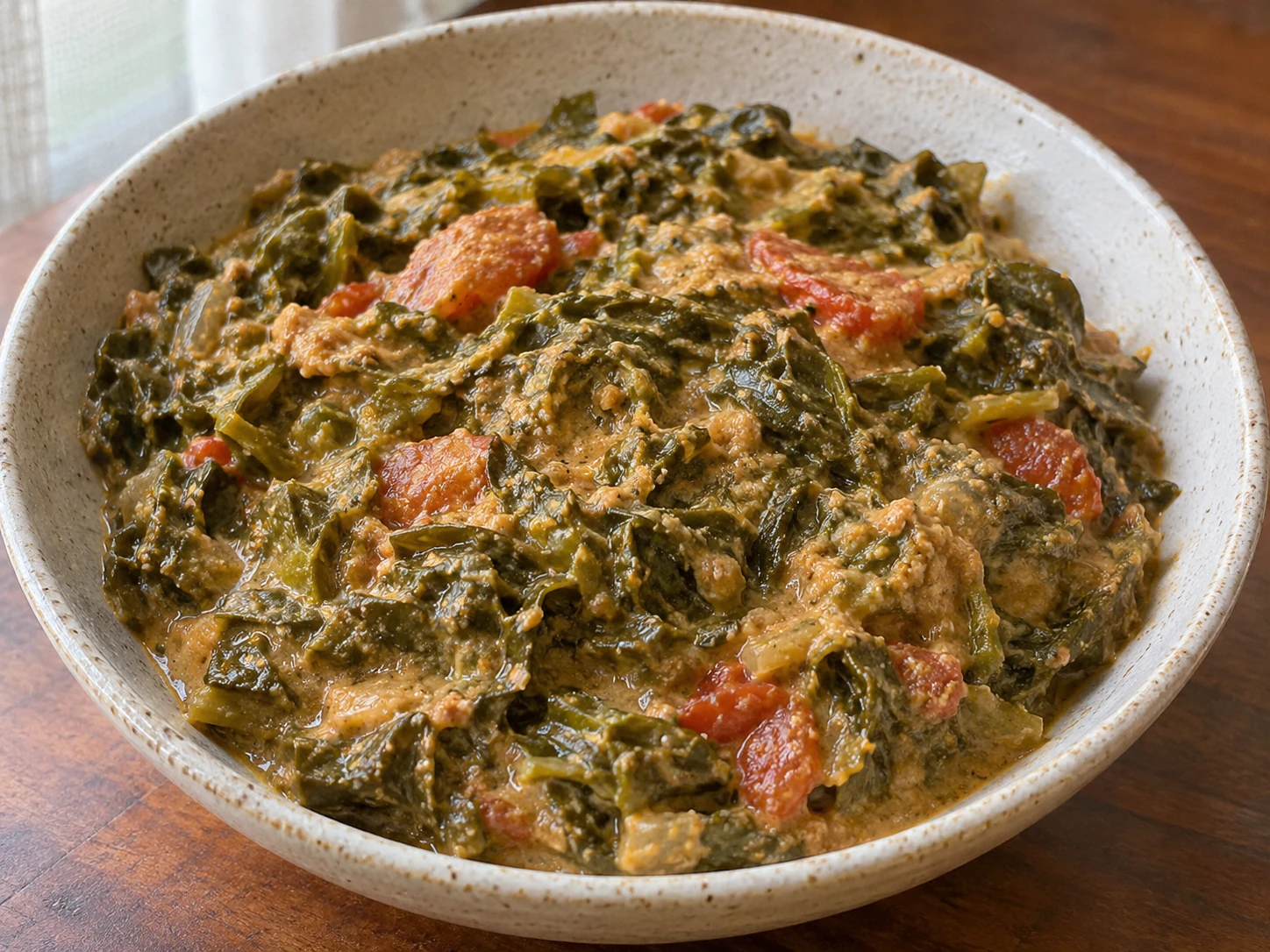
Ingredients
- 100 g identified food-grade dried rape leaves
- 120 g unsalted roasted peanuts, finely ground
- 250 g tomatoes
- 1000 ml drinking cooking water, including 200 ml for peanuts, plus washing water to discard
- 3 g salt
Preparation
Sort 100 g food-grade dried rape leaves; remove debris and tough stems. Discard mouldy or spoiled lots. Rinse thoroughly and discard washing water.
Cut large leaves if needed and chop tomatoes. Mix 120 g peanuts with 200 ml of the 1000 ml cooking water.
Put rinsed leaves with remaining 800 ml water in a pan. Bring to a simmer and gently cook 10 minutes, turning leaves.
Add tomato, peanut cream and salt. Stir to the bottom to distribute powder.
Gently simmer 20 minutes, stirring regularly; continue with hot water if fibres remain firm, preventing sticking.
Check truly tender leaves and a soft sauce. Reduce briefly if necessary, stir and share four side portions.
Introduction
Dried weight is not interchangeable with fresh leaf weight. Four relish portions exclude nshima. This recipe gives no home-drying protocol and expects tender leaves without tough stems.
Cultural context
The Zambian ministry book documents dried rape leaves with peanuts and tomato. This adaptation uses already roasted peanuts, measured water and texture checks. Culinary rape leaves are food brassica leaves, not unidentified agricultural products.
Tips
Buy identified food-grade dried leaves.
Discard washing water.
Test ribs before reducing.
Planning
Buy identified food-grade dried leaves with supplier storage guidance. A photo cannot identify unknown dried plants. Remove debris and woody stems; reject mould, abnormal smells and spoilage because cooking cannot restore them. Rinse thoroughly, discard wash water and cook with fresh measured water. Turn leaves to hydrate evenly and test thicker ribs. Mix plain ground roasted peanuts separately and retain all powder; stir bottom and corners.
Serving
Test a cooled resistant rib before reducing. Extend gently with water if needed; woody parts should have been removed. Loosen sauce if it thickens early and declare peanut even if dark leaves hide it.
Storage
Rehydrated cooked leaves are now a moist dish, not dry shelf-stable stock. Refrigerate promptly in shallow boxes. Reheat needed portions with water and stirring until hot throughout. Freeze dated portions if product guidance permits, thaw refrigerated and avoid repeated cycles.
Variations
Finer cuts may soften faster; follow product-specific guidance. Oil in place of peanuts gives a different formula. Fresh leaves, fish or meat change quantities or allergens. Chilli may be separate.
Accompaniments
Serve with separately made nshima or rice and other dishes if desired. Stir, divide leaves and sauce evenly; sides remain excluded.
Nutrition notes
Generic estimates assume a dried brassica-leaf profile, not measured local drying effects. All peanuts are counted; absorbed water changes weight, not ingredient energy. No sides, precise sodium or micronutrients.