Bambara sausages
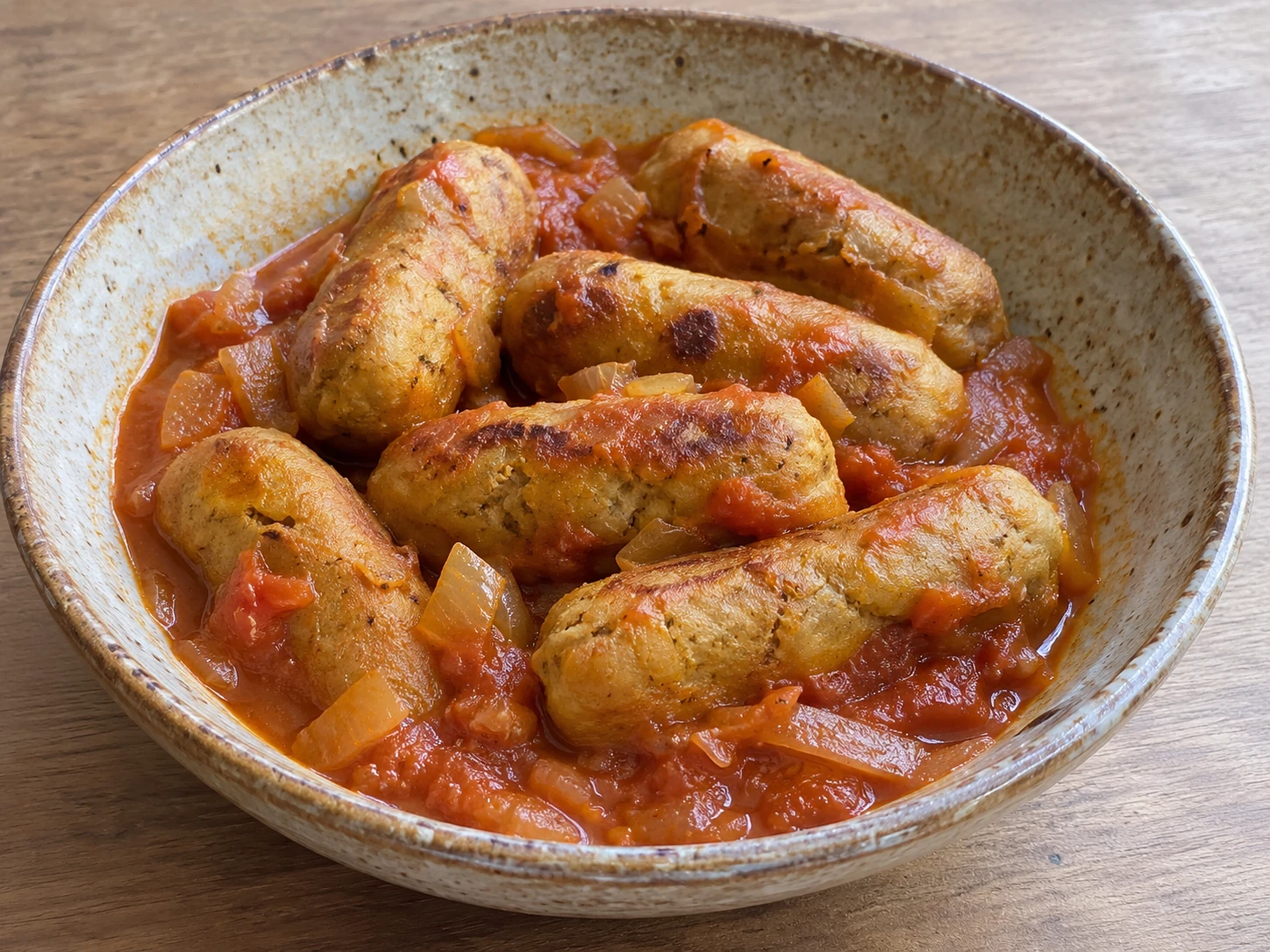
Cooked Bambara-and-flour rolls, browned then simmered in tomato gravy.
Ingredients
- 400 g already fully cooked Bambara groundnuts, drained
- 70 g wheat flour
- 120 g onion
- 300 g tomatoes
- 30 g vegetable oil, including 20 g for browning rolls
- 2 g salt-free curry powder, ingredients checked
- 200 ml drinking water
- 3 g salt
Preparation
Confirm Bambara pulses are fully cooked and ready to eat. Weigh 400 g drained and finely mash without added water.
Very finely chop onion. Mix half into mash with flour, curry and salt. Shape 12 small similar-diameter rolls; never taste raw-flour dough.
Heat the planned 20 g oil and brown rolls about 10 minutes, turning gently; work in batches if the pan is small.
Set rolls on a clean plate. Add remaining 10 g oil, remaining onion and chopped tomatoes; cook 10 minutes, stirring.
Return rolls with 200 ml water. Partly cover and gently simmer 15 minutes, turning carefully; continue if centres retain raw-flour texture.
Check rolls are hot and cooked to their centres with a soft sauce. Share 12 rolls into four portions of 3 with tomato; these vegetable sausages contain no casing or meat.
Introduction
Sausage describes shape, not meat or a casing. Twelve small rolls make four portions. Fully cooked drained pulses are required; dry-seed cooking is separate. Texture is softer and more fragile than commercial sausage.
Cultural context
The Zambian ministry book documents Bambara rolls bound with flour, browned and served with tomato-onion gravy. This weighed adaptation specifies fully cooked pulses, wheat flour and small rolls. Bambara is distinct from peanut.
Tips
Use fully cooked well-drained pulses.
Make short even rolls.
Simmer gently to cook the binder.
Planning
Choose plain fully cooked pulses and drain well; soaked seeds are not equivalent. Mash finely without water. Chop onion very finely to avoid cracks and raw large pieces. Check curry ingredients and traces. Shape short even rolls with clean hands. Do not taste raw flour; a cooked trial piece can assess handling. No prior kitchen testing is claimed.
Serving
Brown moderately, then simmer gently to cook the binder, not merely warm tomato. Test a cooled central bite from a thick roll: it must be hot and cooked, without raw flour. Continue with hot water before reducing if necessary. Vigorous boiling may break pieces.
Storage
Refrigerate promptly in shallow boxes with some sauce, grains separate. Reheat gently until centres are hot throughout. Freeze dated portions only if purchased-pulse guidance permits, accepting fragility; thaw refrigerated and avoid repeated reheating.
Variations
Other pulses change moisture and binding. Cassava flour is another declared adaptation, not a guaranteed equal-weight substitute. Curry must be salt-free as specified; chilli or other sauces change formula and nutrition.
Accompaniments
Serve with separately made nshima or rice and greens if desired, excluded from calculation. Use a wide spoon rather than piercing fragile rolls; distribute solids then sauce.
Nutrition notes
Generic estimates per three rolls and sauce assume a cooked Bambara profile and count all oil, even pan residues. Sides, precise sodium and micronutrients are excluded. Declare Bambara pulses and wheat, and check curry composition.