Chibbubbu
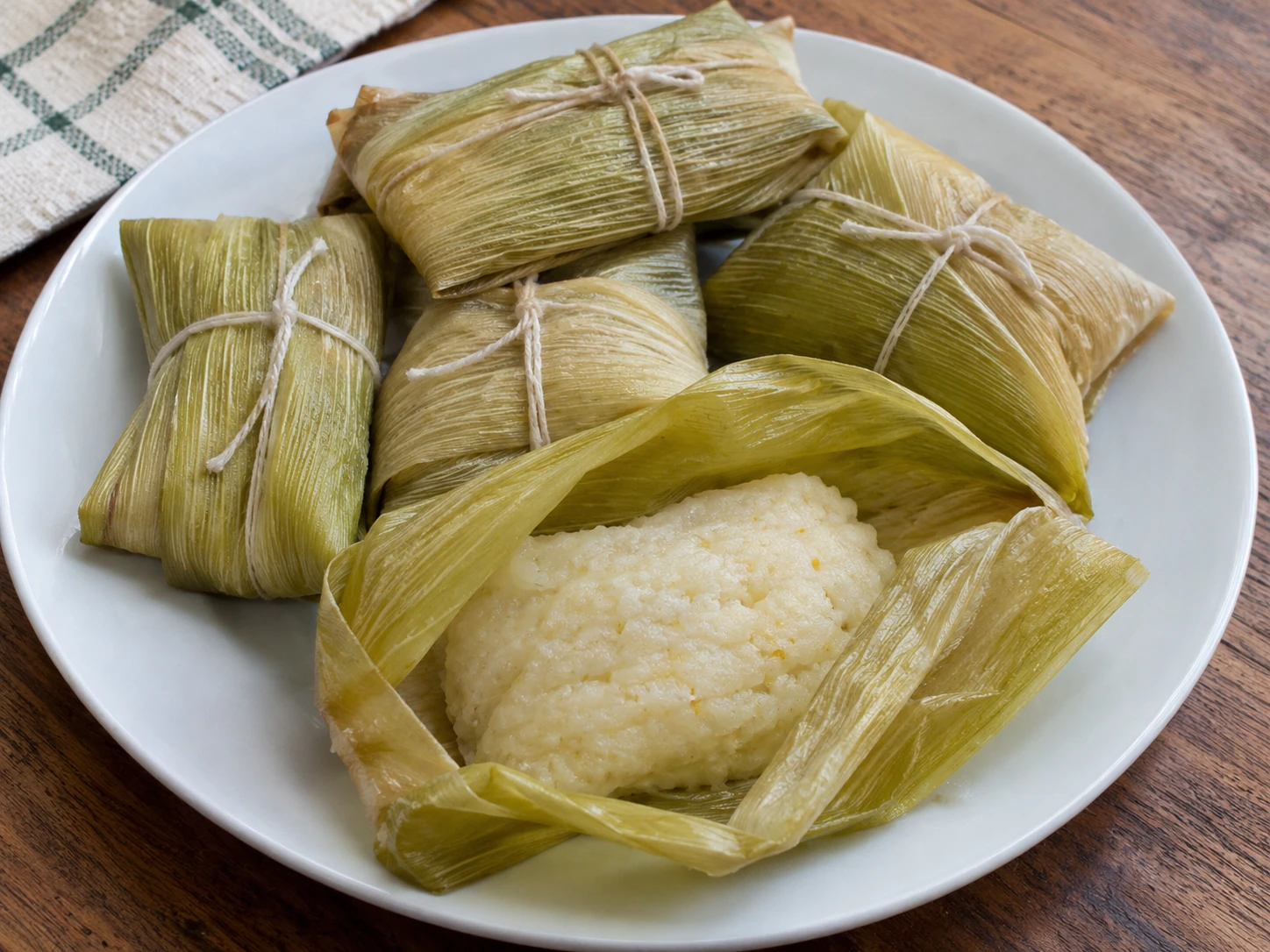
Pounded fresh maize cooked in small maize-husk parcels.
Ingredients
- 600 g tender but starchy fresh food maize kernels, shelled weight
- 2 g salt
- 16 clean flexible food-maize husks, not eaten
- 2000 ml drinking water for cooking, not consumed
Preparation
Choose sound husks from food maize. Wash thoroughly, remove silks and soften 16 husks in hot water, then drain; never use treated or decorative leaves.
Shell maize, weigh 600 g and pound or pulse-blend into a thick paste. Use sufficiently starchy fresh maize; runny sweetcorn purée cannot hold its shape.
Mix in salt. Overlap husks in pairs, place paste in 8 similar small parcels, fold sides and ends closed and tie with food-grade kitchen string without overtightening.
Bring 2000 ml water to the boil in a suitable pan. Add closed parcels, maintain a simmer and cook about 40 minutes; top up hot water to keep submerged.
Remove one parcel with tongs, cool slightly and carefully open. Check set tender paste at the centre without hard grain; continue cooking others if needed.
Drain parcels and cool slightly before opening. Remove string and husks, which are not eaten; share 8 small chibbubbu into four portions of 2.
Introduction
The tender compact paste contains no filling or sauce. Eight small parcels make four portions. Husks, string and cooking water are not consumed; fresh starchy maize must form thick paste without hidden dry flour.
Cultural context
The Zambian ministry book documents salted pounded fresh maize wrapped in maize husks and boiled. This adaptation specifies weights, similar parcels and centre checks; kitchen string replaces husk-strip ties. It differs from nshima, samp and whole cobs.
Tips
Choose fresh maize that makes thick paste.
Use food-grade husks and ties.
Check an opened centre.
Planning
Choose sound food maize tender enough to pound but starchy enough to bind. Very watery sweetcorn belongs in another dish rather than a leaking parcel. Wash sound broad husks and soften in hot water; decorative or treated material is unsuitable. Remove cob fragments and grind in small batches without extra water. Overlap husks and close ends without tearing; use only cooking string, never plastic or decorative ties.
Serving
Simmer gently and maintain immersion with hot water. Open cautiously after steam subsides. A hot wrapper does not prove a cooked centre; test cooled central paste for tenderness and continue if needed.
Storage
Refrigerate leftovers promptly in shallow portions, opening cleanly if this speeds cooling. Do not leave a stack in a closed hot pot overnight. Reheat needed portions until hot at the centre; freeze dated portions if desired and thaw refrigerated. Texture can firm.
Variations
Keep parcels similarly thin. A large parcel needs more centre cooking. Added flour or peanuts changes the formula. Other plant wrappers require established food-contact suitability.
Accompaniments
Serve slightly cooled, explaining that wrapper and string are removed. Sides are separate and excluded. An opened parcel shows the edible paste clearly.
Nutrition notes
Generic estimates count edible maize only, excluding husks, string and water. Actual starchy maize moisture and carbohydrates vary; no precise micronutrients or sides are included.