Madhumbe flatbreads
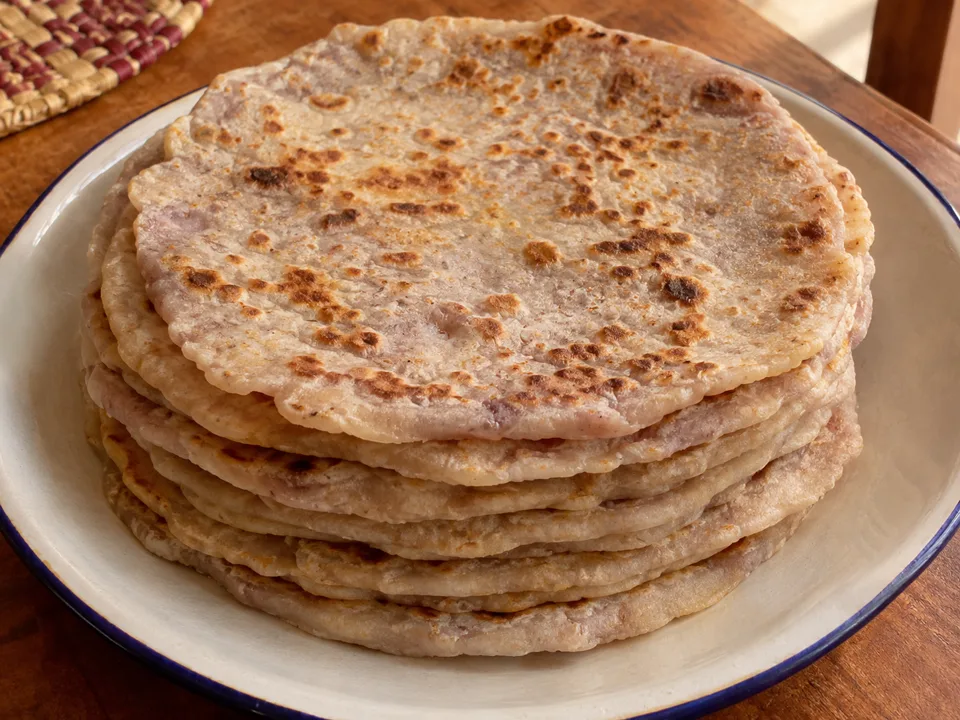
Eight thin pan-cooked taro and wheat flatbreads, four portions of two. Adapted from Princess Tafadzwa. Taro is fully cooked before dough mixing; wheat means this is not gluten-free.
Ingredients
- 500 g raw food-grade taro, yielding 300 g cooked mashed flesh
- 200 g plain wheat flour
- 20 g wheat flour for work surface, as needed
- 20 ml neutral oil for all cooking
- 3 g salt
- About 1.5 litres drinking water for taro cooking, discarded
Preparation
Use identified purchased edible taro. Wash, peel carefully, remove damaged parts and cut evenly; gloves may help with raw-skin irritation. Clean hands and tools.
Cover with cooking water, boil then simmer 25–35 minutes or longer until every piece fork-tender. Never taste raw or hard taro. Drain and discard water.
Mash smooth while warm, weigh 300 g and let cool enough to handle. No milk or butter in mash; reserve surplus separately.
Mix mash, 200 g flour and salt to soft dough. Add only little reserved work flour if too sticky; do not taste raw flour dough. Cover and rest 10 minutes.
Divide into eight equal parts and roll about 15 cm wide and a few mm thick on lightly floured surface. Keep others covered.
Heat heavy pan over medium. Share 20 ml oil across all eight breads, not per bread. Cook about 2–3 minutes first side and 2 minutes second until golden spots and no raw sticky dough centre; lower heat if blackening.
Stack in clean cloth and serve two per person, sides separate. Cool leftovers promptly, refrigerate and reheat appropriately. Do not store moist breads for days at room temperature.
Introduction
Eight thin pan-cooked taro and wheat flatbreads, four portions of two. Adapted from Princess Tafadzwa. Taro is fully cooked before dough mixing; wheat means this is not gluten-free.
Cultural context
Princess Tafadzwa documents a contemporary madhumbe flatbread as another use for taro. This does not claim exclusive national origin for all tuber flatbreads. It differs from boiled madhumbe through wheat dough and pan cooking.
Planning
Weigh cooked drained taro; raw 500 g allows for peeling and yield. Work flour is a reserve, oil a total. Gluten-free flour is not a guaranteed direct substitute. Fully cooking taro first is essential.
Nutrition notes
Taro and wheat mainly contribute carbohydrates; oil adds fat and energy. No numerical values calculated. Contains wheat and gluten, including work-surface flour; sides separate.