Mushrooms with dried fish
Rehydrated dried fish slowly simmered with oyster mushrooms, tomato and pepper.
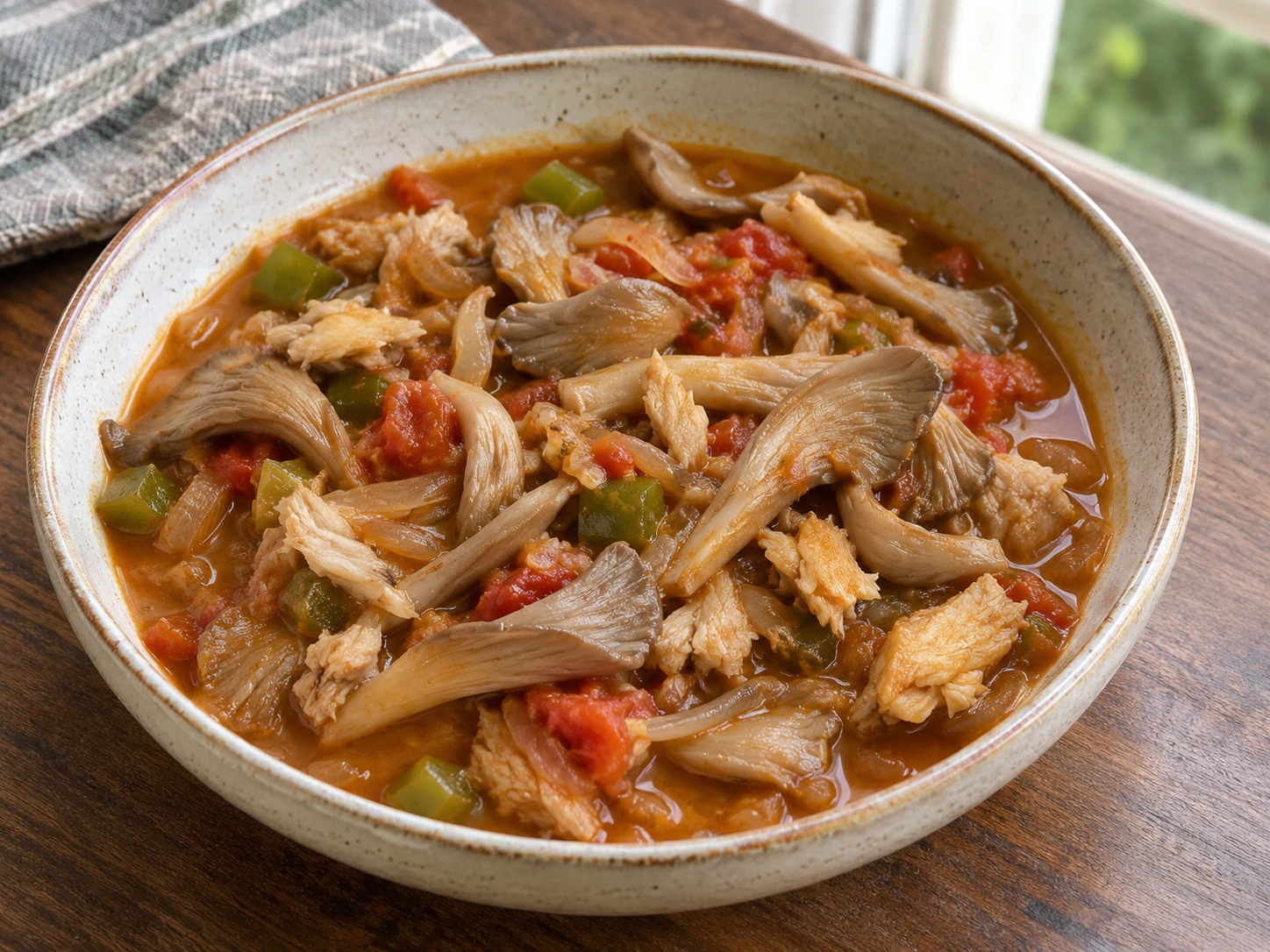
Ingredients
- 250 g unsalted food-grade dried fish, dry weight without large bones
- 400 g food-grade cultivated oyster mushrooms, cleaned weight
- 300 g tomatoes
- 120 g onion
- 150 g green sweet pepper, trimmed weight
- 12 g peeled garlic
- 10 g vegetable oil
- 1200 ml drinking water for cooking, plus soaking water to discard
- 2 g salt maximum, after tasting
Preparation
Choose sound unsalted food-grade dried fish. Weigh 250 g without large bones; cover with cold water and soak 45 minutes refrigerated, then discard water.
Examine rehydrated fish and carefully remove remaining bones; break into pieces. Clean identified cultivated oyster mushrooms, remove hard bases and weigh 400 g; never use unidentified wild picks.
Put fish and 1200 ml cooking water in a pan. Bring to a simmer and gently cook 60 minutes, monitoring water level.
Add mushroom strips and cook 10 minutes. Chop tomato, onion and pepper and mince garlic during this stage.
Add chopped vegetables, garlic and oil. Gently cook another 30 minutes; add hot water if the bottom dries. Check fish is hot at the centre, at least 63 °C, and tender.
Check pepper and mushroom stems are tender, then taste before adding up to 2 g salt. Look again for bones while dividing into four portions with reduced juices.
Introduction
Fish cooks first, then mushrooms and vegetables join. Four portions exclude separately prepared nshima. Dry usable fish is weighed before soaking; add the separate soaking period to active preparation and cooking time. Fresh or ready-cooked smoked fish needs another method.
Cultural context
The Zambian ministry book documents mushrooms with dried fish and these vegetables. This weighed adaptation chooses cultivated oyster mushrooms, refrigerated soaking and a centre-temperature check; no invented local name is used.
Tips
Allow 45 minutes of refrigerated soaking.
Remove bones before and after soaking.
Taste before adding salt.
Planning
Buy sound food-grade unsalted dried fish and follow supplier storage. Cooking does not restore spoiled fish. Salted products need appropriate separate desalting guidance. Remove large bones before weighing and fine bones after soaking; heat does not remove them. Soak covered in cold water in the refrigerator, discard water and cook with fresh measured water. Use identified cultivated mushrooms and trim tough bases; photos cannot identify safe wild species.
Serving
Keep enough moisture during the long fish simmer. Check both centre heat and tenderness: hot fish may still be tough. Taste only after cooking before salting. Share solids and juice and inspect for bones again.
Storage
Refrigerate promptly in shallow boxes. Rehydrated dried fish is now a cooked moist dish, not shelf-stable dry fish. Reheat needed portions to seventy-four degrees throughout with water if needed. Follow product freezing restrictions, thaw refrigerated and avoid repeated reheating.
Variations
Cultivated button mushrooms form another declared adaptation. Fish species and thickness affect tenderness; follow supplier guidance and continue gently if tough. Peanuts or meat change formula, timing and allergens. Chilli can be separate.
Accompaniments
Serve with separately made nshima or rice and greens if desired. These are outside quantities and nutrition.
Nutrition notes
Generic per-quarter estimates assume unsalted dried fish and count all oil, excluding removed bones and sides. Species, salt and fat vary; no precise sodium, calcium or other micronutrients are claimed.