Nyevhe
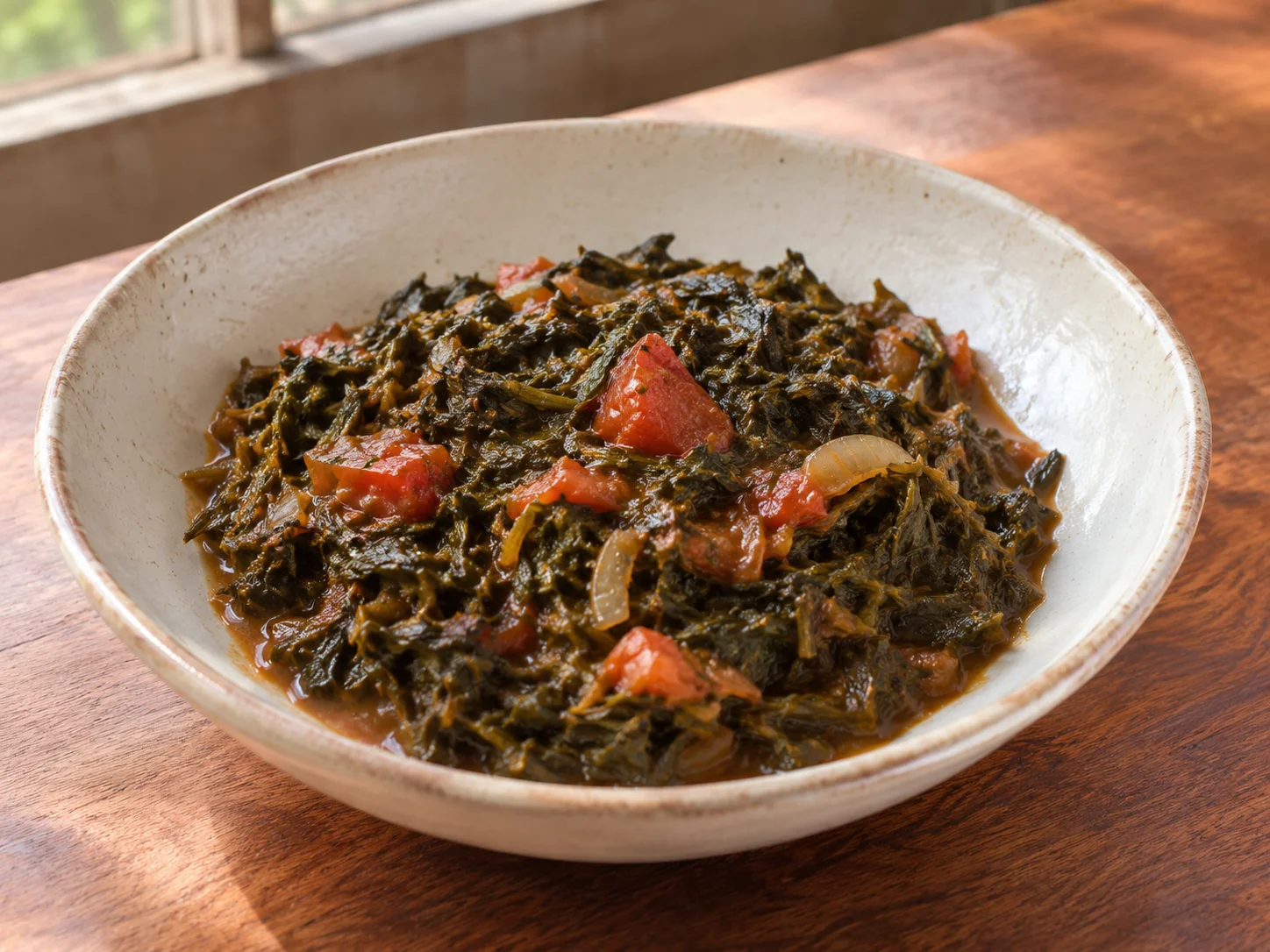
Dried food-grade spider-flower leaves rehydrated and cooked with tomato and onion. Four side portions, without peanuts; thirty minutes soaking is included.
Ingredients
- 60 g identified food-grade dried nyevhe leaves
- 250 g diced tomatoes
- 80 g finely chopped onion
- 15 ml neutral oil
- 1 litre drinking water for soaking, discarded
- 1 litre fresh drinking water for cooking
- 2 g salt, adjusted
Preparation
Sort dried leaves on a light tray, removing stones, debris and hard stems. Reject mouldy or suspect product. Rinse in a fine sieve and put in a roomy clean container.
Cover with the litre of soaking water for thirty minutes, refrigerating if the kitchen is hot. Stir once or twice, drain without returning sediment to the leaves and discard all soaking water. This is not cooking.
Boil the litre of fresh water, add rehydrated leaves and part of the salt. Boil gently partially covered about thirty minutes, stirring and keeping moist. Top up with hot water if needed.
Test several cooled leaves for tenderness and extend if leathery. Reserve about 100 ml clean cooking liquid, then drain. If the liquid is sandy, use clean hot water for the sauce instead; never use soaking water.
Heat oil, soften onion three to four minutes, add tomatoes for four to five minutes. Fold in nyevhe and some reserved clean cooking liquid; simmer five minutes for a moist short sauce. Check tenderness and salt.
Serve four side portions with separately prepared sadza or another accompaniment. Cool leftovers promptly in shallow containers, refrigerate and reheat thoroughly with a little water using clean utensils.
Introduction
Dried food-grade spider-flower leaves rehydrated and cooked with tomato and onion. Four side portions, without peanuts; thirty minutes soaking is included.
Cultural context
A measured home adaptation of a vegetable preparation documented in Zimbabwean cooking; sources are linked with the French master. Side dishes and starches are prepared separately.
Planning
Use correctly identified culinary nyevhe, not an anonymous dried-herb mixture. Mufushwa means dried vegetables and does not make different leaf species interchangeable. Remove grit; do not preserve sand for supposed nutrients.
Nutrition notes
Vegetables contribute fibre and dietary variety. Oil or peanuts, where included, add fat and energy. Nutrient values have not been calculated for this version; the complete meal depends on accompaniments.