Lemon oven-baked tilapia
Whole tilapia baked with lemon, dill, ginger and green pepper, then lightly browned.
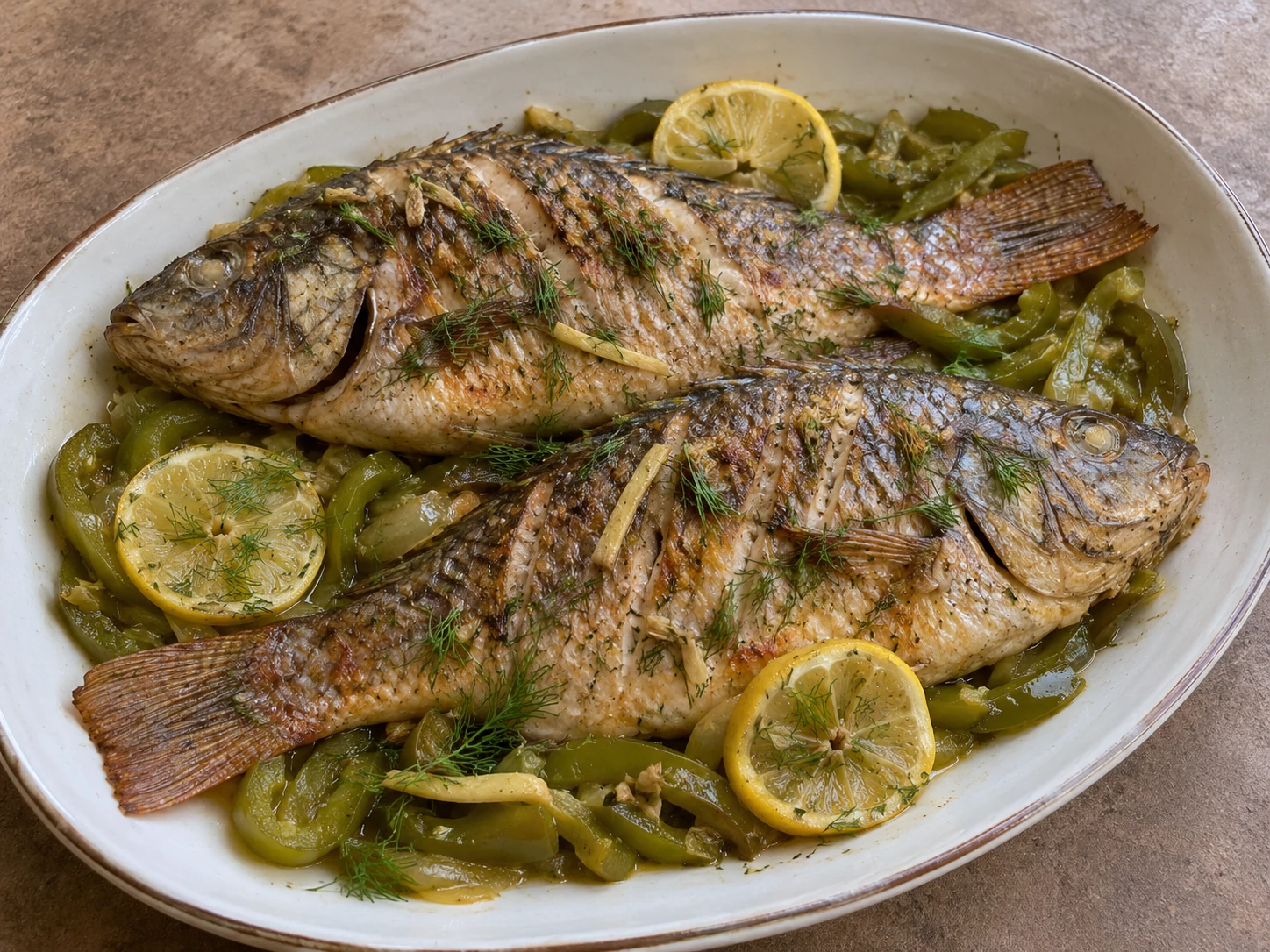
Ingredients
- 1400 g whole tilapia, already gutted and scaled, two similarly sized fish
- 300 g deseeded green pepper
- 100 g onion
- 20 g vegetable oil
- 60 g lemon, half juice and half thin seedless slices
- 10 g peeled garlic
- 10 g peeled ginger
- 10 g fresh dill
- 3 g salt
- 1 g black pepper
Preparation
Preheat oven to 200 °C. Keep tilapia refrigerated until preparing; pat dry and inspect cavities. Make shallow skin scores without cutting the central bone.
Slice pepper and onion. Chop garlic, ginger and dill. Divide lemon between juice and slices; remove seeds.
Spread pepper and half the onion in the dish with 5 g oil. Rub fish with remaining 15 g oil, salt and pepper.
Mix remaining onion, garlic, ginger, dill and lemon juice; place loosely in cavities. Set fish on vegetables and add lemon slices.
Cover and bake about 35 minutes at 200 °C. Uncover and cook about 10 minutes more, watching colour.
Check at least 63 °C in thickest flesh without touching bone; continue if needed. Lift fillets, check bones and share flesh, vegetables and juices into four portions.
Introduction
Covered cooking preserves moist flesh while vegetables catch the juices. Two similarly sized fish provide four portions after filleting. Whole weight includes head and bones; internal temperature determines doneness.
Cultural context
A contemporary home adaptation informed by Zambian author Lubaya’s herb-and-lemon baked fish. It differs from fried tilapia and the existing nshima-with-grilled-fish meal. It claims no invented ancient or regional origin.
Tips
Use similarly sized fish.
Keep the probe off the bone.
Do not chase dark skin.
Planning
Buy already gutted and scaled fish and keep chilled. Thaw refrigerated according to the label; this waiting time is additional. Make shallow scores, clean raw-fish work surfaces and avoid tightly packing cavities. Divide measured oil between vegetables and fish, and remove lemon seeds.
Serving
Probe the thickest flesh away from bone for at least 63 °C. Do not continue solely for darker skin. Lift fillets carefully, remove central and small bones, inspect cavity aromatics and divide edible flesh evenly.
Storage
Remove leftover flesh from large bones and refrigerate promptly in shallow boxes with juice. Reheat only needed portions gently, covered with liquid until hot throughout. Check bones again and follow purchased-product guidance.
Variations
Parsley may replace dill as a declared flavour change. Serve chilli separately. Boneless fillets or a much larger fish need different timings; do not substitute them under the same schedule.
Accompaniments
Serve with separately cooked nshima or rice and optional extra vegetables. These sides are outside the estimate; peppers and cooking juices belong to this dish.
Nutrition notes
Generic estimates assume an edible yield from whole fish, not actual fillet measurements. Yield varies. All oil is counted and cereal sides excluded; no precise micronutrient content is claimed.