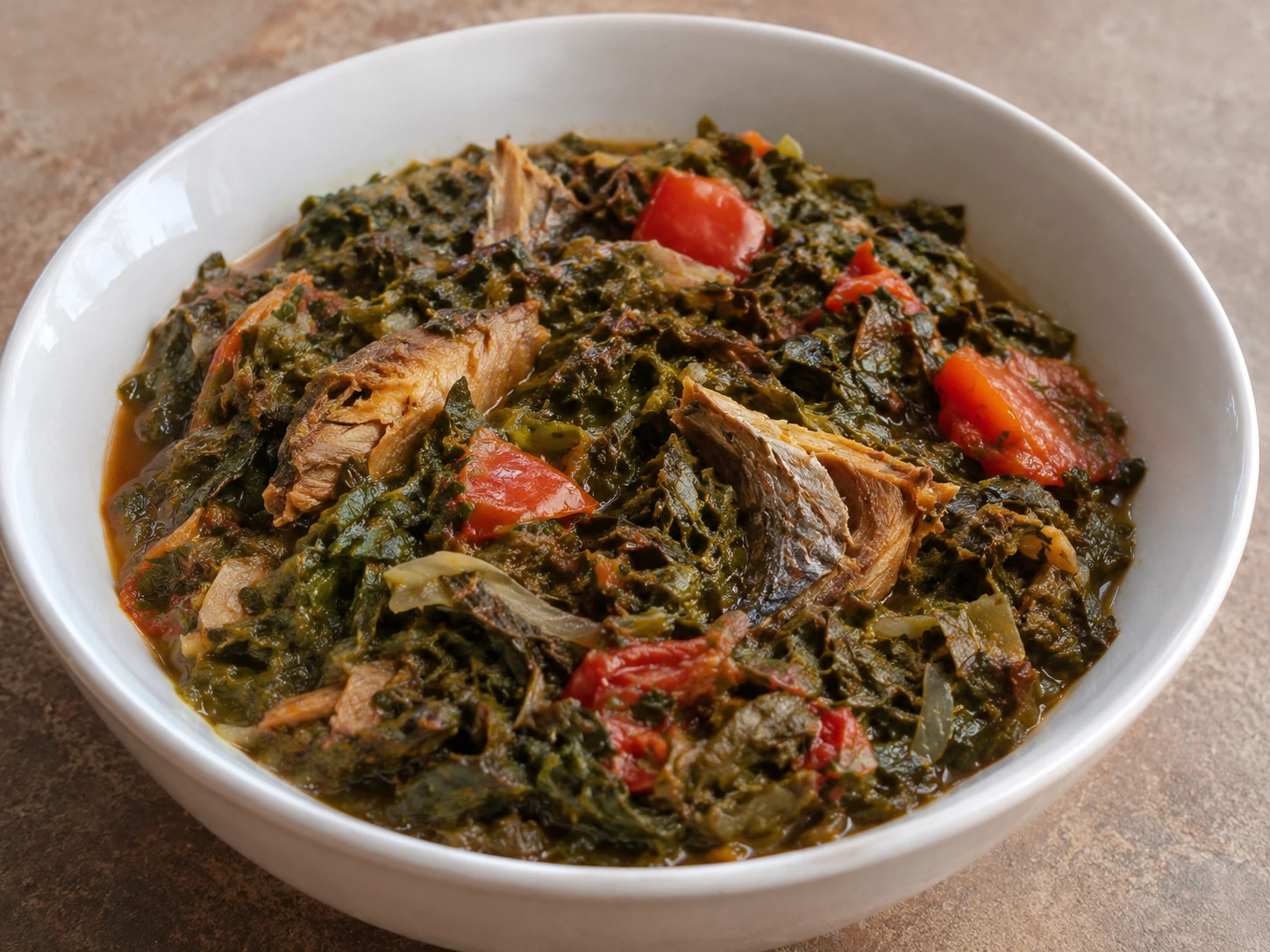
Katapa with dried fish
Cooked cassava leaves simmered with dried fish, tomato and onion.
Ingredients
- 700 g food-grade cassava leaves already processed and fully cooked by the supplier, drained
- 250 g food-grade dried freshwater fish pieces, before soaking
- 300 g tomatoes
- 150 g onion
- 20 g vegetable oil
- 1000 ml drinking water for soaking, discard
- 600 ml drinking water for cooking
- Salt only after tasting, depending on the fish
Preparation
Confirm leaves are processed and fully cooked, ready to reheat; follow the label. Sort and rinse fish, then soak 45 minutes in the refrigerator in 1000 ml water. Follow any longer supplier desalting instructions.
Discard soaking water. Drain, remove accessible bones and divide fish into pieces. Chop tomato and onion.
Soften onion in oil for 5 minutes. Add tomato and cook 10 minutes over medium heat.
Add fish and 400 ml of the 600 ml cooking water. Partly cover and gently simmer 30 minutes.
Add cooked leaves and remaining 200 ml water. Simmer 25 minutes, stirring carefully. Continue with hot water if fish is firm; also follow leaf reheating instructions.
Check complete rehydration, even heat and bones. Reduce briefly if necessary; taste before salting and divide into four portions.
Introduction
The fish softens gradually in a short sauce rather than a soup. Times depend on thickness and dryness; do not reduce the sauce finally until the fish is supple. Fish is weighed dry, before soaking.
Cultural context
The Zambian agriculture ministry’s recipe book documents dried fish with cassava leaves. This adaptation changes quantities and starts with fully cooked leaves; it does not reproduce the raw-leaf processing method or substitute smoked fish silently.
Tips
Weigh fish before soaking.
Soften fish before reducing sauce.
Check bones twice.
Planning
Use food-grade dried fish from an identifiable seller and follow soaking, desalting and cooking guidance. Soak refrigerated, discard that water and inspect bones before and after cooking. Leaves must already be processed and fully cooked: freezing or pounding alone does not establish this. Cyanogenic compounds cannot be assessed by tasting.
Serving
Lift fragile pieces with a broad spoon and stir leaves gently. Test the thickest piece for a firm dry centre. Add hot water and continue if needed; share fish before leaves and warn about bones.
Storage
Refrigerate promptly in small shallow boxes. Reheat only needed portions with water until uniformly hot. Follow product storage and refreezing restrictions, and check bones again when serving.
Variations
Salt varies with fish; add only after final tasting. Chilli may be separate. Peanuts change the sauce and allergens; smoked fish would need another weighed formula.
Accompaniments
Serve with separately made nshima or rice and another vegetable if desired. These are excluded from portions and nutrition.
Nutrition notes
Fish contributes protein. Species, drying and edible parts vary greatly; generic per-quarter estimates do not quantify sodium or calcium. All measured oil is counted, sides excluded.