Attiéké with fish
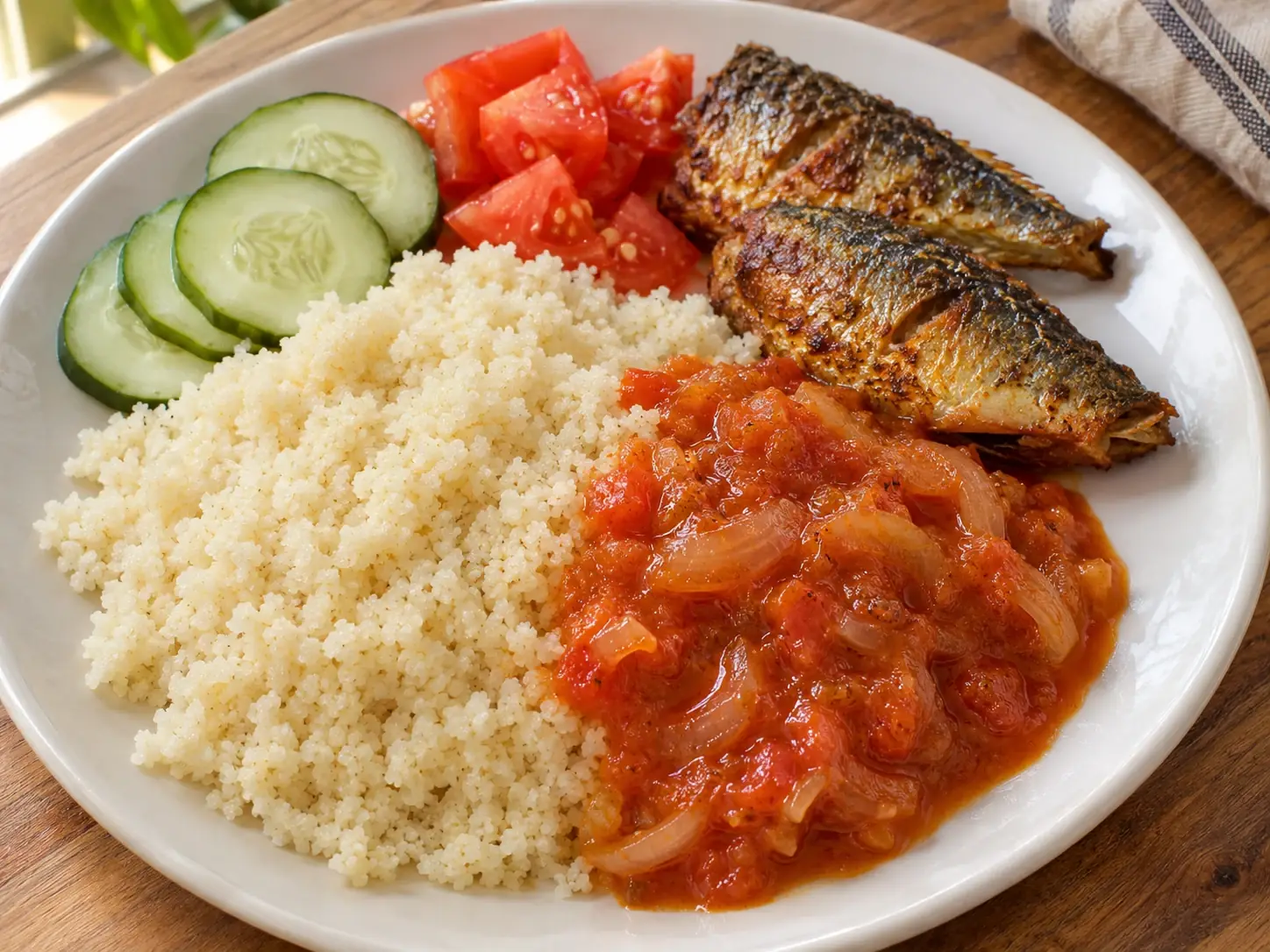
A Freetown street-food inspired plate of ready-to-heat attiéké, pan-fried mackerel, tomato-onion gravy and fresh salad.
Ingredients
- 500 g fresh or frozen ready-to-heat attiéké, not dry granules
- 600 g fresh boneless mackerel fillets, 8 pieces
- 400 g tomatoes for gravy
- 150 g peeled onion
- 20 g tomato paste
- 1 garlic clove
- 30 ml vegetable oil: 15 ml gravy, 15 ml fish
- 150 ml water for gravy
- 200 g cucumber
- 200 g additional tomatoes for salad
- 20 ml lime juice
- 3 g salt: 2 g fish, 1 g gravy
- 1 small pinch ground chilli, optional
Preparation
Wash vegetables first. Reserve 200 g tomatoes for salad and chop the other 400 g for gravy. Slice onion and chop garlic. Use separate or cleaned equipment for fish, remove remaining bones and pat dry.
Soften onion in 15 ml oil for 5 minutes. Stir in garlic and tomato paste for 1 minute. Add 400 g tomatoes, 150 ml water, 1 g salt and optional chilli. Simmer partially covered about 20 minutes until spoonable.
Reheat 500 g fresh or frozen attiéké following its package directions. Separate grains with a fork before and after heating. This method is not for dry attiéké. Keep hot without packing tightly.
Season fish with the remaining 2 g salt. Heat the other 15 ml oil and cook fish in one layer, about 4–5 minutes on one side and 3–4 on the other, adjusting for thickness. Flesh must be opaque and separate easily; extend if required.
Slice cucumber and reserved salad tomatoes. Dress with 20 ml lime juice just before serving, using clean utensils. Lime that touched raw fish must not be used on salad.
Divide attiéké, gravy and salad between 4 plates and add 2 fish pieces each. Serve promptly. Cooking tasks overlap within the 30-minute allowance.
Introduction
Attiéké originates in Côte d’Ivoire and is also served with varied toppings in Freetown. This recipe documents that serving context without assigning it a Sierra Leonean origin.
Cultural context
Tourism accounts describe adaptable Freetown attiéké plates. Mackerel fillets, these quantities and pan-frying are choices for this home adaptation. Attiéké is fermented cassava, not wheat couscous.
Planning
Check whether your product is fresh, frozen or dry. The 500 g quantity is for ready-to-heat product. Prepare gravy ahead if useful, keep salad chilled, and reheat hot components thoroughly. Store leftovers separately after prompt cooling.
Nutrition notes
Fish provides protein and fat; attiéké contributes carbohydrate. Tomatoes and cucumber add vegetables. No numerical nutrition analysis is claimed. Contains fish; check packaged ingredients.