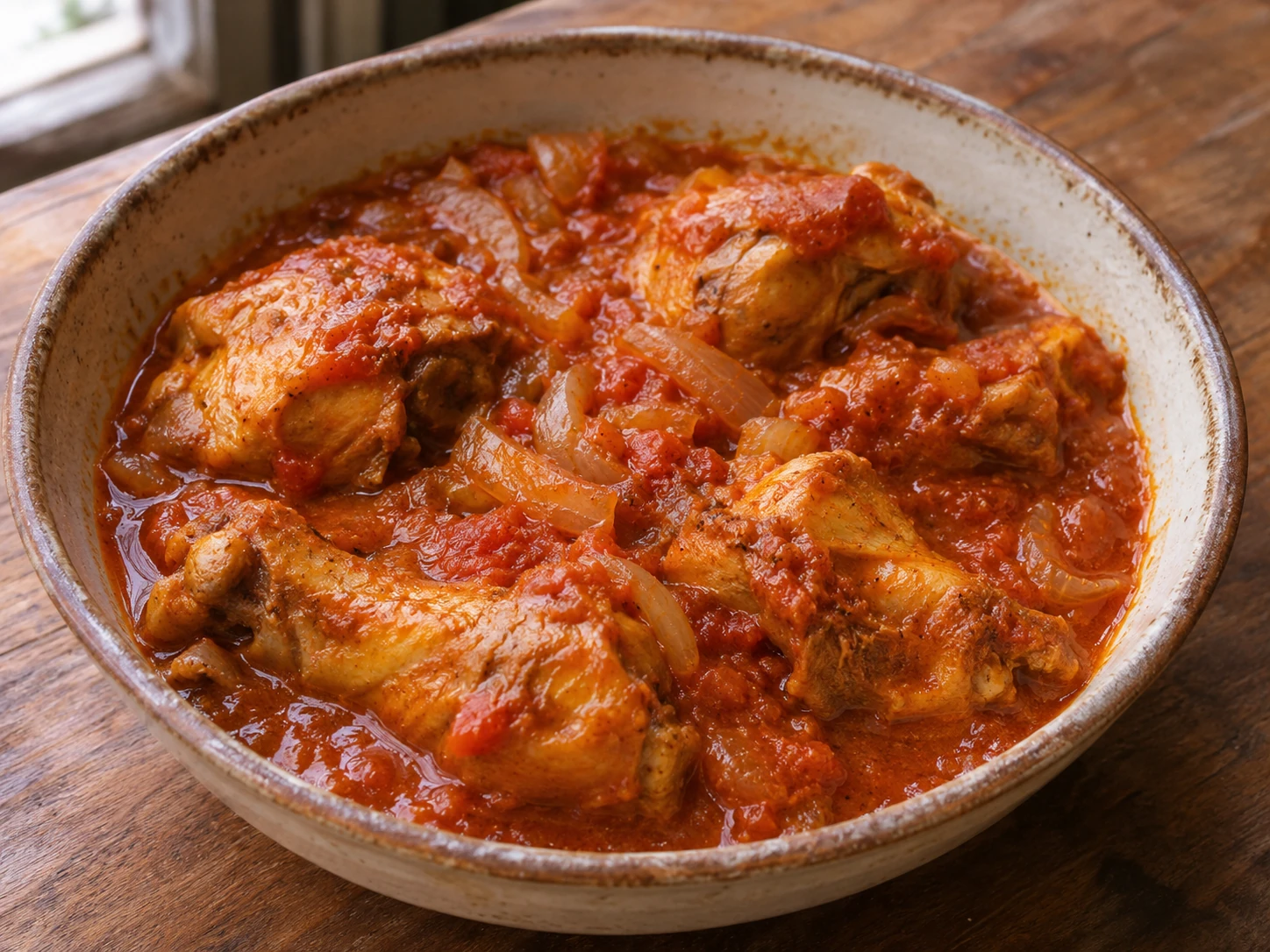
Village chicken stew
Free-range chicken slowly simmered with tomato, onion and garlic until tender in a concentrated sauce.
Ingredients
- 1,200 g raw bone-in free-range chicken pieces
- 500 g tomatoes
- 200 g onion
- 10 g garlic
- 20 g vegetable oil
- 800 ml drinking water
- 3 g salt
- 1 g ground black pepper
Preparation
Keep chicken chilled until preparation. Use a separate board for raw pieces; do not wash them under the tap. Clean hands and utensils afterwards.
Slice onion, chop garlic and tomato. Heat oil and brown chicken for 10 minutes, in two batches if needed; this is not complete cooking.
Reserve in a raw-food container. Soften onion in the pot for 5 minutes, add garlic for 1 minute, then tomato for 9 minutes, stirring.
Return chicken and its juices. Add water, salt and pepper. Bring to a gentle simmer, partly cover and cook for 60 minutes, turning a few times.
Check at least 74 °C in the thickest part without touching bone. If flesh is still firm, continue gently in 10-minute intervals with hot water as needed.
Once cooked and tender, finish about 15 minutes uncovered to reduce sauce. Check another large piece. The stated 100-minute cooking time is indicative; firmer birds may need longer.
Share chicken and sauce into four portions with separately prepared vegetables and nshima. Use a clean serving dish and point out bones.
Introduction
Initial browning builds flavour but never replaces cooking through. Temperature and tenderness are separate checks: safely cooked flesh can still need gentle simmering to soften. Four portions include bones and sauce, without sides. Bird age and piece size make the timing a guide rather than a guarantee.
Cultural context
Zambian Kitchen documents village chicken stew with tomato and onion, often served with nshima. This weighed home adaptation adds water quantities and explicit doneness checks without equating every foreign free-range bird with local Zambian poultry. It is the standalone stew, distinct from the catalogue’s complete nshima meal, and has no peanuts.
Tips
Check temperature and tenderness separately.
Do not serve in the raw-food dish.
Starting weight includes bones.
Planning
Choose a bird suited to stewing and similar-sized pieces. Check several thick pieces; bone weight is not edible meat. Prepare vegetables separately from raw poultry, do not wash the bird under running water and clean hands, boards and tools. A dish holding merely browned chicken remains a raw-food dish. Brown without overcrowding, soften aromatics and tomato, and keep hot water available for extended simmering.
Serving
Place the thermometer in thick flesh away from bone. Bubbling sauce or browned skin does not establish internal temperature. Once safe temperature is reached, continue gently if still tough. Divide pieces fairly, remove detached bone fragments and use clean dishes and utensils. Loosen thick resting sauce with hot water.
Storage
Refrigerate leftovers promptly in shallow clean containers rather than leaving a large pot for hours. Reheat only the portion needed until hot in its centre, turning pieces. Freeze cooled dated portions if desired and thaw in the refrigerator, not all day in a warm room. Keep sauce with chicken for moisture and sides separately.
Variations
Younger birds may soften sooner, so check before prolonging automatically while retaining the temperature test. Boneless chicken needs different timing and yield estimates. Offer chilli separately; commercial stock changes salt and allergens. Peanut stew requires another weighed recipe.
Accompaniments
Serve with hot nshima and separately cooked greens or cabbage; rice is another home option. Cereal and vegetable accompaniments are not in the four stated chicken portions.
Nutrition notes
Chicken supplies protein. Estimates explicitly assume an edible-meat yield from bone-in weight; they are not a measured yield for a particular bird. Skin and actual meat eaten affect the figures. Sides are excluded.