Beans in tomato sauce
Fully cooked red beans simmered in onion-tomato sauce, thickened with a few mashed beans.
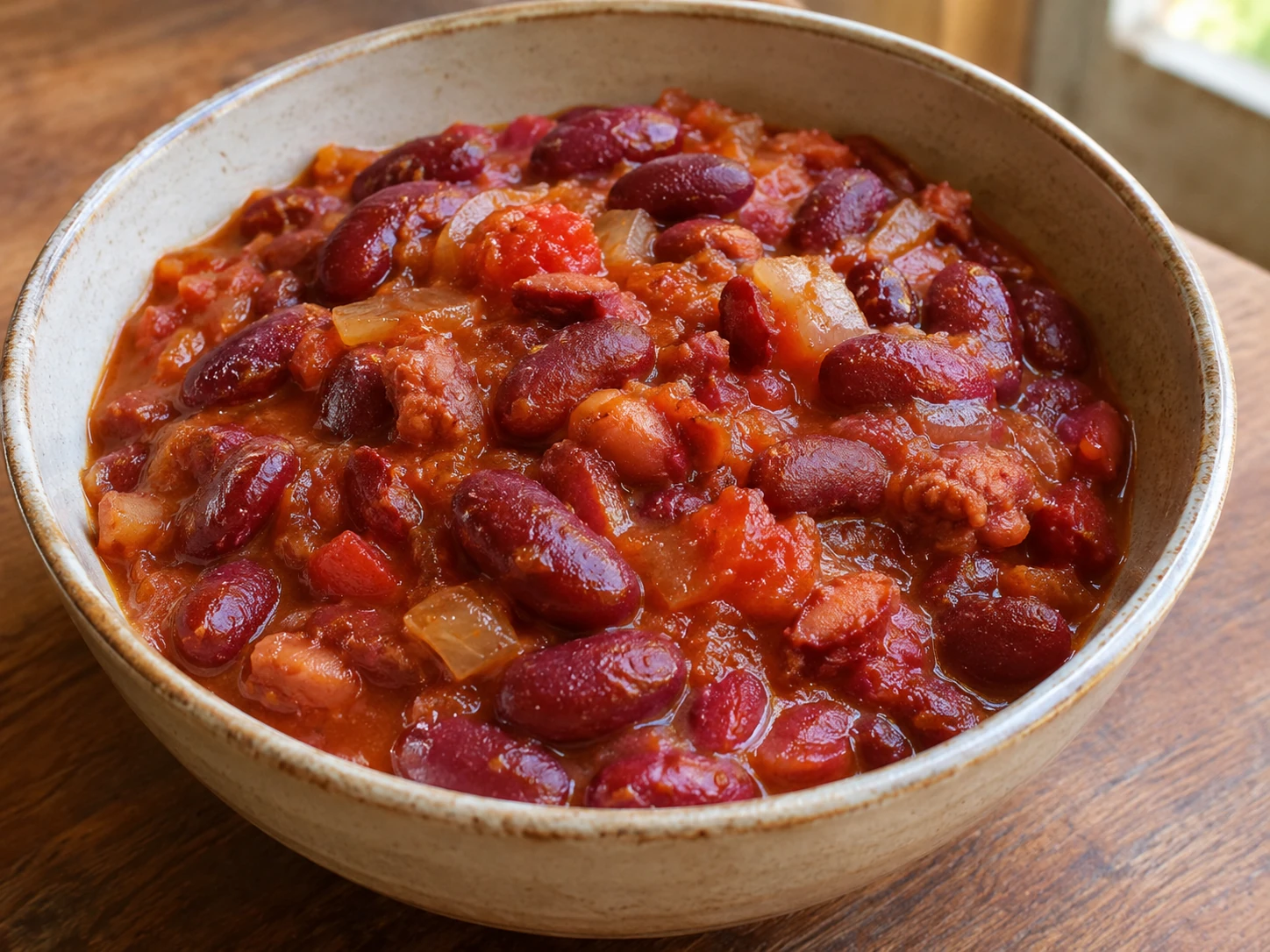
Ingredients
- 800 g fully cooked red kidney beans, drained weight
- 400 g tomatoes
- 150 g onion
- 20 g vegetable oil
- 300 ml drinking water
- 2 g salt, reduced if beans are already salted
Preparation
Use fully cooked beans. Drain and rinse canned beans if using, then weigh 800 g. This recipe does not cook raw dried beans.
Dice tomato and slice onion. Check a bean is already tender and ready to use.
Warm oil, soften onion for 5 minutes, add tomato and cook for 10 minutes, stirring.
Add beans and 300 ml water. Season according to existing salt and gently simmer partly covered for 15 minutes.
Mash two spoonfuls of beans against the pan side and stir into the sauce to bind it. Taste and loosen with a spoonful of hot water if needed.
Divide into four portions, serving beans and sauce together, with any nshima and vegetables prepared separately.
Introduction
Keep most beans whole in a short sauce that sits on the spoon. This four-portion preparation starts with fully cooked beans, not raw dry ones expected to cook in 30 minutes. Advance-cooked or canned beans make the timing explicit; cereals and vegetables added to the meal are separate.
Cultural context
Tomato-onion bean stews are documented in Zambian Kitchen’s family-food repertoire. Using ready-cooked beans is an announced home adaptation, not a claim that canning is traditional. This is the standalone preparation, distinct from the existing complete nshima meal and from groundnut beans.
Tips
The stated bean weight is cooked and drained.
Do not use beans that are only soaked.
Mash just a small amount.
Planning
Choose plain cooked beans and read the label for salt. Drain before weighing: 800 g excludes packing liquid. Home-cooked beans must be fully cooked and properly stored; merely soaked beans are not suitable. Raw dry-bean preparation requires its own method and time. Finely chop onion, use ripe tomato and keep the measured water ready rather than adding unmeasured glasses.
Serving
Mash only a small amount to keep whole beans visible. Briefly reduce excess liquid or loosen dry sauce with hot water. Taste before adding salt, especially with cans. Divide beans and tomato evenly; a short covered rest thickens the sauce and may require loosening.
Storage
Refrigerate leftovers promptly in small clean boxes. Reheat gently with water, stirring until hot throughout; high heat only risks catching the tomato. Freeze dated portions if desired, thaw in the refrigerator and expect some split beans. Store meal components separately and avoid repeated reheating.
Variations
Cooked white beans make an announced adaptation with a more fragile texture and revised nutrition. Offer chilli separately. Stock cubes require salt and allergen checks. Peanut, meat or fish additions need a separately quantified recipe rather than undefined options.
Accompaniments
Serve with nshima or rice and separately prepared greens, or use beans as the main component of a vegetable plate. Extra cereals are outside the nutritional estimate.
Nutrition notes
Beans contribute plant protein and fibre. Estimates use cooked drained weight, not dry-bean weight, plus measured vegetables and oil. Actual salt depends on the product.