Dried fish in tomato sauce
Dried freshwater fish slowly softened in tomato, onion and pepper sauce.
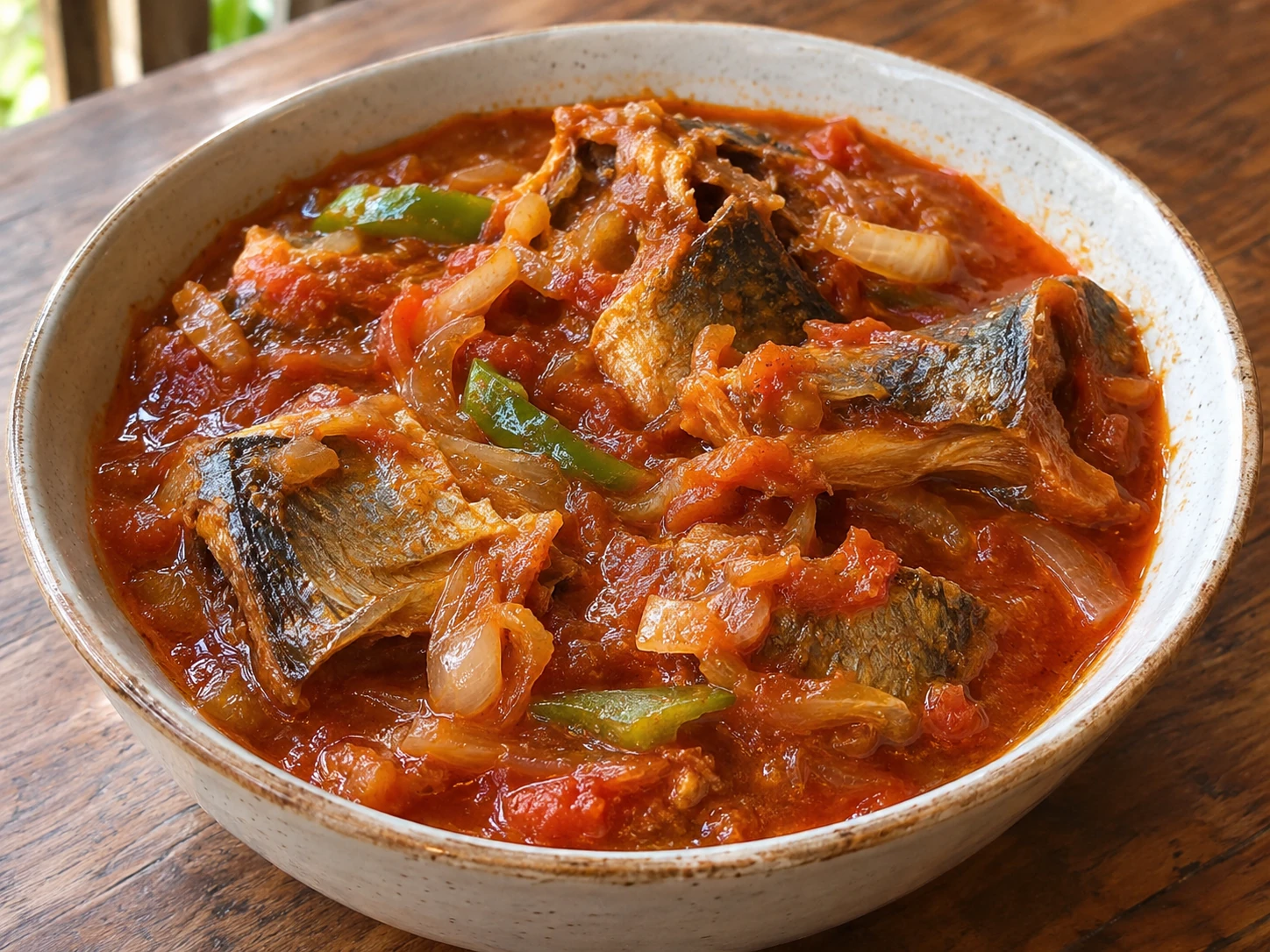
Ingredients
- 350 g food-grade dried freshwater fish pieces, weighed before soaking
- 500 g tomatoes
- 150 g onion
- 150 g deseeded green pepper
- 25 g vegetable oil
- 800 ml drinking water for soaking, to discard
- 500 ml drinking water for cooking, added gradually
- Salt only after tasting, depending on the product
Preparation
Check the supplier’s instructions, sort and rinse fish. Soften in 800 ml water in the refrigerator for 30 minutes, then discard water and drain. Follow any required desalting method instead and adjust total time.
Chop tomato, pepper and onion. Remove accessible large bones without breaking up all the pieces; check for debris.
Warm oil and soften onion and pepper for 5 minutes. Add tomato and cook for 10 minutes.
Lay fish in the sauce and add 350 ml of the cooking water. Simmer gently, partly covered, for 50 minutes, turning carefully a few times.
Add the remaining 150 ml gradually if the bottom dries before the fish softens. Continue until fully rehydrated and cooked, following its size and packet instructions.
If watery, finish about 10 minutes uncovered. Taste before salting, remove visible bones and share into four portions, adapting service for diners who have difficulty with bones.
Introduction
Larger dried pieces need more time and moisture than tiny fried fish. Check the product, soak appropriately and simmer gently with measured water additions. Four portions exclude nshima and vegetables. The dry starting weight is not the final serving weight; texture and supplier instructions take precedence over a fixed minute count.
Cultural context
Zambian Kitchen documents dried-fish sauces with tomato, onion and pepper. This is a weighed home adaptation, not a repetition of health claims sometimes attached to dried fish. It differs from fried kapenta and from fresh-fish stew in both product and method.
Tips
Weigh before soaking.
Follow required desalting instructions.
Cooking does not remove every bone.
Planning
Buy properly stored food-grade fish from an identifiable supplier. Reject mouldy or abnormal-smelling products; washing does not repair spoilage. The 30-minute refrigerated soak begins softening but does not replace label-required desalting. Discard soak water and use separate cooking water. Remove accessible large bones and choose a pan wide enough to turn pieces gently.
Serving
Tenderness takes priority over sauce reduction. Hard fish in a dry pan needs water and time, not fierce heat. Turn with broad utensils. Long cooking does not guarantee harmless bones: remove visible ones and provide an appropriately prepared alternative for diners with chewing or swallowing difficulties. Declare fish.
Storage
Refrigerate cooked leftovers promptly in shallow clean boxes; rehydrated fish does not keep like dry packaged fish. Reheat gently with water until fish and sauce centre are hot. Freeze dated portions if desired and thaw in the refrigerator; flesh may become more fragile. Store unused dry product according to its packet.
Variations
Curry, paprika or separately served chilli can make announced variations. Taste cooked reduced sauce before salting. Smoked fish may have different moisture, salt and cooking needs; fresh fish does not require this rehydration. Neither is an automatic substitution.
Accompaniments
Serve with hot nshima and separately cooked cabbage or greens, or plain rice. Keep other dishes lightly salted if fish is salty. Accompaniments are excluded from estimates.
Nutrition notes
Protein comes largely from fish. Macronutrient estimates use a generic dried-fish profile. Sodium, calcium and vitamins are not quantified without precise product identification. Estimates cover one quarter without cereal sides.