Cabbage ifisashi
Soft Chinese cabbage in a tomato-groundnut sauce, without added oil.
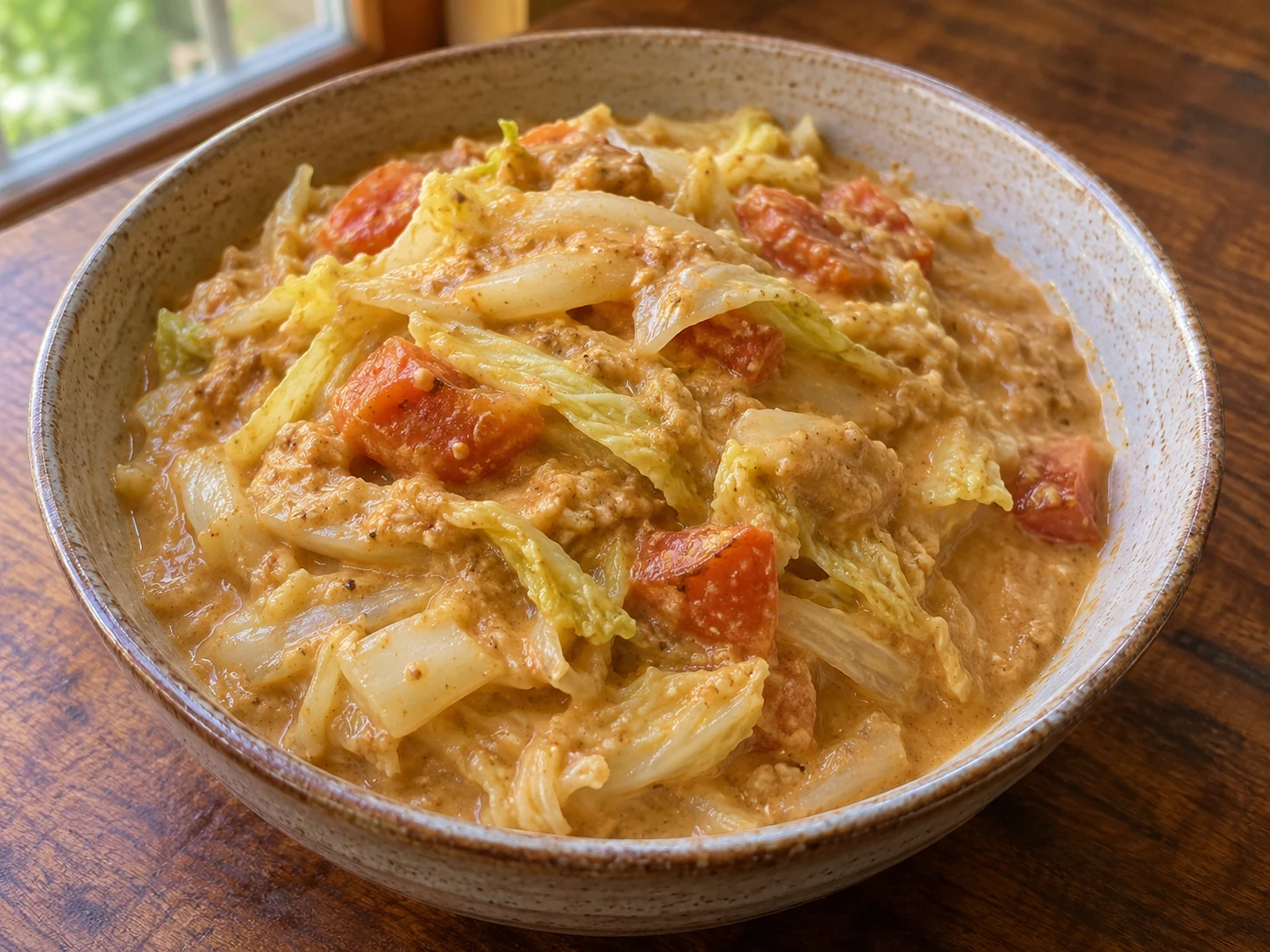
Ingredients
- 800 g trimmed Chinese cabbage
- 160 g raw unsalted groundnuts, finely ground
- 250 g tomatoes
- 100 g onion
- 500 ml drinking water, including 200 ml for the groundnuts
- 2 g salt
Preparation
Remove damaged leaves and the hard base, wash, drain and weigh 800 g. Separate thick ribs from leafy parts; slice ribs finely and leaves into ribbons.
Dice tomato and slice onion. Mix groundnuts with 200 ml of the measured water.
Simmer the remaining 300 ml water with onion, tomato and cabbage ribs, partly covered, for 10 minutes.
Add leafy ribbons, stir in groundnut cream and salt and return to a gentle simmer.
Cook gently for 30 minutes with the lid ajar, stirring down to the bottom. Ribs should be tender and nuts should no longer taste powdery and raw.
Briefly uncover if too thin, or add hot water by spoonfuls if catching. Divide into four sides; prepare nshima separately.
Introduction
The ribs and leaves should both be tender in a cohesive, creamy relish rather than a quick stir-fry. Four portions are sides, without nshima. Groundnuts cook gently in the vegetable liquid; regular stirring is more effective than high heat.
Cultural context
Zambian Kitchen lists Chinese cabbage among vegetables prepared as ifisashi. This weighed home version specifies the actual cabbage and differs from the spinach or pumpkin-leaf version already catalogued. It omits bicarbonate, relying on controlled cooking rather than claiming a single universal family formula.
Tips
Start ribs before leaves.
Stir the pan corners.
No added oil does not mean fat-free.
Planning
Use napa-style Chinese cabbage, not an unannounced white-cabbage substitute. Trim before weighing, separate ribs from leaves and wash out grit. Cut ribs finer and start them earlier. Use fresh food-grade raw groundnuts, finely ground and premixed with water. Stir into corners as the sauce thickens.
Serving
Taste a cooled rib: it should yield easily. Reduce only after tenderness is achieved. Loosen a thickened resting sauce with hot water, divide sauce and cabbage equally and clearly declare peanuts.
Storage
Refrigerate leftovers promptly in small shallow containers. Reheat with a little water, stirring until hot throughout. Freeze dated portions if desired, thaw in the refrigerator and expect softer cabbage. Keep other meal components separate.
Variations
Pure unsweetened, unsalted peanut butter makes a smoother announced adaptation; start with less mixing water and adjust. Serve chilli separately. Fish or meat would require another weighed recipe and revised allergens.
Accompaniments
Serve with separately prepared nshima or plain rice; beans or fish may complete the meal. These additions are excluded from portions and nutrition.
Nutrition notes
Estimates cover one quarter without sides. Groundnuts contribute protein, fat and energy; vegetables fibre. No added oil does not mean no fat. Generic profiles are not a local laboratory analysis.