Soya chunk stew
Textured soya pieces simmered in tomato gravy with potatoes, carrots and green pepper for a vegetable-based family dish.
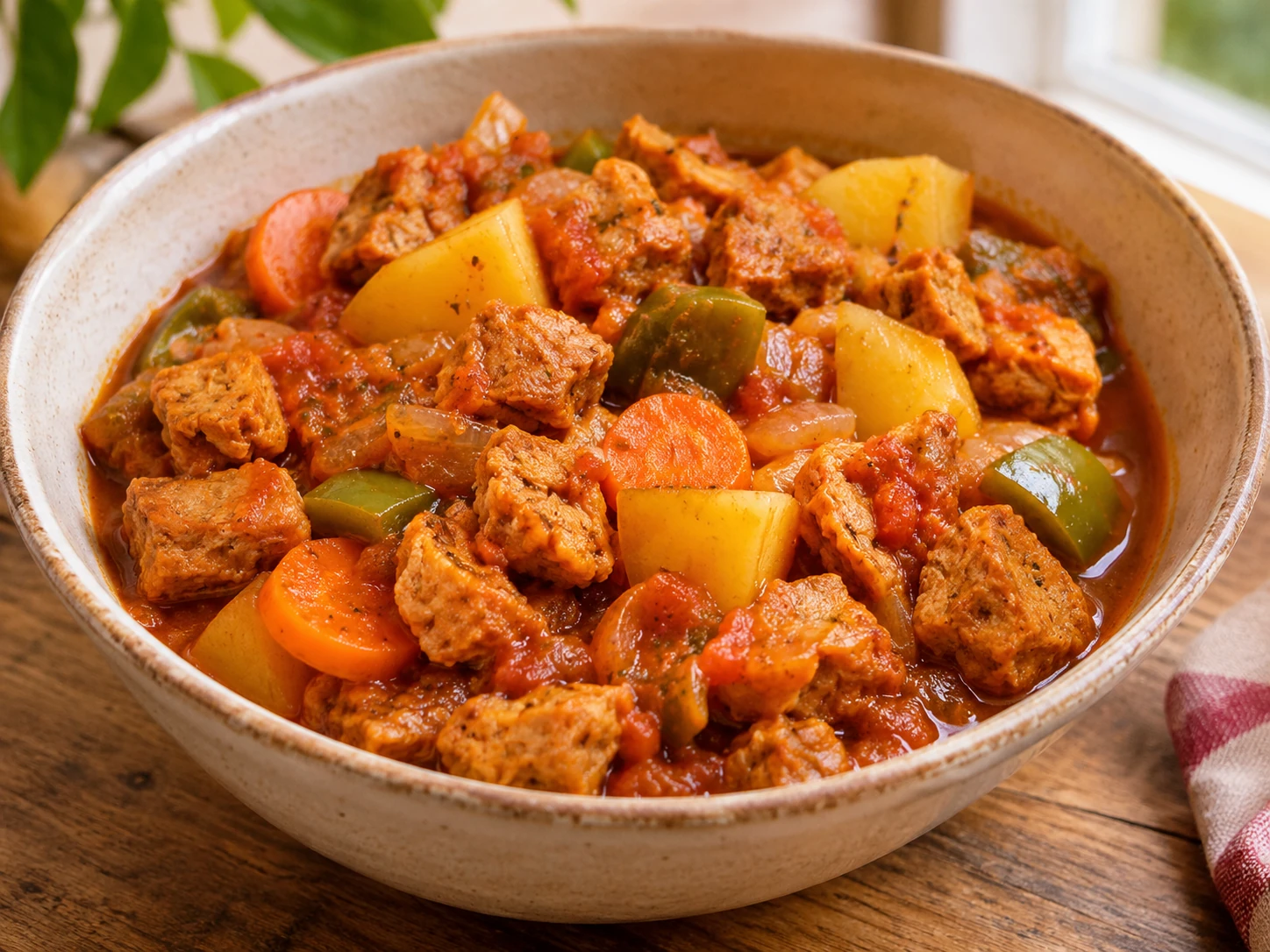
Ingredients
- 160 g dry plain textured soya chunks
- 300 g peeled potatoes
- 200 g prepared carrots
- 150 g deseeded green pepper
- 300 g tomatoes
- 120 g onion
- 8 g garlic
- 25 g vegetable oil
- 1 g ground turmeric
- 1 g ground black pepper
- 2 g salt
- 800 ml boiling water for soaking, to be drained
- 350 ml drinking water for the sauce
Preparation
Cover the soya with 800 ml boiling water for 20 minutes, or follow the manufacturer’s instructions. Drain and gently squeeze once cool enough to handle.
Meanwhile, cut potatoes into 2 cm cubes, carrots into half-rounds and pepper into pieces. Slice onion, chop garlic and dice tomatoes.
Heat the oil in a sauté pan. Brown the drained soya over medium heat for 7 minutes. Add onion and garlic and cook for 5 minutes without burning.
Add tomato, turmeric, pepper and salt and cook for 5 minutes. Add potatoes, carrots and the separate 350 ml sauce water. Bring to a gentle simmer, cover and cook for 10 minutes.
Add green pepper and cook for about 8 minutes more, until roots are tender and the soya has absorbed sauce. Continue if necessary.
Uncover briefly if too watery or add a spoonful of hot water if dry. Taste and divide into four portions. Any cereal accompaniment is prepared separately.
Introduction
Soya chunks take up the onion and tomato flavours while the roots soften around them. The finished dish should be moist, with neither watery gravy nor dry, rubbery centres. Begin soaking while preparing the vegetables. Keep the drained soaking water separate from the measured water actually used in the sauce.
Cultural context
Soya chunks are documented in contemporary Zambian home cooking, including a vegetable preparation from Zambian Kitchen. This is not presented as an ancient ritual dish. The weighed adaptation is entirely plant-based: it omits the source’s beef cube and gravy thickener, relying on reduced tomato and potato for body. No unverified local name is assigned.
Tips
Weigh soya dry before soaking.
Follow the packet and check allergens.
Discard soaking water; use separate sauce water.
Planning
Use plain dry textured soya chunks, not tofu, dried beans or soy sauce. Check the packet for added salt, flavourings and allergens; follow its soaking and cooking instructions. Let soaked pieces cool enough before squeezing gently. Drained chunks brown more readily. Cut potatoes evenly and add pepper late so it does not collapse before the roots are tender.
Serving
Test a cooled piece of potato, carrot and soya separately. Roots should yield to a fork and soya should be moist inside. If not ready, continue gently with a little water rather than reducing too early. Share chunks, vegetables and sauce evenly. Stir after holding because soya absorbs liquid; a spoonful of hot water can restore the gravy.
Storage
Refrigerate leftovers promptly in small clean containers. Rehydrated soya is a moist cooked dish, not a shelf-stable dry product. Reheat only the amount needed with a little water until hot throughout. Freezing is possible but potatoes may become crumbly; thaw in the refrigerator. Store unused dry chunks according to their packet and retain the composition details.
Variations
Offer chilli separately if desired. Suitable vegetable stock can replace sauce water, reducing salt according to the label; meat cubes would remove the plant-based character. Pumpkin can replace some potato, with cooking adjusted. Tofu needs another method and cannot inherit the same nutrition figures.
Accompaniments
The stew already contains potatoes. Serve as it is with separately prepared greens, or add nshima or rice to suit appetite. Additional cereals are outside this recipe’s nutrition. A simple fresh vegetable garnish can contrast with the warm gravy.
Nutrition notes
Textured soya contributes protein; potatoes and carrots supply carbohydrate and the vegetables fibre. Estimates use the dry soya weight before soaking, weighed vegetables and measured oil. They vary by brand and exclude additional nshima or rice.