Chimpapila with groundnuts
Bean leaves slowly simmered and bound with groundnuts to make a tender, substantial vegetable relish.
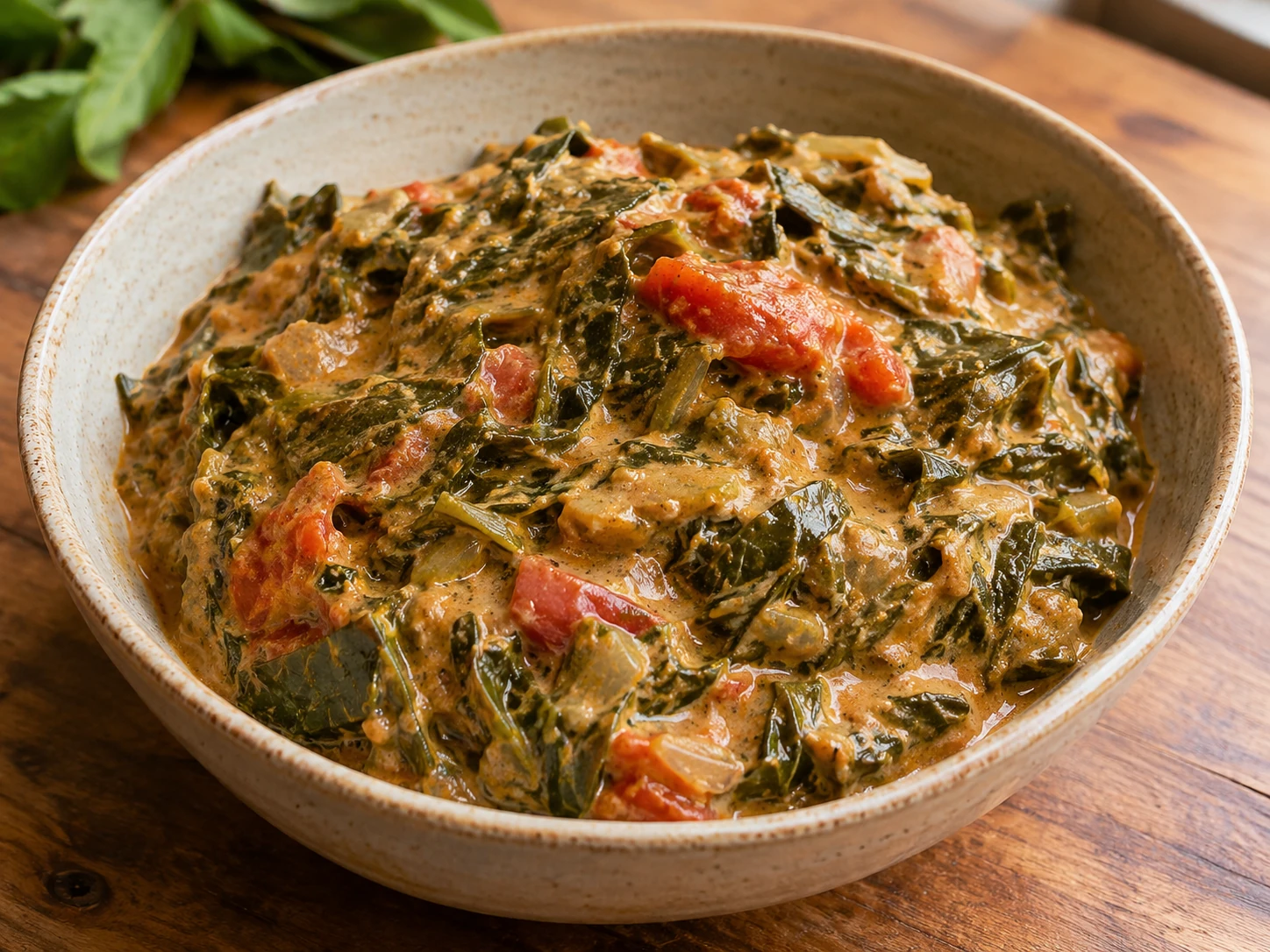
Ingredients
- 600 g food-grade chimpapila bean leaves, trimmed weight
- 120 g raw unsalted groundnuts, finely ground
- 250 g tomatoes
- 100 g onion
- 600 ml drinking water, including 200 ml for the groundnuts
- 2 g salt
Preparation
Use leaves identified and sold for food as chimpapila. Remove tough stems, wash carefully and drain. Roughly cut larger leaves.
Dice the tomato and slice the onion. Mix the ground raw nuts with 200 ml of the measured water.
Bring the remaining 400 ml water to a simmer. Add leaves, tomato and onion. Partly cover and cook gently for 30 minutes, stirring several times.
Add groundnut cream and salt. Return to a gentle simmer and cook for another 30 minutes, stirring to the bottom regularly.
Test a small stem. If still fibrous, add a little hot water and cook longer. Finish uncovered for 5 minutes to obtain a coating sauce.
Divide into four side portions and serve with separately prepared nshima. This adaptation omits bicarbonate and allows enough time to soften the leaves.
Introduction
Chimpapila can require longer cooking than delicate greens. The veins and small stems must soften before the sauce is considered finished. Groundnuts bind the leaves while tomato and onion form a quiet background. Prepare this four-portion side before making nshima so the final cooking is not rushed.
Cultural context
Zambian Kitchen identifies chimpapila as bean leaves in Bemba usage and documents a groundnut preparation. Do not automatically translate the name as cowpea leaves without identifying the supplied plant. This weighed adaptation omits the source’s bicarbonate, relying instead on trimming and sufficient simmering; maturity affects the time needed.
Tips
Use identified food-grade leaves.
Do not assume chimpapila always means cowpea leaves.
Check tenderness before reducing the sauce.
Planning
Buy leaves intended for human consumption from a supplier who can identify them. Do not pick arbitrary bean foliage: variety, crop treatment and food use are not interchangeable. Weigh 600 g after removing thick stems and damaged leaves. Lift washed leaves from the water so grit remains behind. Use fresh food-grade groundnuts; a rancid smell is not corrected by cooking. Premix the fine powder with water and stir the thickening sauce to the bottom.
Serving
Taste a cooled leaf and fine stem. If still firm while the sauce is thick, add hot water and simmer partly covered rather than continuing to reduce. Once tender, stir gently so no dry groundnut clumps remain. Divide leaves and sauce evenly and clearly declare the peanut allergen.
Storage
Cool leftovers in small shallow containers and refrigerate promptly. Add a little water when reheating and stir until hot throughout; an unstirred thick mass may burn underneath while staying cold inside. Portions may be frozen and thawed in the refrigerator, with a softer result. Keep sides separately to avoid reheating more than required.
Variations
Roasted nuts give a different toasted flavour but do not shorten leaf cooking. Pure peanut butter may be used in an announced adaptation with gradually adjusted water. Avoid sweetened products. Serve chilli separately. Dried fish would add salt and another allergen and is not part of this vegetable version.
Accompaniments
Nshima gathers the groundnut sauce; serve it separately to adjust each person’s cereal portion. Other vegetables, fish or legumes can complete the meal. Four portions here mean four sides, not four complete meals.
Nutrition notes
Groundnuts supply protein and fat; leaves contribute fibre. Actual composition depends on the plant supplied. The numerical estimate uses a generic bean-leaf profile and weighed ingredients, excludes nshima and is not an analysis of the local product.