Fried kapenta
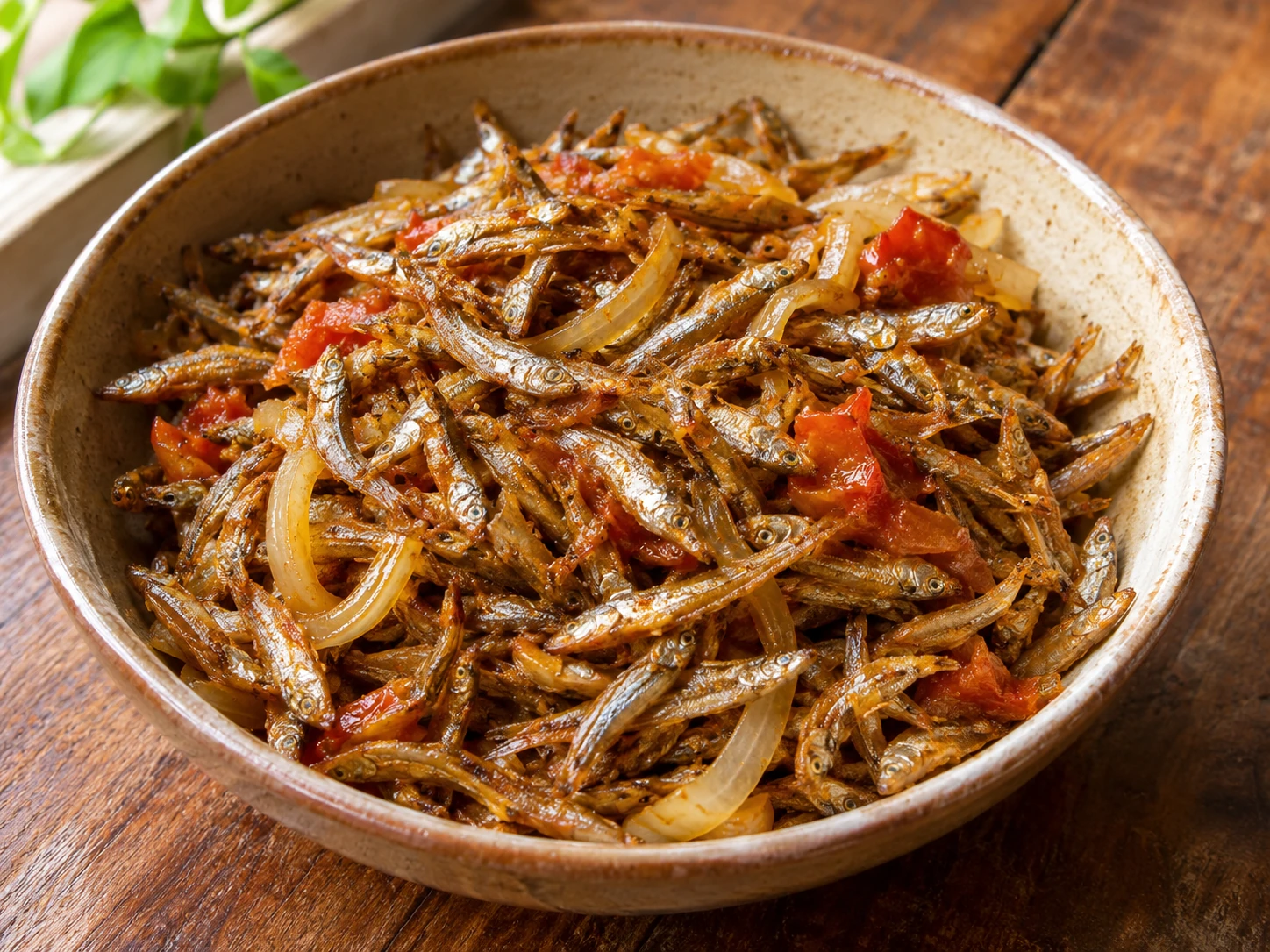
Tiny dried fish browned in a pan, then briefly combined with onion and tomato for a concentrated relish.
Ingredients
- 250 g food-grade dried kapenta
- 120 g onion
- 200 g tomatoes
- 40 g vegetable oil
- 50 ml drinking water
- 1 g mild curry powder, optional
- Salt only after tasting, depending on the fish
Preparation
Sort and briefly rinse the fish. Soak in clean drinking water for 5 minutes, drain and dry thoroughly.
Slice the onion and dice the tomatoes. Heat the oil in a wide pan over medium heat without letting it smoke.
Add the dry fish in a shallow layer and fry gently for 8–10 minutes, turning carefully until golden. Use two batches if necessary, sharing the oil.
Add onion and optional curry. Cook for 3 minutes, stirring gently to avoid breaking up all the fish.
Add tomato and 50 ml water. Cover over low heat for 5 minutes, then uncover and reduce for about 2 minutes.
Let a sample cool briefly before tasting. Add salt only if needed. The finished dish should be concentrated, with visible fish rather than a pool of broth.
Divide into four side portions. Serve with separately prepared vegetables and nshima. Declare the fish allergen and adapt the meal for diners who cannot manage small bones.
Introduction
Drying the rinsed fish and giving them enough pan space are essential. They first develop colour, then receive only enough tomato moisture to bind the relish. Four portions are side servings: their intense flavour accompanies a larger portion of nshima. This version differs from the longer tomato stew and the groundnut version already catalogued.
Cultural context
Kapenta is a familiar Zambian food. Zambian Kitchen describes a fried preparation finished with onion and tomato. This weighed home adaptation uses measured oil and little water. Curry is optional. Fish size, drying and salt content vary, so colour and texture matter alongside the stated cooking time.
Tips
Dry the fish thoroughly before frying.
Do not overcrowd the pan.
Taste before adding salt.
Planning
Use properly stored food-grade fish from an identifiable supplier. Reject mouldy, damp or abnormal-smelling fish; rinsing cannot repair spoilage. Sort before wetting, then drain and spread on a clean towel. Wet fish cause splattering and steam rather than brown. A broad spatula and a wide pan help preserve their shapes; fry in two batches rather than piling them up.
Serving
Serve after reducing the tomato. Long covered holding softens the browned fish. Reheat briefly with only a spoonful of water if necessary. Kapenta is often eaten whole, but its small bones are unsuitable for some diners with chewing or swallowing difficulties; choose appropriately prepared alternative fish for them. State clearly that the dish contains fish.
Storage
Refrigerate cooked leftovers promptly in a small closed container. Once moistened with tomato, the dish no longer keeps like the original dried product. Reheat only the portion needed until hot throughout; expect a softer texture. Store unused dried fish as directed on the packet, protected from moisture and contamination.
Variations
Omit curry for a clearer fish flavour or offer chilli separately. Much more tomato and water would turn this into a stew. Fresh kapenta is more perishable and needs a different recipe: it is not a gram-for-gram substitute for dried fish. Groundnut sauce also changes the identity and adds an allergen.
Accompaniments
Serve with nshima and a separately cooked vegetable such as okra or pumpkin leaves. Keep the other dishes lightly salted if the fish is already salty. Plain rice is another home option and is excluded from the estimate.
Nutrition notes
Kapenta contributes protein. Dried whole-fish composition varies with species, drying and salting; sodium or calcium cannot be established from the name alone. Energy and macronutrient estimates are indicative, per quarter of the dish and without sides.