Impwa with tomato
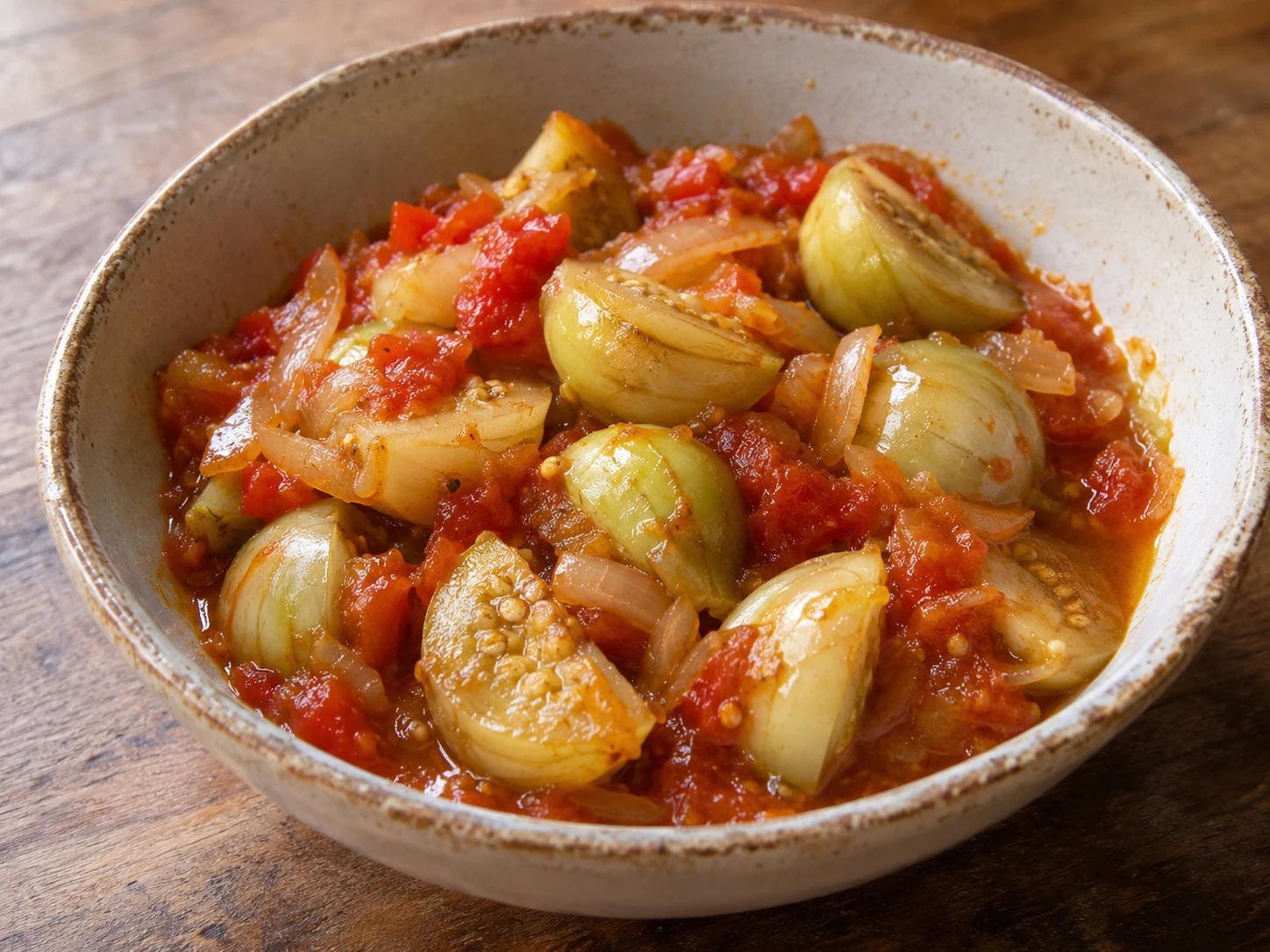
Small African garden eggs softened with onion and tomato in a short sauce that retains their mild bitterness.
Ingredients
- 700 g food-grade African garden eggs (impwa), weighed without stalks
- 300 g tomatoes
- 120 g onion
- 30 g vegetable oil
- 100 ml drinking water, added gradually
- 2 g salt
Preparation
Wash the impwa, remove stalks and cut into halves or quarters according to size. Remove damaged areas. Slice the onion and dice the tomatoes.
Warm the oil over medium heat in a wide sauté pan. Add the impwa and turn regularly for 10 minutes; do not let the oil smoke.
Add the onion and cook for 5 minutes. If the pan starts catching, lower the heat and add a spoonful or two of the measured water.
Stir in the tomato and salt. Add the remaining water as needed, cover and simmer gently for 10 minutes.
Test a thick quarter: it should yield easily. Cook uncovered for about 5 more minutes to finish tenderising and obtain a short sauce.
Divide into four side portions and serve with separately prepared nshima and another dish if desired.
Introduction
Cut garden eggs into evenly sized pieces, soften them in measured oil and finish with tomato and onion. The pieces should remain identifiable but tender at the centre. Tomato rounds their naturally variable bitterness rather than hiding it completely. This recipe makes four vegetable side portions, without peanuts or fish.
Cultural context
Impwa is used in Zambia for African garden eggs. Zambian Kitchen documents this oil, onion and tomato preparation. The quantities here are a weighed home adaptation. This separate relish differs in serving size from the complete nshima-and-impwa meal already listed; they are related preparations, not unrelated traditions.
Tips
Use edible garden eggs, not decorative fruits.
Add measured water rather than extra oil when the pan catches.
Check the centre before serving.
Planning
Buy firm food-grade fruits from an identifiable seller. Colour alone does not identify a variety. European purple aubergine is an announced substitute, not an identical product. Wash before cutting and keep sound thin skin. Use a wide pan so the pieces can be turned rather than crushed. If oil is absorbed, lower the heat and use measured water instead of repeatedly adding oil.
Serving
Test the thickest piece with a knife: reduced tomato does not prove the vegetable is cooked. Add a little hot water and cover again if necessary; uncover only once tender. Fold gently with a broad spatula and divide both vegetables and sauce equally.
Storage
Put leftovers in a shallow clean container and refrigerate promptly. Reheat gently with a little water until hot throughout, turning carefully. Freezing is possible but softens the flesh; thaw in the refrigerator. Strong reheating will not restore a freshly sautéed texture and may simply dry the sauce.
Variations
Extra ripe tomato can soften the flavour, but reduce its liquid sufficiently. Offer chilli separately. Peanut sauce or dried fish would create other versions with different allergens and salt levels; neither is included. Do not automatically add sugar to mask the vegetable’s character.
Accompaniments
Serve with nshima and separately cooked beans, fish or meat. Plain rice is another home option. The cereal and other dishes are not included in the portion calculations.
Nutrition notes
The relish supplies vegetables, fibre and energy from measured oil. It does not by itself replace a planned portion of legumes, fish or meat. Estimates cover one quarter of the preparation, excluding nshima; the actual garden-egg variety affects the result.