Kalembula with groundnuts
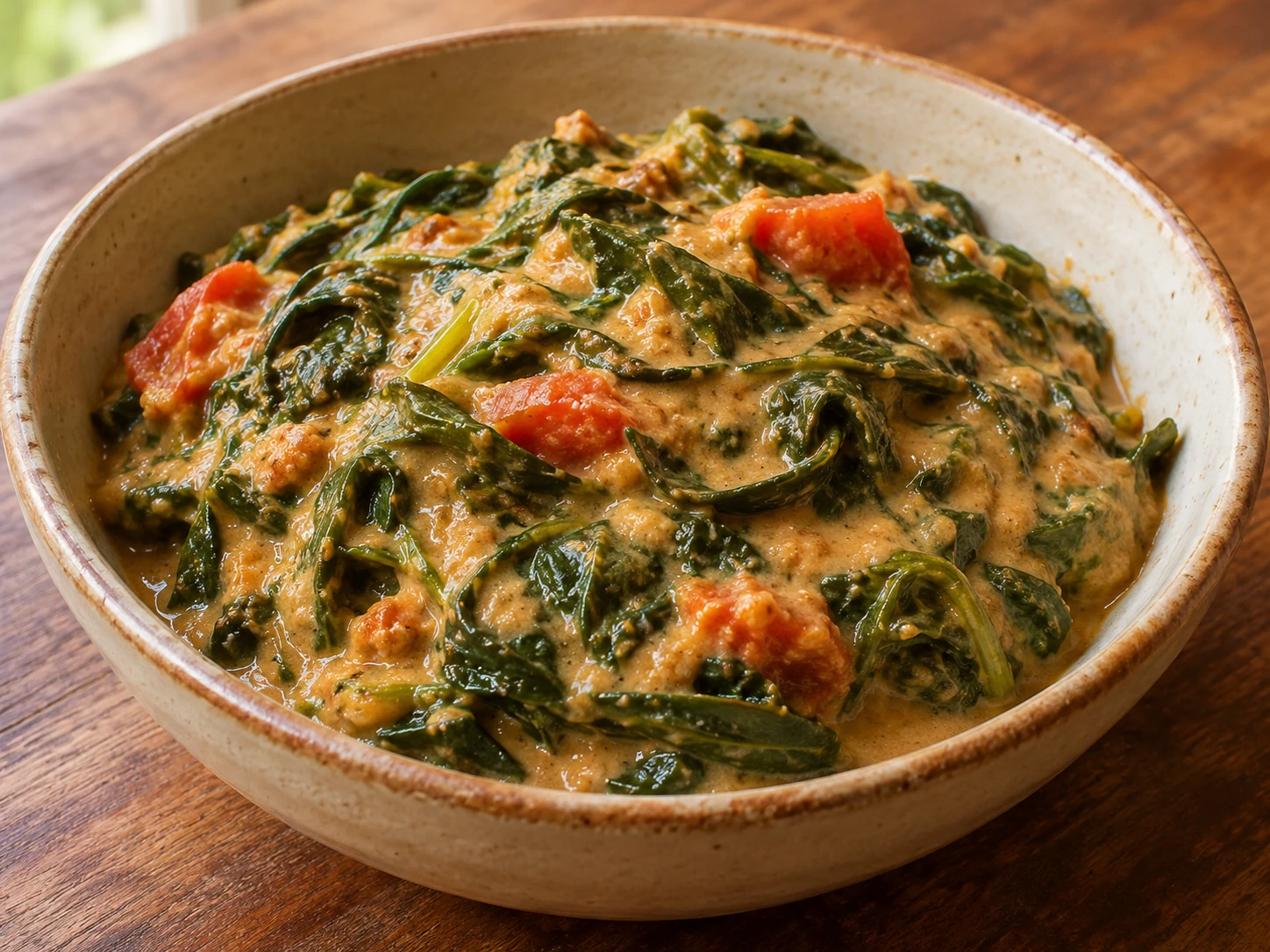
Sweet potato leaves gently cooked in a tomato and groundnut sauce to accompany nshima.
Ingredients
- 700 g food-grade sweet potato leaves, weighed after removing thick stems
- 150 g unsalted roasted groundnuts, finely ground
- 250 g tomatoes
- 100 g onion
- 10 g vegetable oil
- 350 ml drinking water, including 150 ml for the groundnuts
- 2 g salt
Preparation
Remove tough stems and damaged leaves. Wash thoroughly, lifting the leaves out of each change of water, then drain. Keep small leaves whole and tear larger ones. Weigh 700 g prepared leaves.
Dice the tomatoes and slice the onion. Mix the ground nuts with 150 ml of the measured water to make a loose cream.
Warm the oil in a heavy pan. Soften the onion over medium heat for 5 minutes; add the tomato and cook for another 5 minutes.
Add the leaves in handfuls with the remaining 200 ml water. Cover and simmer gently for 5 minutes, then turn the leaves.
Stir in the groundnut cream and salt. Return to a gentle simmer and cook partly covered for 20 minutes, stirring down to the bottom regularly.
Check that fine stems are tender and the sauce coats the leaves. Add a little hot water and cook longer if necessary; briefly uncover to reduce an overly thin sauce.
Divide into four side portions. Serve hot with separately prepared nshima; the nutrition excludes the nshima.
Introduction
This dish turns a generous pile of leaves into a soft, cohesive relish. Groundnuts thicken the sauce, tomato balances the flavour and the leaves remain recognisable. Start the relish before making nshima: it can wait briefly over very low heat, whereas the maize paste is best served freshly cooked. A spoonful of hot water restores a sauce that has thickened while waiting.
Cultural context
Kalembula is the Zambian culinary name for sweet potato leaves. Gloria Miyoba documents a groundnut version in her Kitwe recipe series. This is a weighed home adaptation using roasted groundnuts and measured oil, distinct from the plain tomato-fried kalembula already in the catalogue. Spinach makes a different adaptation, not an identical ingredient.
Tips
Weigh trimmed leaves, not the whole bunch.
Stir the bottom after adding groundnuts.
Peanut butter does not remove the peanut allergen.
Planning
Buy leaves sold for food, not foliage from an ornamental plant. Weigh after trimming; lift washed leaves out of the basin so grit stays behind. Grind the nuts finely and mix them with the reserved water before adding them. Stir to the bottom as the sauce thickens. Do not substitute cassava leaves: they require different processing.
Serving
A spoon drawn through the pan should leave a channel that closes slowly, without clear liquid pooling at the edge. Loosen with hot water if necessary, then reheat gently. Stir before dividing so each serving contains leaves and sauce. Clearly tell diners that the dish contains peanuts.
Storage
Transfer leftovers to shallow clean containers and refrigerate promptly. Reheat only the amount needed with a little water, stirring until hot throughout. Portions may be frozen after cooling, dated and thawed in the refrigerator; the leaves become softer. Avoid repeated cooling and reheating.
Variations
The same weight of pure unsweetened, unsalted peanut butter can replace the ground nuts. Begin with slightly less mixing water and adjust. With frozen leaves, follow the packet and add cooking water gradually because they may release liquid. Serve chilli separately if desired.
Accompaniments
Nshima, plain rice, separately cooked beans or fish can complete the meal. These additions are outside the stated ingredient quantities and nutritional estimate.
Nutrition notes
Groundnuts contribute protein and fat; leaves and tomato supply fibre. Values are estimates for one quarter of the relish, without nshima, and vary with the leaves and groundnuts used. They are not laboratory measurements.