Pepe fish
Whole fish with a thin peanut coating, in an explicitly stated oven adaptation.
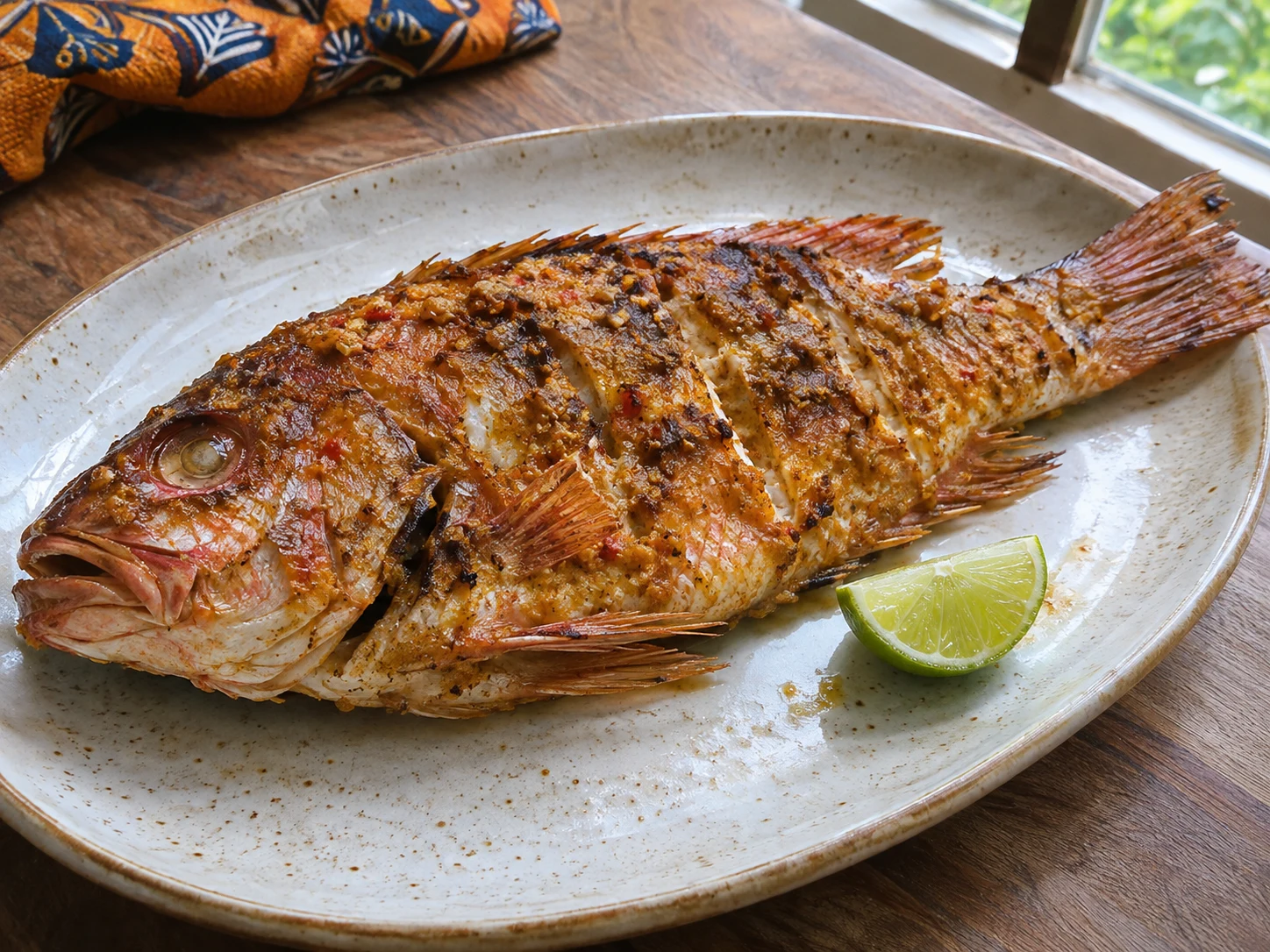
Ingredients
- 2 whole fish, 600–700 g each, gutted and scaled
- 40 g pure unsweetened peanut paste
- 30 ml lime juice
- 15 ml vegetable oil
- 10 g peeled fresh ginger
- 2 garlic cloves
- 30 ml water to loosen peanut paste
- 3 g salt
- 1 pinch ground chilli, optional
Preparation
Check that the fish have been gutted and scaled. Pat dry and make two shallow cuts on each side.
Mix lime juice, oil, crushed garlic, grated ginger, salt and optional chilli. Spread over the fish and inside cavities. Cover and refrigerate for 20 minutes.
Preheat a conventional oven to 210°C. In a clean bowl mix peanut paste with 30 ml water; do not add marinade that touched raw fish.
Place fish in a dish large enough for one layer. Bake 15 minutes.
Brush with a thin layer of loosened peanut paste and bake another 10–15 minutes, watching the surface.
Check the thickest part: flesh must be opaque and detach easily. Continue if required and protect the top if peanut coating darkens too quickly.
Lift the fillets and remove bones carefully before dividing the flesh between four people.
Introduction
This pepe fish uses whole fish roasted with a thin peanut coating. The oven is an explicit household adaptation of an outdoor grilled preparation. Peanut paste is added after an initial cooking stage to reduce its exposure to strong heat. The peanut seasoning distinguishes this recipe from the plain roast fish already in the catalogue.
Cultural context
Sierra Leone Tourism lists pepe fish among the country's fish dishes. These household quantities and the oven method are original editorial choices, without claiming to reproduce a wood-fired grill. Source: https://tourismsierraleone.com/stories/5-seafood-dishes-to-try-in-sierra-leone/
Planning
🐟 The weight includes head, skin and bones, so it is not the edible yield. Choose two similarly sized fish and a dish that holds them without overlap. Check the cavity, pat dry and cut shallowly without severing the fillets. Keep chilled while preparing the seasoning.
🫚 Finely grate ginger and crush garlic for even distribution. Measure lime juice rather than assuming all fruits yield the same amount. Refrigerate during the short marinade. Lime changes the surface but does not replace cooking; an extended acidic rest can alter texture without ensuring doneness.
🥜 Use pure unsweetened peanut paste. Loosen the measured 40 g with the 30 ml water in a clean bowl. Keep this separate from raw-fish marinade. A brush that has touched the fish must not then dress a ready-to-eat salad. The coating should be thin and shared between both fish, not pooled around them.
🔥 Preheat before cooking. Bake first without the peanut coating, then brush and return promptly. The total 25–30 minutes is a guide affected by thickness and oven behaviour. Surface colour alone is insufficient. Examine the thick part near the backbone and continue in short increments if necessary. Protect the top if it browns too rapidly.
🍽️ Lift upper flesh with a wide spatula, remove the central backbone and then lift the remaining flesh. Inspect portions for small bones, especially for people who cannot easily identify them. Share the edible flesh among four people. Rice and vegetables are separate accompaniments. Declare the fish and peanut allergens clearly. Cool leftovers promptly, refrigerate and reheat the required portion thoroughly rather than repeatedly warming the whole dish.
Nutrition notes
Fish supplies protein; peanut paste contributes fat. Edible yield depends on species and trimming. Precise nutrition figures remain to be calculated. Allergens: fish and peanuts.