Lafidi
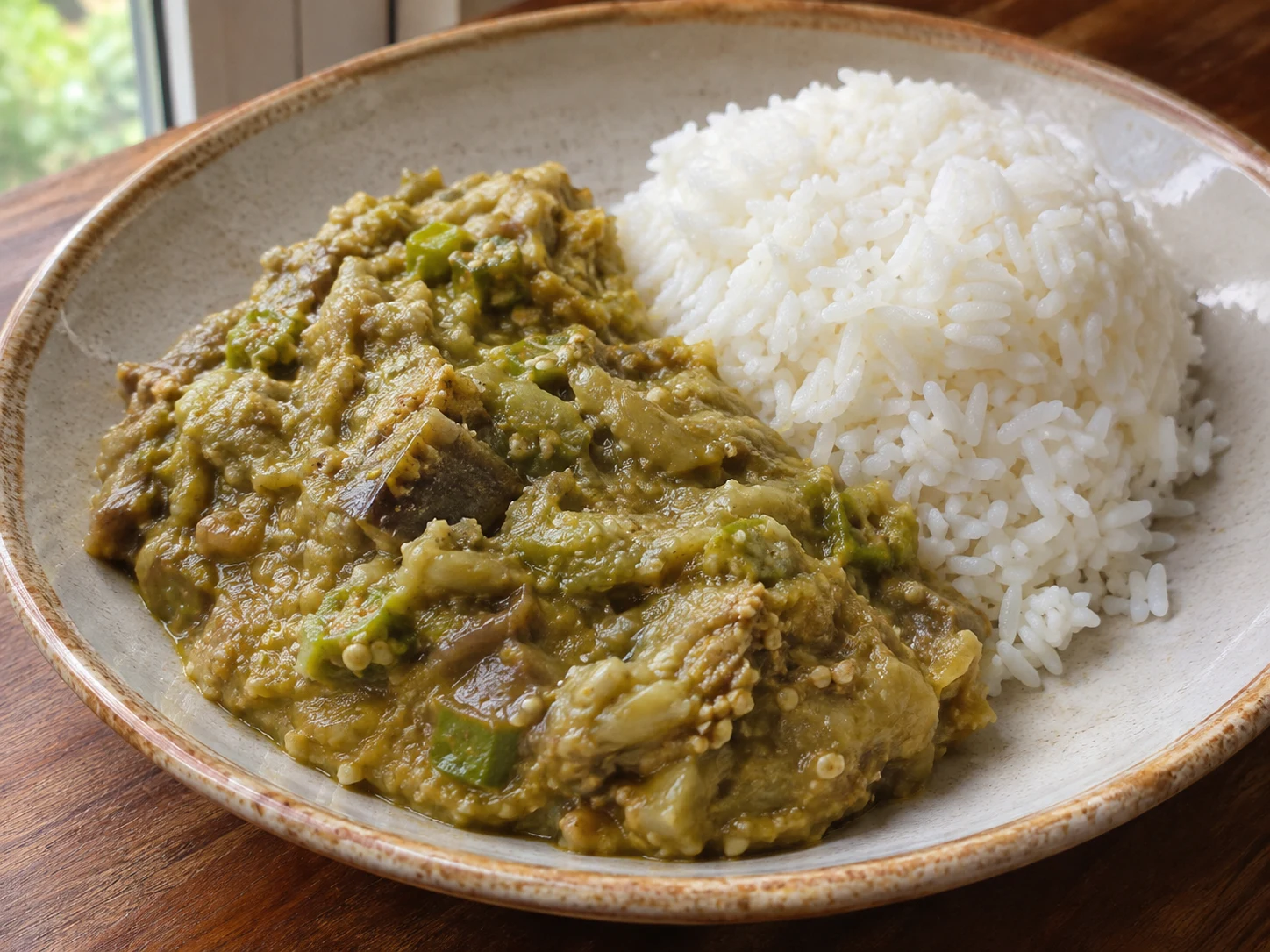
A thick mashed aubergine and okra accompaniment with sesame and dried fish.
Ingredients
- 500 g trimmed edible aubergines
- 200 g trimmed fresh okra
- 80 g peeled onion
- 20 g sesame seeds
- 15 g food-grade dried fish powder
- 15 ml vegetable oil
- 250 ml water
- 1 pinch chilli, optional
- Salt only after tasting, depending on the fish powder
Preparation
Wash the vegetables. Cut aubergines into small pieces and okra into rounds. Slice the onion.
Toast sesame in a dry pan over moderate heat for 2–3 minutes, stirring. Remove when fragrant, cool slightly and grind.
Put onion and aubergines in a saucepan with oil and 250 ml water. Cover and simmer for about 15 minutes.
Add okra, dried fish powder and optional chilli. Cook for another 10–12 minutes until easily mashed. Add a little hot water if the base dries out.
Off the heat, mash with a suitable pestle or fork, retaining a rustic texture. Mix in the ground sesame.
Return to low heat for 2 minutes, taste and decide whether salt is needed. Serve as an accompaniment with separately cooked rice.
Introduction
This lafidi is a thick mashed vegetable sauce enriched with sesame and dried fish. Aubergine provides soft flesh and okra gives natural body. The intended texture is rustic rather than a smooth purée or watery soup. Rice shown in the illustration is an accompaniment and is not included in the sauce ingredients. The quantities provide four accompaniment portions.
Cultural context
Sierra Leone Tourism describes lafidi as an accompaniment. This original home adaptation uses ordinary aubergines and fresh okra in measured quantities. It does not suggest that every similarly named preparation is identical. Source: https://tourismsierraleone.com/stories/5-seafood-dishes-to-try-in-sierra-leone/
Planning
🍆 Weigh aubergines after trimming. Ordinary purple aubergines are an explicitly stated availability choice, with possible flavour and texture differences from local varieties. Wash before cutting. Use only identified food-market vegetables. Wash okra before trimming and slicing; its natural mucilage helps bind the sauce and does not need correcting with flour.
🥣 Use a medium saucepan with a substantial base. The 250 ml water is a starting amount, alongside moisture released by vegetables. A very wide pan evaporates faster. Keep the first stage covered and check that the base remains moist. Add hot water in small amounts if needed instead of adding more oil. The 15 ml oil covers the whole batch.
🌰 Toast sesame gently in a dry pan, stirring, and transfer to a plate before it burns. Residual pan heat continues cooking seeds. Grind once slightly cooled. Ground sesame distributes more evenly than whole seeds. Do not increase it arbitrarily into a heavy oily paste. This recipe contains sesame and must not be considered suitable for a sesame allergy.
🐟 Choose food-grade dried fish powder in sound packaging and follow its storage instructions. Salt content and strength vary, so taste the finished sauce before adding salt. Do not automatically add a stock cube. Mix the powder through the vegetables while they cook, avoiding concentrated salty pockets. A fish-free adaptation would taste different and must be labelled accordingly.
🥄 Mash only once the vegetables are tender. Use a fork or a pestle suitable for the saucepan; transfer to a heatproof bowl if its coating could be damaged. A blender is unnecessary and could make the sauce much smoother than intended. Mix in ground sesame near the end and reheat briefly. The mixture should sit beside rice rather than run like soup. Adjust with small spoonfuls of hot water or gentle reduction.
🍚 Cook rice separately and adapt its portion to the meal. Use a clean serving spoon. Stir the sauce before serving if it has stood briefly. Cool leftovers promptly in shallow containers and refrigerate. Reheat the amount required thoroughly, adding a little water if necessary. Never leave the preparation lukewarm on the table for hours.
Nutrition notes
Vegetables provide fibre. Sesame contributes fat; dried fish adds protein and potentially substantial sodium depending on the product. Nutrition values remain to be calculated. Allergens: fish and sesame.