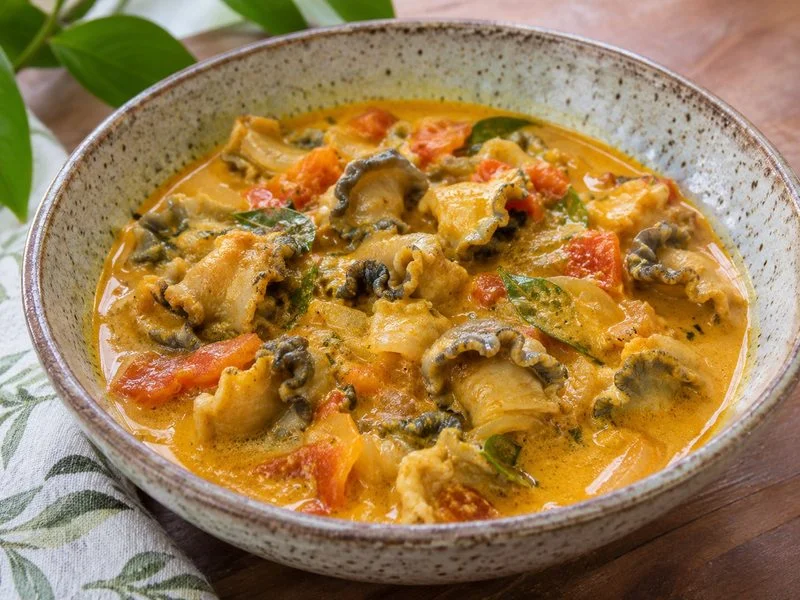
Kari bernik, limpet curry
Limpets, known locally as bernik, are served in a reduced coconut sauce. The recipe uses cooked meat from a food supplier. Recipe 123 covers clam and moringa curry.
Ingredients
- 400 g fully cooked limpet meat ready to reheat
- 260 ml coconut milk
- 110 g onion
- 150 g tomato
- 2 garlic cloves
- 10 g ginger
- 2 tsp curry powder
- 15 ml oil
- Pepper
Preparation
Confirm the limpets are fully cooked. Drain and halve large ones if needed. Follow supplier reheating instructions.
Brown sliced onion lightly in oil. Add garlic, ginger, curry powder and crushed tomato. Cook down briefly.
Add coconut milk and simmer gently until the sauce coats a spoon. Return the limpets and reheat as directed.
Taste before salting. Serve small portions with rice or roast breadfruit.
Introduction
Limpets, known locally as bernik, are served in a reduced coconut sauce. The recipe uses cooked meat from a food supplier. Recipe 123 covers clam and moringa curry.
Cultural context
UN Tourism lists kari bernique among Seychellois specialities. This adaptation uses a coconut base and ready-cooked limpets.
https://www.untourism.int/africa/african-gastronomy/seychelles
Planning
Checking the product before starting
For kari bernik, buy fully cooked limpets ready to reheat. The weight is without shells. Read and keep the product directions to hand. Drain any packing liquid before weighing. Check the size and halve large pieces for serving. If a tough area makes them hard to eat, ask the supplier how they were prepared. The recipe assumes a product already processed for home use.
Slice onion finely so it softens and does not dominate each bite. Prepare garlic, ginger and crushed tomato, keeping the tomato juice. Stir the coconut milk before measuring. Have rice or breadfruit ready, since limpets are added only to reheat as directed. Allow all the meat to touch the sauce without stacking. For a large batch, divide between two pans to keep a steady simmer.
Making the coconut sauce
Soften onion in oil until pale gold, then add garlic, ginger and curry powder. Stir briefly and add tomato. Cook down until the pieces soften and release juice. If the base dries first, lower the heat and stir more often. Add coconut milk once the tomato loses its firmness and simmer gently to reduce. The sauce should coat a spoon and still flow around the limpets. Check before adding them.
If it is still thin like broth, simmer uncovered. Adjusting after adding the limpets lengthens reheating. Loosen an overly thick sauce with a little hot water. Taste before salting and again after warming the meat. Some products are seasoned at purchase, so check the label. Add pepper at the end or offer it separately.
Reheating, portioning and serving with a starch
Add limpets and follow the supplier's reheating directions. Stir to coat each piece and stop when ready. Serve the meat first, then the sauce, so four plates receive similar amounts. For smaller portions, serve the starch separately so diners can choose their sauce. Plain rice absorbs the coconut juices. Serve the sauce beside roasted breadfruit to keep the textures distinct.
The culinary source lists limpet curry among Seychellois preparations. The estimate uses generic gastropod data as a broad guide for the meat. Limpet minerals may differ. The side is excluded. Weigh the drained meat and note the quantity per plate in your own trial. Share small pieces from the bottom with the larger pieces so the last diner gets enough.
Comparing with other seafood curries
For a meal with clam or prawn curry too, use separate dishes and identify the allergens in each. Kari bernik pairs the texture of limpets with coconut and tomato. Keep sauce ready and reheat the limpets just before serving, without holding them warm while waiting for another dish. Record the reducing time. It helps adapt to wetter tomatoes or another coconut milk without changing the amount of shellfish.
The size of the first limpet can affect how tender the batch seems. A large half may differ from whole small pieces. Divide large pieces first and add small ones. If the sauce needs more body, reduce it briefly and pour it over the cooked meat without reheating the meat again. Compare the tomato and coconut balance before adding limpets. For more sauce at the table, track its finished weight or volume as well as the coconut milk you started with.
Nutrition notes
Nutrition and allergens
Limpets supply protein. Coconut milk accounts for much of the fat. The recipe contains molluscs.
Estimated nutrition per serving
Calculation based on 4 servings.
Energy 276 kcal
Protein 18.3 g
Fat 17.6 g
Carbohydrate excluding fibre 8.8 g
Fibre 2.0 g
Calcium 40 mg
Iron 6.0 mg
Potassium 682 mg
Vitamin C 8 mg
Salt Not quantified in the source
Generic gastropod data approximate cooked limpets. Results, especially for minerals, are particularly uncertain.