Zi bigarad, calamondin drink
Juice from a small aromatic citrus fruit is diluted in a glass or jug. Tourism Seychelles distinguishes it from zi zoranz lokal. Local names vary, so identify the fruit before buying.
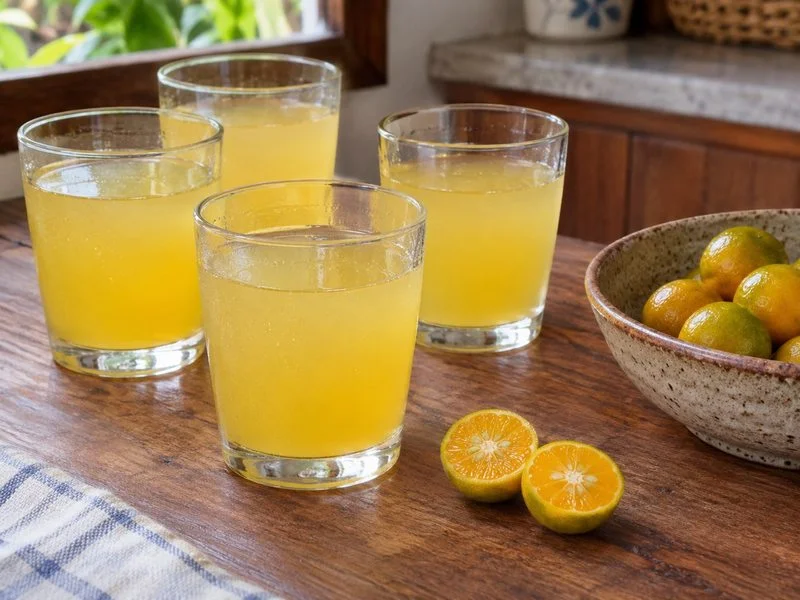
Ingredients
- 100–140 ml food-grade calamondin juice
- Cold water to make 800 ml
- 20–45 g sugar, depending on acidity
Preparation
Wash and halve the fruit. Squeeze without pressing the peel for long. Strain out seeds and measure the juice.
Dissolve 20 g sugar in a little water. Add 100 ml juice and top up with cold water. Taste and add more juice if needed.
Adjust sugar gradually and chill. Stir to serve. Refrigerate any excess juice.
Introduction
Juice from a small aromatic citrus fruit is diluted in a glass or jug. Tourism Seychelles distinguishes it from zi zoranz lokal. Local names vary, so identify the fruit before buying.
Cultural context
Tourism Seychelles calls zi bigarad Kasturi Orange Juice and lists it separately from local sour orange juice. This recipe uses calamondin and is distinct from the kumquat marmalade in recipe 80.
https://seychelles.com/blog-details/15596/highlights/guide-seychelles-most-common-authentic-creole-recipes
Planning
Identifying bigarad and getting ready to juice it
Here bigarad means calamondin sold for culinary use. The small fruit gives a tart juice. How many you need depends on size and pulp. Buy enough to measure the juice after pressing. The recipe gives millilitres rather than a fruit count. Wash, trim damaged parts and halve. Have a fine strainer and small measuring jug ready. There can be many seeds for the size of the fruit. Press in small batches to spot any that fall in.
Apply steady pressure without crushing the peel. Press subsequent fruit more gently if the peel flavour dominates. Let the pulp drain in the strainer before measuring. Keep a little fine pulp if you like, but remove seeds. Strained juice divides evenly among four glasses. If keeping pulp, stir the jug before the last servings. Keep pure juice separate until water and sugar are ready so you can begin at the lower end of the range.
Diluting gradually and chilling
Dissolve the initial sugar in a little water. Stir until no grains remain on the bottom. Add the first amount of juice, then most of the cold water. If you have reached the final mark, take out a few spoonfuls before adding more juice to keep the yield. Taste it cool in a small glass and adjust in small amounts. Strong calamondin may require only the lower amount. If mild, increase the juice gradually.
Once the dilution is right, adjust sugar if needed. Dissolve a little in a separate glass with a few spoonfuls of the drink and stir it back in. Chill and taste again before adding the last sugar. The range allows for variation in the fruit. Nutrition uses midpoints and a reference citrus. Record juice, added sugar and final volume to reproduce the drink. These are more useful than fruit count.
Serving in small glasses and distinguishing the citrus drinks
Stir and divide among four equal glasses. A chilled jug is enough without ice. Serve ice separately so diners can control dilution, since a glass left over ice loses flavour. For a snack, pair with a little kalou cake or galet mayok. It can also accompany breadfruit crisps with a condiment in another bowl. For several drinks, pour smaller servings and stir the jug between rounds.
The source distinguishes zi bigarad from the local sour-orange drink. The collection also has a similarly named kumquat marmalade. Use culinary calamondin for this drink. If names vary at the shop, describe the fruit and ask how it is used. After squeezing, judge juice strength and adjust water. Quantities in the other recipe may not apply. To compare drinks, use the same glass and serving temperature.
Making several jugs from one batch of juice
For a crowd, squeeze several batches and pool the juice before measuring. Make a trial jug, then use the same quantities by volume. Some riper fruit may taste milder, so combining makes adjustment easier. Chill each jug and stir before serving. Record the actual sugar if comparing with the fresh mango drink.
For a curry meal, taste the drink with rice and sauce. Acidity may seem different after a spicy bite. Keep the same dilution and pour a smaller serving if desired. For a snack, test it with the biscuit or cake. Palm wine cake and coconut cake may suit different sweetness levels. Dissolve any sugar in a small sample before pouring it back. Record unused pure juice so it is excluded from the yield of four glasses and can guide the next batch.
Nutrition notes
Nutrition and allergens
Fruit sugars and added sugar supply most of the carbohydrates. Record the exact amounts used.
Estimated nutrition per serving
Calculation based on 4 servings.
Energy 44 kcal
Protein 0.1 g
Fat 0.1 g
Carbohydrate excluding fibre 11.1 g
Fibre 0.1 g
Calcium 5 mg
Iron 0.1 mg
Potassium 54 mg
Vitamin C 9 mg
Salt Not quantified in the source
Mandarin juice is used as a proxy for calamondin. The estimate uses the midpoints of the juice and sugar ranges.