Chilled mango drink
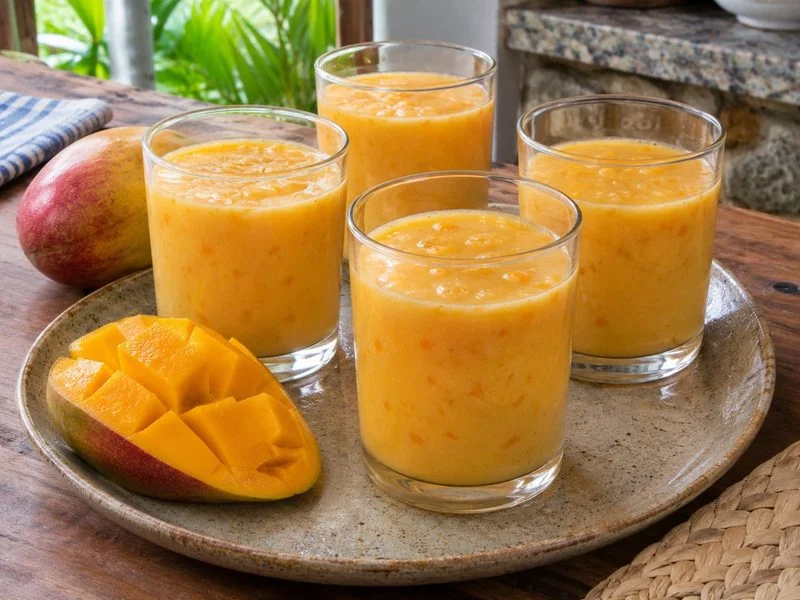
Ripe mango flesh is blended, diluted with cold water and finished with lime. This is a drink, alongside the mango satini, asar and salad in the collection.
Ingredients
- 360 g ripe mango flesh
- Cold water to make 800 ml
- 15 ml lime juice
- Optional sugar, depending on the fruit
Preparation
Cut around the stone and scoop out the flesh. Remove coarse fibres if needed.
Blend with about half the water. Add lime, top up to 800 ml, and strain if fibrous.
Taste chilled before adding sugar. Refrigerate 15 minutes, stir and pour into four glasses.
Introduction
Ripe mango flesh is blended, diluted with cold water and finished with lime. This is a drink, alongside the mango satini, asar and salad in the collection.
Cultural context
SeyVillas mentions fresh mango juice among drinks offered in Seychelles. Dilution with water and a lime finish are choices for this version.
https://www.seyvillas.com/en/guide/travel-info/on-site/food-and-drinks
Planning
Preparing ripe, even pulp
Choose ripe mangoes with flesh that comes off the stone easily. Fragrance at the stem and slight give guide your choice. Check the flesh once cut. Firm flesh near the stone may taste less fragrant. Trim a fibrous mango before blending. The 360 g is for prepared pulp. Weigh after removing peel and the stringiest bits. Use another mango if the first yields too little.
Cut off both cheeks and the side strips. Scoop out very ripe flesh with a spoon. Leave long fibres behind when scraping around the stone. Strands are hard to blend into a smooth drink. Taste the pulp before adding sugar. A sweet mango may need only lime and water. An equally coloured but less ripe fruit may need another adjustment. Keep lime separate until the texture is ready.
Blending with part of the water
Put pulp in the blender with about half the water. Set out a measuring jug if the blender lacks a reliable scale. Pulse to break up large pieces, then blend until it pours evenly. Use two batches if the bowl is too full and combine before adjusting acidity and volume. Loosen a mixture sticking to the sides with some remaining water. Stop the motor before scraping.
Strain to remove fibres if needed. Taste first, since fine pulp can give body. If the sieve mainly catches coarse fibres, help the liquid through with a spoon without forcing fibres through. Straining changes volume. Add lime, stir and top up to the four-serving mark. If still thick, note how far it is from the desired texture before adding water, which changes volume or concentration.
Adjusting the flavour when cold
Chill for the stated rest and taste with a teaspoon. If lime overwhelms mango, add pulp if available or use less lime in a lighter serving next time. To sweeten, dissolve a little sugar in some of the drink before stirring it back. This keeps grains from settling. Sugar is optional and fragrant ripe mango often balances the drink once cold. Taste after each adjustment to water, sugar or acidity to recognise its effect.
Stir the jug before pouring so each glass gets the same pulp. Ice adds water as it melts. Chilled glasses and jug can be used directly. Serve with galet mayok or a little banana cake. Use smaller glasses if offering several juices. Nutrition excludes optional sugar and assumes no extra pulp removed by straining. Track both for comparisons.
Measuring the final yield
Record variety or firmness at purchase, net pulp and volume served. Let foam settle before measuring. Combine two batches before adjusting lime, as mangoes from the same basket can taste different. Tasting the whole batch keeps acidity consistent between glasses.
With an unfamiliar mango, blend a little with water first to check how easily the pulp flows, then adjust the whole batch to taste. Look for pieces by the blades to keep the drink easy to pour. Weigh discarded pulp if comparing fibrous fruit. For several jugs, measure water and lime separately per batch and combine them after pooling the pulp. Pour on a level surface and check the level rather than the glass shape. Broad glasses can look less full at the same volume. Serve smaller portions with cake or biscuits and chill the jug for refills. Next time set the water by final volume and taste, not by thickness at the first blend.
Nutrition notes
Nutrition and allergens
Most carbohydrates come from mango. Straining changes how much pulp and fibre remain.
Estimated nutrition per serving
Calculation based on 4 servings.
Energy 55 kcal
Protein 0.8 g
Fat 0.3 g
Carbohydrate excluding fibre 12.3 g
Fibre 1.5 g
Calcium 10 mg
Iron 0.1 mg
Potassium 156 mg
Vitamin C 34 mg
Salt Not quantified in the source
Values are per glass from an 800 ml batch, with no optional sugar and the pulp retained.