Banana nougat bites
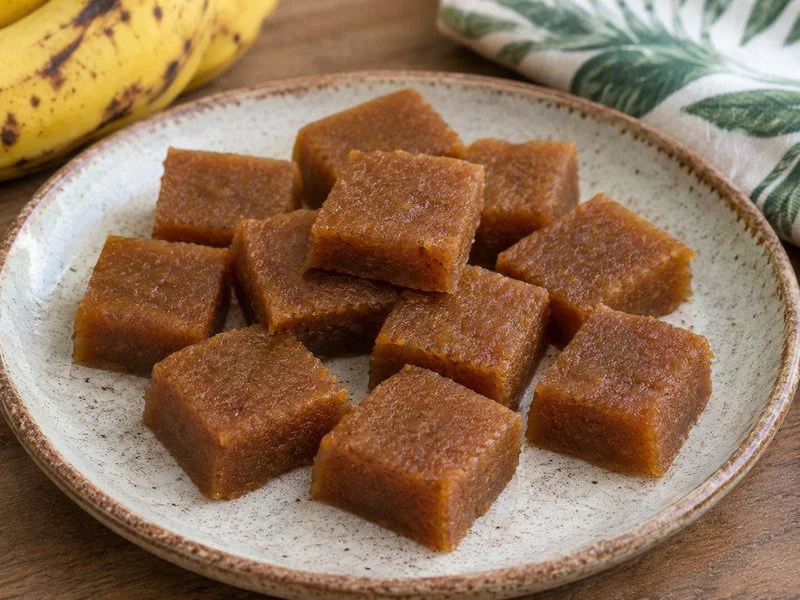
Banana confection is reduced, spread thinly and cut into small pieces. The intended texture is soft and dense, like fruit paste. Recipe 100, nouga bodanmyen, uses coconut and tropical almond.
Ingredients
- 350 g very ripe banana flesh
- 115 g sugar
- 20 ml lemon juice
- 1 pinch salt
- A little neutral oil for the tin
Preparation
Mash banana finely with lemon. Heat with sugar and salt in a heavy pan. Line and lightly oil a small dish.
Reduce over medium, then low heat, stirring regularly. Scrape the base continuously as it thickens so the sugar does not stick.
Test a drop on a cold plate. Stop if it stays soft but moves as one piece under a finger when cool. Spread thinly at once.
Chill before cutting into bites. The yield depends on how far the paste reduces.
Introduction
Banana confection is reduced, spread thinly and cut into small pieces. The intended texture is soft and dense, like fruit paste. Recipe 100, nouga bodanmyen, uses coconut and tropical almond.
Cultural context
Seychelles News Agency mentions locally made banana nougat. A kitchen trial would verify how cleanly this reduction cuts.
https://www.seychellesnewsagency.com/articles/21431/news-alert
Planning
Preparing the purée and dish before heating
Peel and weigh very ripe bananas. Discard damaged parts and mash the rest with lemon juice to a fairly even purée. Large pieces can collect in one area and make slicing uneven. Set out sugar and salt separately. Choose a dish where the paste can spread quickly into a thin layer. Cut and lightly oil the paper, leaving enough overhang to lift the cold slab.
Use a heavy-bottomed pan and a spatula that reaches the corners. A low-sided pan lets you see the base and stir easily. A broad surface speeds evaporation. Start at moderate heat and judge by texture as much as time. Keep a cold plate and spare spoon handy. Once the paste firms, it needs frequent stirring. Have the lined dish ready too.
Reducing while watching the base
Combine purée, sugar and salt. Heat and stir regularly, drawing the paste in from the sides. It initially flows back quickly and releases steam. When the spatula begins to expose a little of the base, lower the heat and stir more often. Concentrated sugar makes the paste stickier. Scrape the base without bringing in dry bits from high on the sides. If one side darkens markedly, rotate the pan or briefly remove it from the heat.
Cool a dab properly on the cold plate, then push it. It should stay pliable and move in one piece. If liquid leaks, reduce some more and test a new dab. If it tears, check that it is cool enough before extending the cook. Overreduced paste is hard to spread and sticks to the tools. When ready, transfer directly onto the paper and spread into the corners without prolonged smoothing.
Cooling and cutting even portions
Cool the dish before moving the slab and chill as directed. Lift by the paper and test a corner on a board. Mark cut lines first. Wipe a sticky blade between cuts without pulling the edges. Thick rectangles deform more easily than thin small bites. Arrange sixteen pieces without piling them high and space sticky ones so they lift separately.
The cited source documents local banana nougat. The fruit-paste texture here comes from the proposed method and depends on bananas and reduction. Record purée weight, pan diameter and cooled weight. The estimate divides the batch into sixteen without accounting for different losses or residue on the spatula. Less reduction can yield heavier pieces of the same size. Use the same dish to compare batches, weigh before dividing and record the cold-plate test.
Serving with other sweets
A small piece is enough alongside cake or fruit. Keep chilled and bring out only what you need. In a warm room use paper cases or separators if the surface gets sticky. For a buffet, replenish small amounts instead of stacking them.
Spread from the centre to the edges for even thickness. Mark off a very thin corner before laying out the portions and use it to test the cut. If the slab cracks when bent, lay it flat and peel off paper in short strips. Start cutting down the centre, then divide the halves evenly to avoid a narrow last strip. Separate sticky pieces with paper instead of changing the finished batch. Note the remaining moisture as a guide to a slightly longer cook next time.
Nutrition notes
Nutrition and allergens
Banana and sugar supply most carbohydrates. Weigh the cooled batch and divide by actual portions.
Estimated nutrition per serving
Calculation based on 16 servings.
Energy 49 kcal
Protein 0.2 g
Fat 0.2 g
Carbohydrate excluding fibre 11.7 g
Fibre 0.6 g
Calcium 1 mg
Iron 0.1 mg
Potassium 80 mg
Vitamin C 2 mg
Salt Not quantified in the source
Values are per bite and include 2 g of oil for lining the dish.