Gato kalou, coconut palm wine cake
The cake takes its name from kalou, made from coconut palm sap. This home version flavours the batter with commercially available coconut palm wine suitable for cooking.
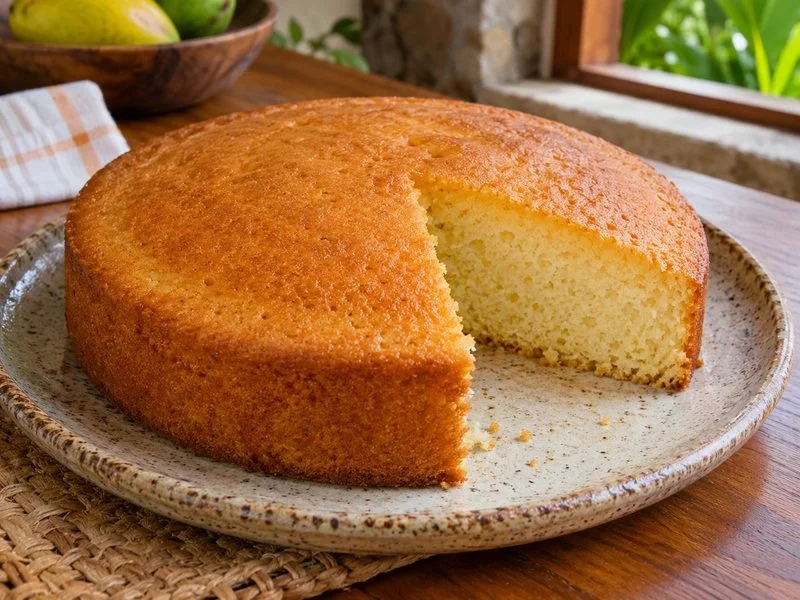
Ingredients
- 200 g wheat flour
- 2 eggs
- 95 g sugar
- 70 g melted unsalted butter
- 95 ml commercial coconut palm wine
- 6 g baking powder
- ½ tsp vanilla
- 1 pinch salt
Preparation
Heat the oven to 175 °C and line a 20 cm round tin. Mix flour, baking powder and salt.
Whisk eggs and sugar until pale. Add warm butter, kalou and vanilla. Fold in dry ingredients in two batches.
Pour into the tin and bake on the middle shelf. Check at 35 minutes and continue if a blade carries liquid batter.
Cool 10 minutes before unmoulding onto a rack. Slice when cool and identify it as a palm wine cake when serving.
Introduction
The cake takes its name from kalou, made from coconut palm sap. This home version flavours the batter with commercially available coconut palm wine suitable for cooking.
Cultural context
Tourism Seychelles and Kokosye document kalou cake. The proportions and baking powder are specific to this adaptation.
https://www.kokosye.com/experiences/secret-garden-tea-treats
Planning
Identifying kalou and measuring ingredients
Check the product and make the cake for an occasion where you can clearly tell diners it contains palm wine. Strength and flavour vary. Keep the label to check ingredients and sulphites. Measure the 95 ml separately. Baking does not necessarily remove all the alcohol. For guests who avoid alcohol, offer a different cake, such as gato koko.
Line a round tin with a paper disc. Combine flour, baking powder and salt in one bowl. Melt the butter and let it cool while remaining pourable. Weigh sugar and set out the bowl for whisking eggs. A different tin diameter changes batter depth, so time the first check accordingly. Use the middle shelf and finish adding the dry ingredients once the oven is hot.
Mixing an even batter and checking the centre
Whisk eggs and sugar until pale. Gradually add warm butter, then kalou and vanilla. Mix enough to keep the butter from pooling. Add flour in two batches, folding from bottom to top. Stop once even. Press small lumps at the side with a spatula instead of beating the whole batter. Pour into the tin and spread towards the sides to an even depth.
The surface browns before the centre sets. Check the thickest part near the stated time and continue if the blade carries wet batter. A little resistance and soft crumbs suffice. Avoid repeated opening while the centre sets. If the edge colours quickly, check without leaving the tin out long. Use the centre to judge readiness. An underdone cake is hard to slice, and a long bake can make the centre as firm as the edges. Check at short intervals if needed.
Turning out and mentioning the palm wine
Rest in the tin for the stated time and run a thin blade around any sticking edges. Invert onto a rack or lift by the paper, depending on the tin. Cool before slicing. For eight servings, mark quarters and halve each. Serve plain so the crumb and kalou come through, or with a hot drink or fresh fruit without adding a strong flavour to the batter.
Tell diners it contains palm wine, especially alongside similar-looking cakes. Nutrition uses a reference wine for energy and does not estimate alcohol left in a baked slice. Time, product and serving size affect intake. Record the product and quantity for comparisons. This distinguishes it from coconut or banana cake. The references attest to kalou cake, while the proportions, tin and baking powder belong to this adaptation.
Reproducing the result
Record tin diameter, time for the centre and number of slices. Taste the cooled cake before changing proportions for a stronger kalou. Change one element at a time. For a large table bake two cakes of the same size. A double depth in one tin changes the timing and the edges can harden before the centre sets.
If the batter resists mixing after the kalou, check for butter that has set against a cold bowl. Loosen those spots with the spatula before adding dry ingredients. Remove any torn paper still stuck to the base before plating. For a tasting, cut the first slice in two so people can try the aroma before taking a full slice. Note whether the flavour is stronger after cooling. Reuse the same tin and product before comparing quantities. Different palm wines change the result even at the same dose.
Nutrition notes
Nutrition and allergens
Flour and sugar provide carbohydrates. The recipe includes alcohol and contains wheat, egg and milk. Check the wine label for sulphites.
Estimated nutrition per serving
Calculation based on 8 servings.
Energy 228 kcal
Protein 4.2 g
Fat 8.5 g
Carbohydrate excluding fibre 30.9 g
Fibre 0.7 g
Calcium 58 mg
Iron 0.6 mg
Potassium 55 mg
Vitamin C 0 mg
Salt Not quantified in the source
White wine is used as an energy proxy for kalou. Energy includes the wine before baking. Residual alcohol is not estimated.