Galet mayok, cassava flour biscuits
Small, crumbly biscuits made from food-grade cassava flour. The dough is pressed into discs before baking. Recipe 66, moukat, uses a different form of cassava and is steamed.
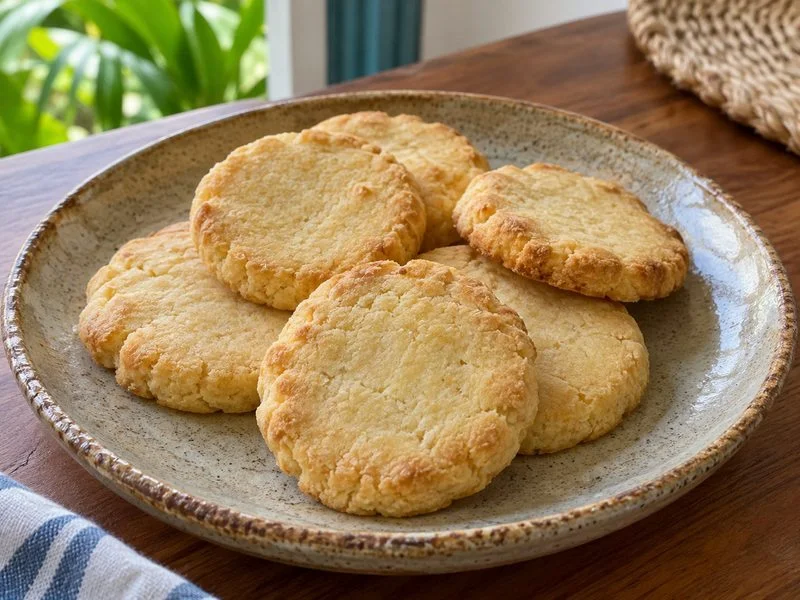
Ingredients
- 170 g commercial cassava flour for baking
- 85 g soft unsalted butter
- 65 g sugar
- 1 egg
- ½ tsp vanilla
- 1 pinch salt
- 1–2 tbsp water if needed
Preparation
Cream butter with sugar and salt. Add egg and vanilla, then flour in two batches. Add a little water if the dough crumbles when pressed.
Divide into 18 and flatten to about 8 mm. Space on a lined tray.
Bake at 170 °C until lightly golden at the edges and firm underneath. Check the first tray after 15 minutes.
Wait 5 minutes before moving. Cool on a rack so moisture can escape underneath.
Introduction
Small, crumbly biscuits made from food-grade cassava flour. The dough is pressed into discs before baking. Recipe 66, moukat, uses a different form of cassava and is steamed.
Cultural context
Kokosye on La Digue presents galet mayok as cassava flour biscuits served with tea. This is a home adaptation.
https://www.kokosye.com/experiences/secret-garden-tea-treats
Planning
Preparing the butter and flour
Use commercial cassava flour for baking. Different grinds can clump or require more water. Weigh it before cracking the egg. Reserve the water for dough that remains crumbly after mixing. The butter should yield to a spatula without being melted. In a cool room, cut it small and wait for it to soften. Melted butter can make dough greasy, while cold butter leaves lumps. Judge by squeezing a little dough, without expecting a smooth cake batter.
Work the butter with sugar and salt, then mix in egg and vanilla just enough to distribute them. Add flour in two batches. Bring the dough together with the back of a spatula and squeeze a handful. If it falls apart, add a little water, stir and check again. Hold back from adding both spoonfuls at once. Dry-looking dough can hold when shaped. If sticky, let it stand before adding flour.
Shaping eighteen biscuits of even thickness
Line a tray and divide the dough into eighteen. Weigh the portions to distribute crumbs from the bowl. Roll gently and press to about 8 mm. A cutter is unnecessary. Pinch cracks together where needed and leave a slightly irregular edge instead of working the dough into perfect circles. Support the base as you transfer each biscuit.
Leave gaps and group any thicker pieces to check separately. Bake in the preheated oven. When the edges colour, lift one with a small spatula to see underneath. A pale biscuit with a firm base may be ready. Compare one near the edge and one in the middle before baking the whole batch longer. Check a second tray sooner if the equipment is still hot.
Cooling for a crumbly texture
Wait as directed before transferring the biscuits. Just-baked pieces can crack if lifted by the edge. Support the whole base with a spatula and cool on a rack. Do not stack them warm. Compare a cool biscuit with a hot one. If they harden too much when cold, check thickness and browning before increasing the water next time. Overbaking thin biscuits can harden even correctly mixed dough.
Serve plain with tea, a cold drink or fruit. The cited source serves them among La Digue sweets. This version is adapted to home baking. Record the flour, added water and actual count. The estimate assumes eighteen. Compare the cooled weight if some larger biscuits are served separately. Even out portion size and thickness before changing ingredients.
Baking multiple trays
Shape all the portions for a double batch before baking. Cover any that will wait to prevent drying. Keep thickness and spacing similar. Timing depends on the tray and thickness. A smaller second batch may be ready sooner.
With a small tray, distribute each batch across its width. Leaving most of a tray empty can affect browning. Compare the first and last biscuits once cool. If only the edge pieces harden, move the tray next time before changing the dough. If sugar is still visible after working the butter, mix only enough to distribute it before adding egg. Break a cold biscuit to show its texture. It should break into a few pieces and keep its shape until touched. Serve with tea and a little fruit if desired.
Nutrition notes
Nutrition and allergens
Cassava flour mainly provides carbohydrates. Butter and egg supply fat. The recipe contains milk and egg.
Estimated nutrition per serving
Calculation based on 18 servings.
Energy 85 kcal
Protein 0.5 g
Fat 4.1 g
Carbohydrate excluding fibre 11.6 g
Fibre 0.3 g
Calcium 10 mg
Iron 0.1 mg
Potassium 75 mg
Vitamin C 0 mg
Salt Not quantified in the source
Values are per biscuit. Cassava flour data come from the Pacific food composition tables.