Oven-roasted sweet potato wedges
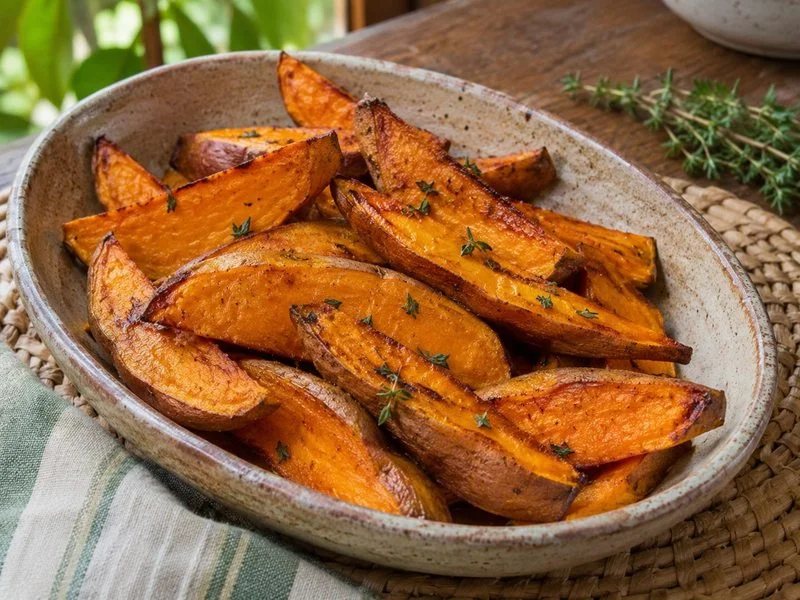
Roasting caramelises the edges while keeping the centre tender. The sweet potatoes are served as a savoury side with simple seasoning.
Ingredients
- 800 g firm-fleshed sweet potatoes
- 20 ml neutral oil
- 3 thyme sprigs
- 2 g salt
- 1 optional lime wedge
Preparation
Scrub and trim sweet potatoes. Cut even wedges, dry and toss with oil and thyme.
Space the wedges cut-side down on a tray. Roast at 205 °C and turn halfway.
Check the thickest wedge at 35 minutes. If browned but not tender inside, reduce to 185 °C and continue in 5-minute intervals.
Salt out of the oven. Add a squeeze of lime with a rich main dish, if desired. Serve hot.
Introduction
Roasting caramelises the edges while keeping the centre tender. The sweet potatoes are served as a savoury side with simple seasoning.
Cultural context
Silhouette magazine mentions baked sweet potato as a Seychellois side dish. This home version cuts it into wedges.
https://www.airseychelles.com/portals/silhouette/2024/SilhouetteJul-Sep-2024.pdf
Planning
Cutting wedges that roast evenly
Choose sweet potatoes of similar width. Long ones have tips that brown quickly and thick middles that take longer. Scrub the skin and trim damaged parts. Halve larger potatoes lengthways and cut wedges close in width to the smaller ones. Lay cut faces down on a stable board. The wedges should turn with a spatula without losing their tips. Even thickness matters more than an equal number per potato.
Pat the cut faces dry. Toss in batches with part of the oil, add thyme and turn to coat lightly. Redistribute any pooled oil before transferring. Aim to brown the surfaces touching the tray. Keep salt for the end. Leave thick thyme stems whole between wedges for easy removal, or mix loose leaves straight into the oil.
Using the tray and checking browning
Set each wedge on a cut face and leave room for steam to escape. Use two trays if crowded and check them separately because shelf height affects heating. Put the tray into the preheated oven. At the first check, look at the face against the metal. If pale and stuck, let it roast a little longer. Turn gently once it lifts.
Test the thickest wedge near the stated time by inserting a blade in the middle. If firm while the outside is browned, lower the oven as directed and cook in short increments. Remove thin tips first if ready. If a moist variety stays pale as the centre softens, move wedges to give the surface a chance to dry without overcooking them. Taste an edge and the middle to compare textures.
Finishing with thyme, salt and lime
Take out the wedges once tender and easy to lift without breaking. Salt by hand, focusing on the cut surfaces. Try a few drops of lime on one portion with the main dish. With a rich coconut curry, acidity can bring out the potato's sweetness. With a tart sauce, offer lime at the table. Remove protruding thyme stems.
If they must wait, set wedges side by side in an open dish so steam does not soften the browned faces. Serve with meat, fish or sauced vegetables. The wedges can replace rice or breadfruit. Make smaller servings if offering two starches. The estimate uses four portions and excludes optional lime. More oil would change the figures more than the lime.
Recording the result for another oven
Note trimmed weight, wedge count and average width, along with when you turned them and when the centre yielded to the blade. A different tray or variety may brown differently. Start with the same cut, then move the tray if the underside does not brown as expected. When doubling, increase tray area and keep the same wedge thickness.
Roast other dishes separately so their juices do not spill around the wedges. Use the same oven if there is room, checking each dish independently. The skin helps you pick up tender wedges. If it comes off, serve with the browned faces visible and avoid turning again. When tasting several sides, give each diner two wedges first and add more according to portion size. For pale-fleshed potatoes, rely on the blade and how the piece holds, since colour differs.
Nutrition notes
Nutrition and allergens
Sweet potatoes provide carbohydrates and fibre. Orange-fleshed varieties also provide beta-carotene.
Estimated nutrition per serving
Calculation based on 4 servings.
Energy 213 kcal
Protein 3.2 g
Fat 4.6 g
Carbohydrate excluding fibre 34.3 g
Fibre 6.1 g
Calcium 63 mg
Iron 1.4 mg
Potassium 679 mg
Vitamin C 6 mg
Salt Not quantified in the source
Optional lime is excluded.