Banke Nwel beef curry
Beef simmers until fork-tender in a reduced, spiced sauce. Fresh beef and the seasoning distinguish this curry from the styou bef in recipe 38.
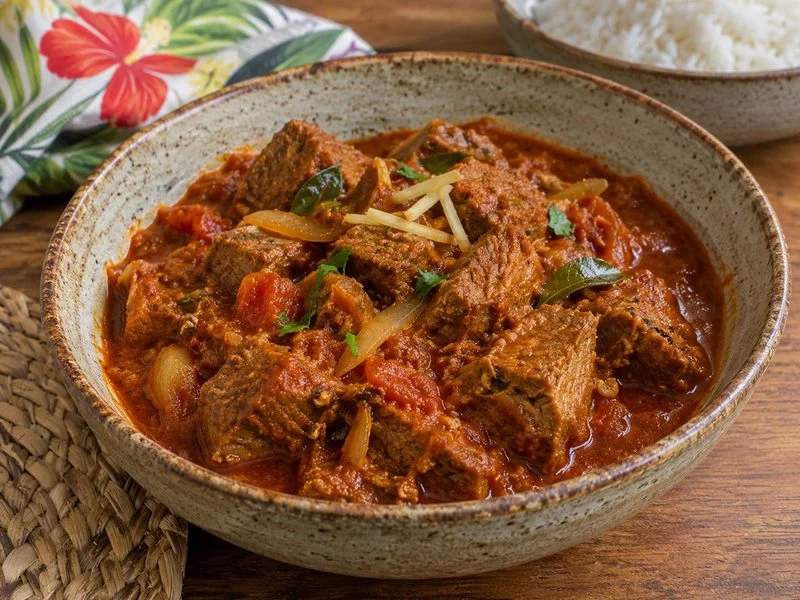
Ingredients
- 850 g boneless chuck or blade beef
- 180 g onion
- 240 g tomato
- 3 garlic cloves
- 16 g ginger
- 2 tsp curry powder
- 1 tsp turmeric
- 20 ml oil
- 400 ml hot water
- Salt and pepper
Preparation
Cut beef into even cubes, brown in two batches and set aside. Soften onions in the same pot.
Add garlic, ginger and spices. When fragrant, add crushed tomatoes. Return the beef, add water and bring to a gentle simmer.
Partly cover. Start testing the largest pieces after about 1 h 40 min. Add hot water if reducing too fast.
Once tender, uncover and reduce for a few minutes. Adjust salt and serve with rice and cucumber salad from recipe 125.
Introduction
Beef simmers until fork-tender in a reduced, spiced sauce. Fresh beef and the seasoning distinguish this curry from the styou bef in recipe 38.
Cultural context
The Banke Nwel account mentions beef curry among the possible banquet dishes. The cut and spice quantities are choices for this adaptation.
https://www.nation.sc/articles/2740/living-heritage-project-banke-nwel-brings-back-a-long-lost-tradition
Planning
Buying beef for slow cooking
Ask for boneless chuck or shoulder for slow cooking in cubes. Pick a piece that yields even cubes. Remove large clumps of fat and keep the marbling for more tender meat. Weigh the prepared beef and pat dry before browning. For six, plan the rice, cucumber and other sides ahead so the curry arrives hot. Prepare aromatics and tomatoes before the beef goes in.
Slice onions, chop ginger and garlic, then dice the tomatoes and save their juice. Measure spices and water separately. Use a pot that holds the pieces in the liquid after reducing. They can overlap while simmering. Brown in batches so the base can dry between pieces. Wetter batches release more liquid on contact. Set browned pieces aside instead of crowding the pot.
Building the tomato and spice sauce
After browning several faces, soften the onion in the same pot. Gently loosen any brown deposits with a spatula. Add ginger, garlic and spices, followed immediately by tomato to moisten the mixture. Let the pieces soften a little before returning the beef and its juices. Add hot water, return to a simmer and partly cover. Use enough liquid for slow cooking without flooding the sauce.
The adaptation uses tomato, onion and reduced meat juices for body, with no coconut milk. For underripe tomatoes, cook longer and crush a few pieces before adding water. If the tomatoes are very juicy, keep some water in reserve. Both adjustments affect reducing time. Turmeric and curry powder are mainly for flavour. Keep the quantities steady even if the liquid looks thin at first.
Adjusting the time to the cubes
Near the end of the first simmer, test one of the thickest cubes. A fork should enter without force. Cook in short increments if the centre resists. Stir gently because tender pieces can start to fall apart. If the sauce thickens too far, add hot water by the spoonful and cover more tightly. If the beef is ready but the sauce is thin, lift it out with a skimmer and reduce the liquid before returning it to finish the seasoning.
Taste a cube with the finished sauce. Curry powders may contain salt or ingredients of different strengths. Read the label and adjust after reducing. Add pepper at that point. If the sauce is rich, serve a spoonful and leave the rest in the shared dish. Plain rice and cucumber suit the beef and its juices. For a meal with a second braise from the same banquet, serve smaller portions and offer rice separately.
Serving in the Banke Nwel tradition
Put the beef in a deep platter and add enough sauce to coat it. Divide the large cubes among six plates and add the smaller ones. The Banke Nwel account lists beef curry among the banquet dishes. Here the method is adapted to chuck or shoulder at home. The collection's cucumber salad reflects the recorded accompaniment to curry and rice. Serve it separately to keep the vinegar out of the hot sauce until eating.
Record cube size, cut and cooking time. Equal weights can cook differently. If you add a lot of water, measure the sauce before salting. The estimate depends on the reference cut. A more heavily trimmed piece changes the figures. Calculate rice and sides separately. Next time, keep the spices constant and compare pieces of the same cut first.
Nutrition notes
Nutrition and allergens
Beef provides protein, iron and vitamin B12. Check the spice blend for allergens.
Estimated nutrition per serving
Calculation based on 6 servings.
Energy 235 kcal
Protein 31.8 g
Fat 9.6 g
Carbohydrate excluding fibre 4.7 g
Fibre 1.5 g
Calcium 37 mg
Iron 3.6 mg
Potassium 694 mg
Vitamin C 8 mg
Salt Not quantified in the source
The reference is stewing beef with its fat.