Pot-roasted pork shoulder
A whole pork shoulder is browned and then cooked covered with aromatics and a little liquid. Pot-roasting distinguishes it from the pork belly and greens sauté in recipe 92.
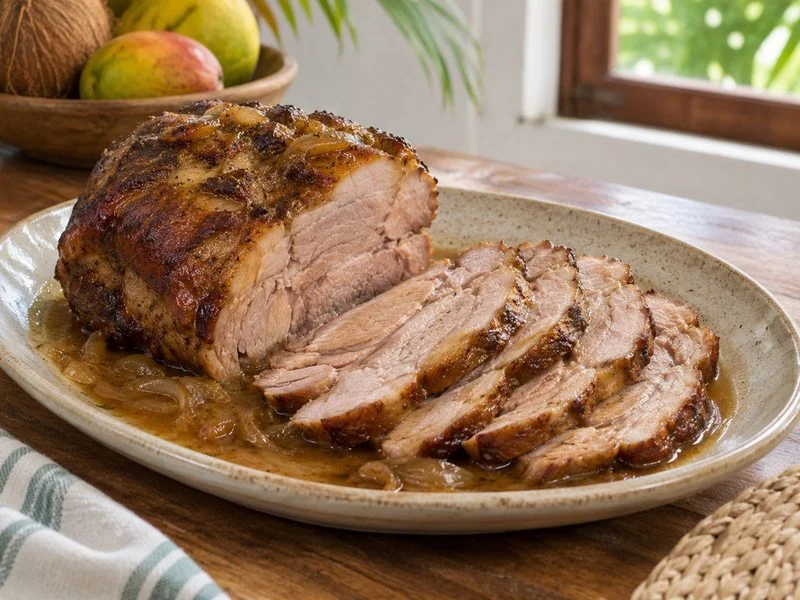
Ingredients
- 1.1 kg boneless pork shoulder in one piece
- 200 g onion
- 3 garlic cloves
- 15 g ginger
- 4 sprigs thyme
- 20 ml oil
- 350 ml hot water
- 7 g salt
- Pepper
Preparation
Tie the pork if it has thin edges. Pat dry, season and brown on several sides in oil in a casserole.
Set aside. Soften sliced onion in the pan juices, add garlic, ginger and thyme, then deglaze with hot water.
Return pork, cover and simmer gently, turning halfway. Remove once a fork enters easily. Rest covered before slicing.
Remove thyme, skim fat and reduce the juices slightly. Serve separately so slices stay intact.
Introduction
A whole pork shoulder is browned and then cooked covered with aromatics and a little liquid. Pot-roasting distinguishes it from the pork belly and greens sauté in recipe 92.
Cultural context
Seychelles Nation lists roast pork among Seychellois dishes. Tourism Seychelles also documents pot-roasting. This version gives directions for a domestic casserole.
https://www.nation.sc/articles/7470/seychellois-cuisine-and-its-importance
Planning
Choosing the shoulder and pot
Ask for a boneless shoulder of even thickness. Tie a thin end or loose fold with kitchen string so it keeps its shape. Remove only thick fat that comes away easily. The stated weight is raw. Serving yield depends on fat and water loss and on slice count. For six people, choose a side that is easy to share and needs little work while the meat rests.
Use a pot that lets the shoulder lie flat and turn without rubbing the sides. Prepare onion, garlic and ginger before browning. Slice onion, have hot water and thyme sprigs ready, and pat the meat dry before spreading the measured salt over several faces. A wet surface browns poorly. Set out a shallow dish to catch the meat and its juices while frying the onions.
Building the cooking juices
Place the pork in hot oil and wait until it releases more easily before moving. Brown several faces. Hold the ends briefly against the base with tongs if stable. Let the deposits brown without blackening. Set the meat aside once evenly coloured. Stir onions into the juices in the same pot. Remove some fat if there is a lot visible.
When the onion softens, add garlic, ginger and thyme. Pour in hot water and gently loosen the deposits with a spatula. Taste at the first simmer to check the ginger if you wish, then return pork and juices. The liquid should surround the base. Almost submerging the meat changes how it cooks and leaves more liquid to reduce. Check this level if changing pots. Cover and simmer gently. Turn halfway so the other side touches the base.
Checking doneness and reducing the juices
At the first check, pierce the thickest part. A fork should enter easily once the meat is tender. If the liquid reduces too far before then, add a little hot water and cover again. If the meat is ready but the liquid is thin and plentiful, remove the pork and reduce the juices alone to keep the meat moist. Rest it on a board with a channel or a dish wide enough to catch the juices.
Remove the thyme sprigs and spoon off some surface fat. Reduce the juices until they lightly coat the onions. Taste after reducing because salt concentrates. Add hot water if stronger than you want. Serve very concentrated juices in smaller amounts instead of covering every slice. Add the resting juices if you want a fuller flavour.
Slicing and choosing sides
Remove any string and look at the grain. Slice the main piece across the fibres, changing angle where they turn. Even slices are easier to serve. For six portions, alternate leaner and fattier pieces on the platter. Keep the juices and onions separate. Roasted breadfruit, sweet potato or plain rice can take a spoonful of the juices.
The estimate starts with raw shoulder including its fat. What reaches the plate depends on trimming and skimming. In a trial, weigh the prepared cut and the meat actually served, and note the amount of sauce. For a smaller piece, check sooner, especially if thin. Timing depends more on thickness than on the number of guests. Use the same size pot to compare trials.
Nutrition notes
Nutrition and allergens
Pork supplies protein and B vitamins. Fat per portion depends on the cut and how much fat is removed from the juices.
Estimated nutrition per serving
Calculation based on 6 servings.
Energy 477 kcal
Protein 32.0 g
Fat 36.1 g
Carbohydrate excluding fibre 3.5 g
Fibre 0.7 g
Calcium 41 mg
Iron 2.2 mg
Potassium 623 mg
Vitamin C 5 mg
Salt Not quantified in the source
The reference is raw shoulder with its fat. Served energy and fat are lower if the meat and juices are trimmed and skimmed.