Baked kapitenn with lemon mayonnaise
Fish served with mayonnaise on the side, following baked fish from Banke Nwel. Recipes 08 and 101 cover capitaine curry and snapper roasted on tomatoes and onions respectively.
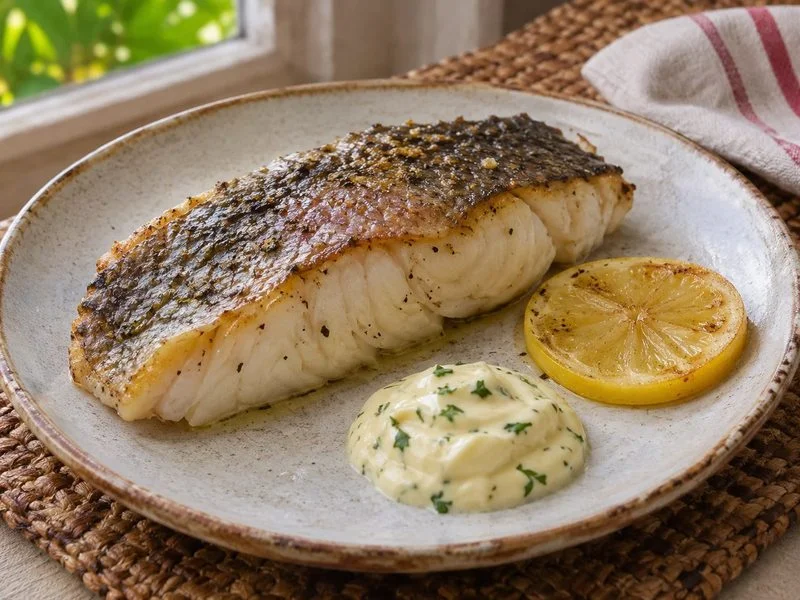
Ingredients
- 4 skin-on kapitenn fillet portions of 150–170 g
- 1 lemon
- 15 ml neutral oil
- 1 garlic clove
- 4 sprigs thyme
- 70 g shop-bought mayonnaise
- 8 g parsley
- Salt and pepper
Preparation
Heat the oven to 190 °C. Check fillets for bones and pat skin dry.
Lightly oil the dish. Lay thyme and sliced garlic in the bottom, place fillets skin up and season. Put lemon slices around them.
Bake, checking thin fillets at 12 minutes. Remove each once its centre reaches 63 °C without touching the dish with the probe.
Mix mayonnaise with parsley and a spoonful of lemon juice. Taste and chill until serving.
Remove aromatics and serve each fillet with a little mayonnaise on the side.
Introduction
Fish served with mayonnaise on the side, following baked fish from Banke Nwel. Recipes 08 and 101 cover capitaine curry and snapper roasted on tomatoes and onions respectively.
Cultural context
The re-enactment menu reported by Seychelles Nation lists baked capitaine with mayonnaise and says barracuda could replace it. The fillets and lemon mayonnaise are choices for this adaptation.
https://www.nation.sc/articles/2740/living-heritage-project-banke-nwel-brings-back-a-long-lost-tradition
Planning
Choosing the fillets and checking for bones
Ask for skin-on capitaine fillets of similar weight and check their thickness. A flat fillet cooks faster than a thick piece of the same weight. Divide a large fillet into four and group the thinner pieces on one side of the dish. Run your fingers along the centre line and pull out protruding bones with clean tweezers. Pat both faces with kitchen paper. Use a board for fish and wash it before preparing sauce and herbs.
Set the fillets skin up to show the skin when serving. Choose a dish that fits all four without overlap. Leave room for thyme, garlic and lemon slices. A thick wet layer beneath the fish would slow the cooking on the underside. Distribute the aromatics in a few spots and lightly oil the base. Slice some lemon and squeeze the rest separately to adjust the mayonnaise off the heat.
Baking and checking individual portions
Preheat the oven to the specified temperature. Arrange the fillets in the centre with thin portions where you can reach them. If they are thin, start checking at the first suggested time. Open the oven just long enough to measure the fastest piece, then check the others. Insert the probe sideways into the centre. If it touches the dish, lift it slightly and measure again. Remove pieces that are ready and leave thicker ones to reach the target.
The skin may darken at the edges even when the thickest flesh needs longer. Use the reading in the flesh as your main guide. Slide a wide spatula under the thick section and support the tip to lift the fillet whole. Set it on a warm plate to slow cooling. Remove any garlic or thyme stuck to the flesh. Serve roast lemon alongside, adjusting the amount to taste.
Making lemon mayonnaise on the side
Weigh shop-bought mayonnaise into a bowl. Finely chop the parsley and combine with some lemon juice first. Add this gradually. Thick mayonnaise takes more juice before it becomes too thin. Start with less if the sauce is already light. Taste with the tip of a spoon. The lemon should lift the sauce and leave the fish flavour distinct. Reserve some juice if you have squeezed it all. Adding it at the table is easier than thickening a runny bowl.
Cover and refrigerate until plating. Check the mayonnaise label for allergens, which vary by product. When the fish is ready, put a small spoonful next to each fillet or use a separate bowl. That keeps the skin out of the sauce before eating and lets diners choose how much to take. Leave extra lemon at the table for anyone who wants it directly on the fish.
Serving in the style of the meal
Display the fillet skin up with mayonnaise separate. Serve alongside lettuce and tomato salad or the cucumber salad in the collection. For an opening course in a Banke Nwel meal, serve a smaller piece and offer sauce in a shared bowl. The recorded menu describes roast fish with mayonnaise and allows a different fish. Fillets, thyme and the lemon finish are this home-oven version.
Record fillet thickness as well as weight. The timing is repeatable when both measures are close. Note the mayonnaise served and the number of portions. The estimate uses four servings and a reference white fish for capitaine. Extra mayonnaise mainly changes the fat. Weigh the mayonnaise before and after serving for a closer comparison. Lemon slices left in the dish are separate from the juice actually added to the sauce.
Group noticeably thinner fillets on a side where you can lift them out without disturbing the others. Put lemon slices around the fish and keep the skin clear.
Nutrition notes
Nutrition and allergens
Fish supplies protein. Fat varies mainly with the amount of mayonnaise. The recipe contains fish. Check the mayonnaise for egg and mustard.
Estimated nutrition per serving
Calculation based on 4 servings.
Energy 286 kcal
Protein 28.9 g
Fat 17.7 g
Carbohydrate excluding fibre 1.2 g
Fibre 0.3 g
Calcium 36 mg
Iron 1.0 mg
Potassium 696 mg
Vitamin C 10 mg
Salt Not quantified in the source
Fresh cod is used as the reference white fish without confirmed figures for capitaine. The calculation uses standard mayonnaise.