Kari koko pans sale, coconut tripe curry
A coconut milk tripe curry. The recorded Creole name refers to salted tripe. This adaptation uses plain precooked beef tripe, sold ready to reheat by the butcher.
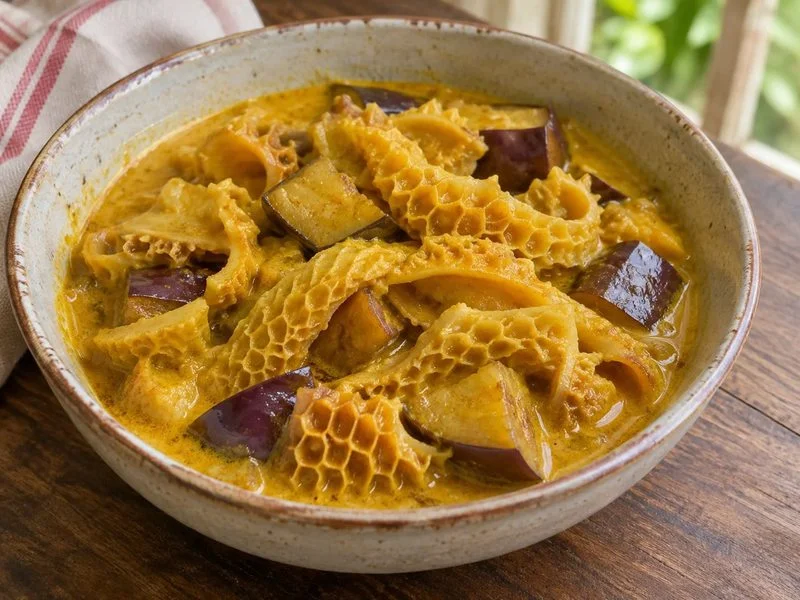
Ingredients
- 600 g plain fully cooked beef tripe
- 220 g aubergine
- 300 ml unsweetened coconut milk
- 170 g onion
- 160 g tomato
- 3 garlic cloves
- 15 g ginger
- 2 tsp curry powder
- 1 tsp turmeric
- 120 ml water
- 15 ml oil
- Salt and pepper
Preparation
Confirm tripe is fully cooked and follow the packet. Drain and cut into even strips.
Soften onion in oil over medium heat. Add garlic, ginger and spices. Stir briefly, then add crushed tomato.
Cook tomato down. Add coconut milk, water and tripe. Bring to a simmer and partly cover.
Simmer 20 minutes following reheating directions. Add 2 cm aubergine cubes and cook about 15 minutes more until soft, then check tripe tenderness.
Adjust seasoning after reducing. Serve with rice. Salt plain tripe only to taste.
Introduction
A coconut milk tripe curry. The recorded Creole name refers to salted tripe. This adaptation uses plain precooked beef tripe, sold ready to reheat by the butcher.
Cultural context
The Creole Melting Pot documents salted tripe curry with aubergine and coconut milk. Both remain in this adaptation for plain precooked tripe.
https://www.thecreolemeltingpot.com/curry-of-salted-tripe-with-coconut-milk-kari-koko-pans-sale/
Planning
Buying tripe and preparing aubergine
Check that the plain beef tripe is precooked and ready to reheat, on the label or with the butcher. Some is already cut into strips. Drain before weighing so packing liquid does not count as flesh. Check thickness and trim noticeably larger pieces. Similar widths share out more easily. The honeycomb texture on some pieces should remain visible. Coconut milk and aubergine carry through from the documented curry.
Cut aubergine just before adding it if you want to limit air exposure. Make cubes about 2 cm across and keep the skin to hold them together. With an especially large aubergine, remove very spongy or seedy areas before weighing. Prepare tomatoes and onions too. The tripe and aubergine cook at different rates. Keep the aubergine aside while you adjust the sauce so it does not break down before the end.
Softening the aromatics
Soften sliced onion in oil over medium heat, then add ginger, garlic and spices. Stir briefly to coat them in the moist base. Add crushed tomatoes when fragrant. Cook until the tomatoes collapse, then add coconut milk and water. Juicy tomatoes give the sauce mild acidity. If the pieces stay firm, cook another minute or two before adding coconut milk. Keep the heat gentle so the base stays moist.
Add the tripe and bring to a gentle simmer. Follow the product's reheating instructions. Set the lid ajar and stir from bottom to top without trapping the strips against the sides. If the liquid looks low, add hot water and check before adjusting again. The sauce gains body as the aubergine softens. Reducing too far now can mean adding more liquid later after the seasoning concentrates.
Adding aubergine and checking the sauce
After the stated time for the tripe, add the aubergine. Make sure the cubes all touch the liquid, especially in a broad pan where some can sit above it. Stir gently after a few minutes. Test almost-cooked aubergine with a knife point. It should yield right up to the skin. Check a strip of tripe too. If the aubergine finishes first, lift it out with a skimmer and return it at the end so it stays whole.
If thin, uncover and reduce briefly once the pieces are ready. Adjust salt after reducing. If the sauce thickens sharply or seems greasy, skim excess and loosen with water. Taste all the elements together. Aubergine should come through behind coconut and spices. If tomato dominates, reduction may intensify it. Finish with a looser texture in that case and serve a little less sauce.
Serving and recording the adaptation
Share the strips and aubergine cubes before adding sauce. Serve with plain rice or roast breadfruit wedges. Use a deep dish if offering the sauce separately. Start with one spoonful per person and let diners add more to suit their starch. The source describes salted tripe. This version makes the method accessible with plain precooked tripe. Adjust the salt according to the label and a final taste.
Record drained weight, aubergine cube size and time in the sauce. If replacing plain tripe with a seasoned product, check its ingredients. Nutrition uses cooked, drained tripe. Rice and other sides are separate. To reproduce the sauce yield, note pan width and when you took off the lid at the end.
Use a broad platter so you can see aubergine and tripe separately from the first spoonful. Pour sauce last so even the last diners can take a balanced serving.
Nutrition notes
Nutrition and allergens
Tripe supplies protein. Coconut supplies most of the fat in the sauce. Sodium varies with plain, seasoned or salted tripe.
Estimated nutrition per serving
Calculation based on 4 servings.
Energy 371 kcal
Protein 20.8 g
Fat 24.4 g
Carbohydrate excluding fibre 13.8 g
Fibre 4.2 g
Calcium 165 mg
Iron 4.5 mg
Potassium 563 mg
Vitamin C 11 mg
Salt Not quantified in the source
The estimate uses plain precooked tripe, drained.