Banke Nwel pork curry
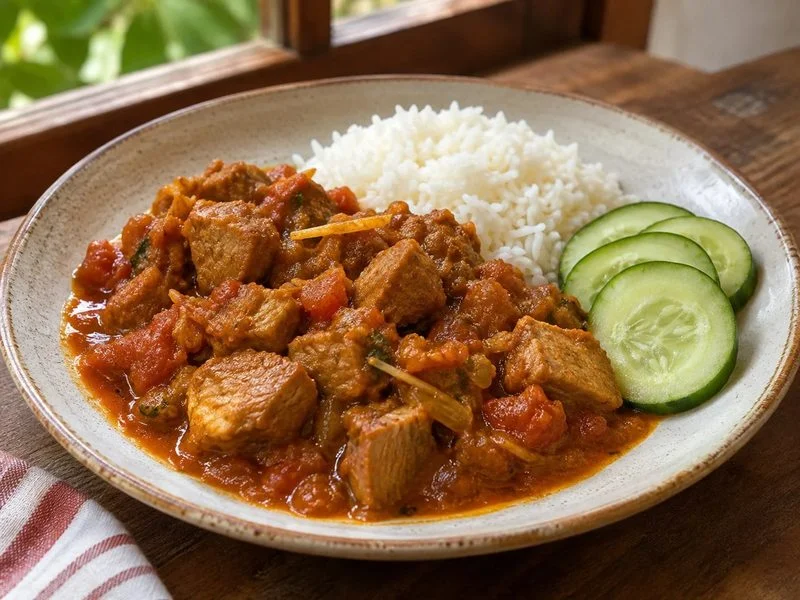
Fresh pork simmers with turmeric, ginger and tomatoes until the sauce clings to the pieces. Other recipes pair salt pork with lentils or vegetables. This one develops the fresh pork curry mentioned in accounts of the banquet.
Ingredients
- 800 g fresh boneless pork shoulder
- 180 g onions
- 250 g tomatoes
- 3 garlic cloves
- 18 g ginger
- 2 tsp curry powder
- 1 tsp turmeric
- 20 ml neutral oil
- 280 ml hot water
- Optional chilli
- Salt and pepper
Preparation
Cut pork into 3 cm cubes and pat dry. Brown in oil in two batches and reserve, keeping the cooking juices.
Soften onions in the pot and add garlic and ginger. Mix spices with chopped tomatoes and add immediately to keep the turmeric from burning.
Return pork with its juices. Add hot water, partly cover and simmer gently. Stir occasionally to prevent sticking.
After 1 hour, test the thickest piece. Extend in short intervals if it resists a fork, adding a few spoonfuls of water if the sauce thickens too early.
Adjust salt after reducing. Serve with white rice and cucumber salad from recipe 125.
Introduction
Fresh pork simmers with turmeric, ginger and tomatoes until the sauce clings to the pieces. Other recipes pair salt pork with lentils or vegetables. This one develops the fresh pork curry mentioned in accounts of the banquet.
Cultural context
The account of the Banke Nwel re-enactment mentions several curries and notes that pork was a frequent choice. The cooking method here is an adaptation.
https://www.nation.sc/articles/2740/living-heritage-project-banke-nwel-brings-back-a-long-lost-tradition
Planning
Choosing the pork and pot
Ask for fresh boneless pork shoulder. If buying a whole piece, remove loose clumps of fat and leave the thin strands between the fibres. Cut even cubes, turning the meat so you can see the grain. Save thin trimmings for another dish if they would dry before the thicker cubes cook. The stated weight is before cooking. For four generous or six smaller portions, divide the meat with the sides in mind.
Choose a wide-bottomed pot to brown the meat in two batches. Set the cubes on a plate and pat them dry. Cut the onions and tomatoes, then prepare garlic and ginger separately. Turmeric and curry powder disperse easily in juicy chopped tomatoes. Collect the juice from the board in the bowl. Having everything ready keeps the pot hot between browning the meat and making the base.
Browning the cubes and using the pan juices
Heat the oil and add half the meat with room between the pieces. Let one face brown before turning. If juice floods the bottom and stops the meat browning, use fewer pieces in the next batch and let the moisture evaporate. Move browned cubes to a plate and save their juices. Brown deposits flavour the sauce. Remove any that turn black before continuing.
Cook the onions in the same pot, stirring to coat them in the pan juices. Once soft, add garlic, ginger and spiced tomatoes. Tomato juice and acidity loosen some browned deposits. Scrape gently with a spatula, without forcing any stubborn residue. Return the meat and juices and add hot water. Bring to a simmer around the cubes, then partly cover and lower the heat so the liquid reduces slowly.
Simmering until tender
Stir occasionally, lifting pieces from the base, especially as the liquid reduces. A wide spatula lifts the cubes more easily than a pointed spoon at the end. If the sauce thickens while the pork is still firm, add hot water in small amounts and cover more tightly. If the pork is tender but the sauce runs freely from the spoon, lift out the cubes and reduce the sauce uncovered. Return them once the sauce clings again.
Taste a piece with some sauce. Keep the optional chilli mild if you want the ginger to come through, or offer it separately for different tastes. Adjust salt after reducing, once the sauce is close to its serving strength. Spoon off some of any visible fat before seasoning. Leave enough sauce between the cubes for a spoonful per serving of rice.
Serving in the spirit of the meal
Serve plain rice without dressing it ahead of time. Keep the cucumber salad cool and the curry hot in separate dishes. Serve some cubes and sauce together, then top up the plates with less sauce. The vinegar-dressed cucumber adds crunch alongside the braised meat. Banke Nwel is the reference for the serving. The proportions and stovetop method are adapted for home cooking as described in the source.
Record trimmed weight, number of diners and any fat removed. Four portions are more substantial than the five used for the estimate. Six portions are smaller and can include more rice or salad. To double the recipe, brown in several batches and check reduction separately. A full pot takes longer to return to a simmer and can lose less water in the same time.
Serve the most regular pieces first, then share smaller pieces and remaining sauce. This helps when five diners choose different amounts of rice.
Nutrition notes
Nutrition and allergens
Pork provides protein and B vitamins. Fat varies with how the shoulder is trimmed. Check spice labels for allergens.
Estimated nutrition per serving
Calculation based on 5 servings.
Energy 443 kcal
Protein 28.7 g
Fat 32.7 g
Carbohydrate excluding fibre 5.5 g
Fibre 1.9 g
Calcium 46 mg
Iron 2.4 mg
Potassium 698 mg
Vitamin C 11 mg
Salt Not quantified in the source
The calculation uses five portions from the stated yield of four to six.