Clam and moringa curry
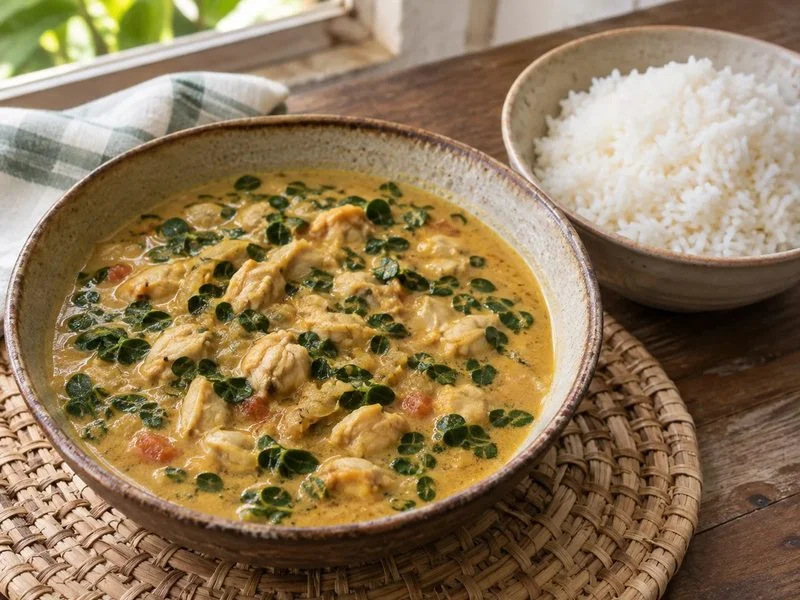
Shelled clams and moringa leaves come together in a spiced coconut sauce. Recipe 88 is a small shellfish soup. Moringa, coconut milk and a coating sauce distinguish this dish.
Ingredients
- 1.2 kg live clams ready to cook
- 90 g edible moringa leaves without thick stems
- 300 ml unsweetened coconut milk
- 110 g onion
- 2 garlic cloves
- 10 g ginger
- 2 tsp curry powder
- 5 optional curry leaves
- 15 ml oil
- Pepper
Preparation
Discard cracked clams and any open ones that do not respond to a tap. Rinse under cold water.
Cover and steam in a little water until open. Discard any still shut. Shell the others and finely strain some cooking liquid.
Soften onion in oil. Add garlic, ginger, curry powder and optional curry leaves. Pour in coconut milk and up to 50 ml strained liquid, depending on its saltiness.
Add washed moringa and simmer a few minutes. Reduce to a lightly coating sauce.
Return clams just to warm through. Taste before adding salt. Serve with plain rice.
Introduction
Shelled clams and moringa leaves come together in a spiced coconut sauce. Recipe 88 is a small shellfish soup. Moringa, coconut milk and a coating sauce distinguish this dish.
Cultural context
Seychelles Nation pairs clams and bred mouroum in a coconut curry. In this version, the clams go into the sauce at the end.
https://www.nation.sc/articles/2212/celebrating-our-kreolite-with-authentic-creole-recipes
Planning
Buying clams and setting out the equipment
For this recipe, buy live clams from a food supplier. The specified weight includes shells, so edible yield varies with size and losses during sorting. Keep them chilled and examine each shell. Discard cracked clams and open ones that do not respond to a gentle tap. Rinse under cold water and inspect around the hinges. Have a small container for the juices, a fine sieve and a clean plate for the cooked flesh.
Remove the thickest moringa stems and weigh the leaves alone. Hold the stem by its firm end to strip the leaves more easily. Wash in a bowl of water and lift the leaves off the surface. Repeat if there is visible sediment. Drain while opening the clams. Coconut milk, curry powder and optional curry leaves are separate ingredients. Check the amount of powder and set everything by the stove because aromatics brown quickly in oil.
Opening the clams and straining their juices
Choose a lidded pan that gives the clams some room. Add a little water, cover and let the steam open them. Lift out open clams with a skimmer, discarding any that remain closed at the end. Open the shells over a container to catch their juices, then set the flesh aside. Loosen stuck flesh with a small spoon. Keep shells away from the board where the vegetables are waiting.
Let heavier sediment settle briefly. Strain the liquid without tipping out the last drops. Taste it. Some batches are salty enough that a few spoonfuls flavour the sauce. For milder juice, use up to the stated amount if you want a stronger seafood flavour. If grit remains, settle and strain it again. Small particles stand out in a creamy sauce.
Thickening the sauce before finishing
Soften sliced onion in oil before adding garlic, ginger and curry powder. Stir briefly, then add coconut milk. Start with a little strained clam juice. Simmer and see how the sauce coats a spoon. Add moringa late enough that the leaves remain distinct. Bring them into the sauce without pressing them to the bottom. Remove any whole curry leaves if they get in the way when serving.
If the sauce is thin, reduce it before adding the clams. This is easier than adjusting while the flesh is heating. Loosen a thick sauce with a spoonful of hot water instead of adding more salty juice. Return the clams once the texture is right. Stir gently to distribute small pieces. Taste the sauce with leaves and a clam before salting. A touch of pepper may be enough to finish the clam-flavoured sauce.
Sharing the clams and serving the curry
For four servings, place clams on the plates first and add sauce and leaves. This helps the last bowls get their share of clams. Ladle the sauce in small amounts and put rice alongside or in a separate bowl. Have the rice ready before warming the clams so the curry can go straight to the table. For a meal with several curries, serve smaller portions and share the sauce at the table.
Weigh the shelled cooked clams to check the yield. The collection uses an indicative meat weight. Small clams or heavy losses during sorting can change it considerably. Record how much juice you add, both to reproduce the balance of coconut and seafood and to explain how two batches of equal gross weight can give different amounts of sauce. Rice and other sides are outside the recipe calculation.
Set out the sieve and container before opening the clams. This keeps unstrained juice out of the sauce when you are in a hurry.
Nutrition notes
Nutrition and allergens
Clams provide protein, iron and vitamin B12. Coconut milk contributes fat. The recipe contains molluscs.
Estimated nutrition per serving
Calculation based on 4 servings.
Energy 301 kcal
Protein 18.6 g
Fat 19.5 g
Carbohydrate excluding fibre 11.3 g
Fibre 2.1 g
Calcium 117 mg
Iron 5.0 mg
Potassium 687 mg
Vitamin C 24 mg
Salt Not quantified in the source
The estimate uses 240 g of cooked flesh from 1.2 kg of shell-on clams. Cooking juices are excluded from the mineral estimate.