Bouyon bred zironmon, pumpkin shoot broth
Young pumpkin leaves and shoots make a light broth with garlic and ginger. The first hundred recipes include a general bouyon bred and dishes combining pumpkin leaves and pork. Here the young shoots are the focus.
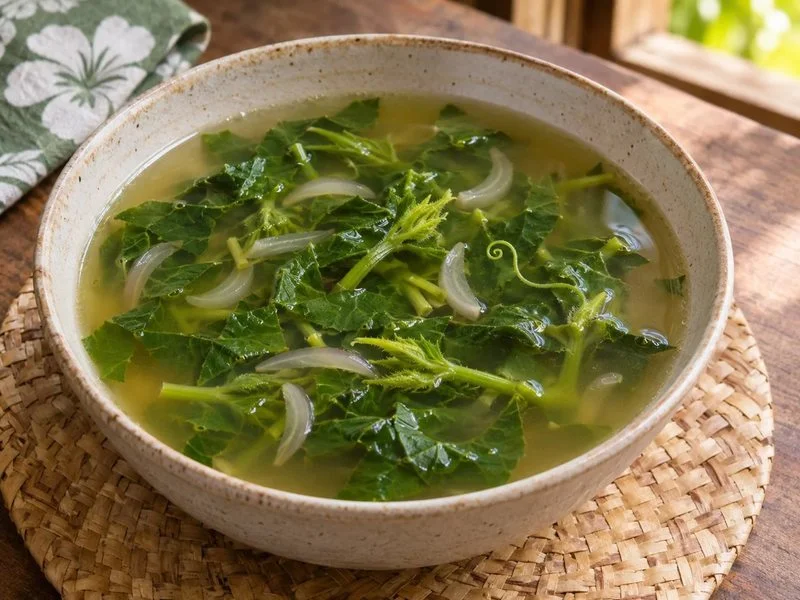
Ingredients
- 300 g young edible pumpkin leaves and shoots
- 110 g onion
- 2 garlic cloves
- 12 g ginger
- 15 ml neutral oil
- 850 ml water
- Salt and pepper
Preparation
Sort greens, discard woody stems and pull off loose fibres. Wash in several changes of water and cut tender stems finer than the leaves.
Soften sliced onion in oil. Add garlic and ginger, stir briefly and add hot water before the garlic browns.
Once simmering, add tender stems. After 4 minutes, add leaves cut into broad strips.
Simmer about 10 minutes. Test a stem and cook a few minutes longer if firm. Salt at the end.
Divide leaves among bowls and ladle broth over them. Serve alongside rice, lentils or fish.
Introduction
Young pumpkin leaves and shoots make a light broth with garlic and ginger. The first hundred recipes include a general bouyon bred and dishes combining pumpkin leaves and pork. Here the young shoots are the focus.
Cultural context
Seychelles Nation publishes a bouyon bred zironmon with ginger and garlic. This recipe adapts the ratio of young shoots to water for serving in bowls.
https://www.nation.sc/articles/2212/celebrating-our-kreolite-with-authentic-creole-recipes
Planning
Sorting the shoots by tenderness
Buy pumpkin leaves and shoots sold as vegetables. Choose pliable bunches with fresh tips. Separate large leaves from shoots before washing. Bend each stem gently and keep the part that snaps readily. Remove the hard base that resists. Leave young leaves in larger pieces and cut firmer stems finely. The 300 g is for the trimmed greens. Buy more by weight if the bunch is heavy with stems.
Check the folds for debris. Immerse the greens in water, stir the leaves by hand and lift them out without picking up sediment. Repeat with fresh water if needed. Drain before cutting. Pull off loose fibres along the stem edges. Keep stems and leaves in separate bowls so each can go into the hot broth at the right time.
Flavouring a light broth
Slice the onion thinly. Choose a pan where it covers much of the bottom without piling up. Soften in oil over medium heat. Keep it pale so it flavours the broth without a roasted taste. Grate ginger over a little plate to save its juice and chop the garlic finely. Add both to the soft onion, then pour in hot water. Stir to release aromatics from the base before adding the shoots.
Keep the broth at a gentle simmer. A hard boil tosses the leaves around and quickly reduces a broth valued for its lightness. Add firmer stems first, then the leaves a few minutes later. Shorten the interval and test a stem early if nearly all the shoots are tender. Discard any unusually tough pieces instead of extending the cook for all the leaves. Stir with a broad spoon to distribute them.
Testing the greens by the spoonful
Near the end of cooking, take out a leaf and a stem piece. Let them cool briefly and taste. The leaf should bite through easily. The stem should have body without tough strands. A piece that bends around the spoon but is still tough needs a few minutes more. If the leaves are already tender, lift them out with a skimmer and finish the stems separately before serving them together. This helps when bunch sizes differ.
Taste the broth before salting, then taste some with leaves. Ginger can be more pronounced in the liquid. Add pepper last and season gently if serving with salted fish. If evaporation has concentrated the broth, add a little hot water and taste again. Allow enough liquid to cover the greens in four bowls. If a ladle scoops up only leaves, divide the greens with a skimmer and add broth last.
Serving the broth with the meal
Serve bouyon bred zironmon as a light starter or with rice, lentils or fish. Use small separate bowls for a meal with several sauces. Diners can spoon out the leaves and keep the liquid in the bowl. For a starter, you may need more broth per portion. Divide the shoots evenly before adding it. A wider pot helps stirring if you double the batch. Check how much liquid has evaporated before salting.
The estimate uses cooked pumpkin leaf data. Stem proportion, trimming and the amount of broth served change what is in each bowl. To compare two batches, note the net greens weight and remaining liquid volume. This also tells you if the broth reduced too far. Next time make the same cuts and adjust only the time the stems get on their own.
If serving the broth later in the meal, set the shoots aside when tender. Reheat the liquid and pour it over them in the bowls to keep their texture close to the original.
Nutrition notes
Nutrition and allergens
Leaves provide fibre and oil contributes fat. Vitamin and mineral levels vary with the shoots and amount of broth served.
Estimated nutrition per serving
Calculation based on 4 servings.
Energy 62 kcal
Protein 2.5 g
Fat 3.7 g
Carbohydrate excluding fibre 3.6 g
Fibre 2.6 g
Calcium 42 mg
Iron 2.5 mg
Potassium 387 mg
Vitamin C 3 mg
Salt Not quantified in the source
Cooked pumpkin leaves are the reference. The proportion of stems and transfer into the broth vary.