Jamalac and guava salad
Crisp jamalac pairs with fragrant guava flesh. This salad complements the frisiter and mango salad in recipe 109 with two different fruits.
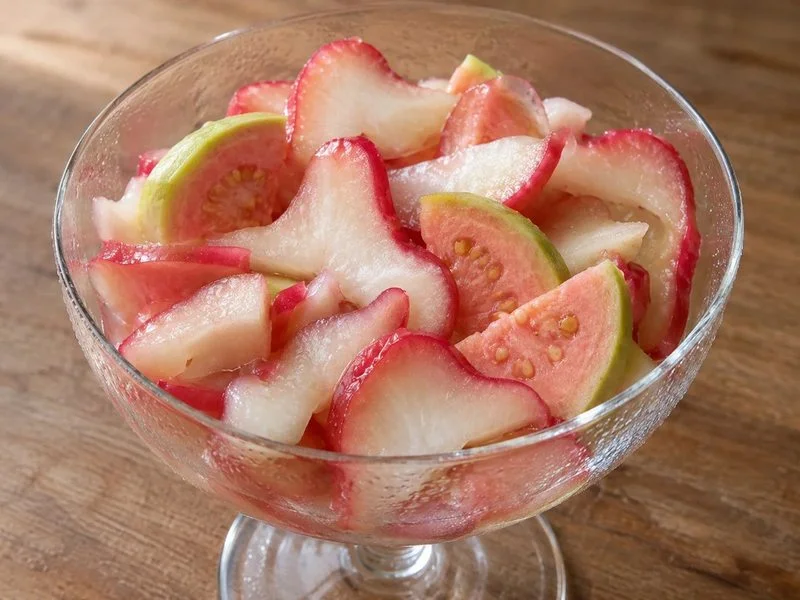
Ingredients
- 320 g firm ripe jamalac, weighed after trimming
- 240 g firm ripe guava
- 15 ml lime juice
- 1–2 tsp sugar depending on ripeness
- Optional 30 ml unsweetened coconut cream to serve
Preparation
Wash fruit. Split jamalacs, remove stems and tough parts, slice thinly and keep chilled.
Halve guavas. Remove very hard seeded centres if needed, slice into thin wedges and weigh the prepared fruit.
Dissolve a teaspoon of sugar in lime juice. Toss gently with fruit and refrigerate for 15 minutes.
Taste both fruits together before adjusting sugar. Divide into four bowls and serve coconut cream separately.
Introduction
Crisp jamalac pairs with fragrant guava flesh. This salad complements the frisiter and mango salad in recipe 109 with two different fruits.
Cultural context
Air Seychelles' magazine lists guava and jamalac among fruits served in salads, sometimes with a touch of coconut cream.
https://www.airseychelles.com/portals/silhouette/2024/SilhouetteJul-Sep-2024.pdf
Planning
Identifying fruits and choosing ripeness
Ask for jamalac by its local name or look for a smooth-skinned water apple. Choose firm fruit with pale, crisp, mildly flavoured flesh. Pick a fragrant guava soft enough to slice neatly. Both fruits should hold together when mixed. Wash them and remove damaged pieces. If there are several guava varieties, choose one consistent batch so you can compare results next time.
Weigh the jamalac after removing any hard parts and visible seeds. The guava weight is also for prepared flesh. A thick guava can make heavier wedges than the jamalac. Halve them to balance each bite. Cut away any centre packed with hard seeds without scraping out the tender flesh. You can keep softer seeds if you like their texture. Record whether your weighed fruit includes the whole centre.
Cutting and keeping the fruit chilled
Halve the jamalac on a clean board and remove any attached stalk. Set each half flat to stop it slipping. Make slices small enough for a spoonful, but thick enough to stay crisp after resting. Cut the guava into wedges and slice the largest ones more thinly. Leave tender edible skin on if suitable. Thinly peel thick skin before weighing.
Put both fruits in a wide bowl. If the guava is very soft, dress the jamalac first. Add the guava last and fold gently with a large spoon. If the jamalac releases much water, spoon some away before adding lime. Add back a little at serving if the salad seems too dry. Cover and refrigerate while it rests. Set out the serving bowls in the meantime.
Adjusting lime to the guava
Dissolve an initial teaspoon of sugar in the lime juice, then mix with the jamalac and finally the guava. During fifteen minutes of resting, juice collects in the bowl. Taste both fruits with some juice. Sweet guava may already balance the lime and jamalac. If needed, dissolve more sugar in a little juice from the bowl before pouring it back so the grains distribute evenly.
Offer optional coconut cream separately so diners can add it at the last moment and the fruit remains visible. If mixing it in, dress only the serving being eaten straight away. Lime acidity and coconut richness are easier to control separately. Try a serving without cream and another with a spoonful to see which suits the fruit. The estimate excludes the cream.
Sharing the colours and adjusting the yield
Set out wide bowls and put several pieces of each fruit in each. Spoon on the juice last. If there is a lot, leave some behind rather than filling each dish to the same level. Serving promptly shows the contrast between pale jamalac and guava. If both are pale, size and edible skin distinguish them. Mix as little as possible while plating to keep the slices whole.
For a meal with other desserts, serve smaller portions containing both fruits. For four bowls, use the stated net weight and adjust sugar to taste. Next time, note the net guava yield and how much juice stayed behind. The estimate uses reference fruit for jamalac, so the figures are approximate and depend on variety. Measure any coconut cream added to include it in the calculation.
If the guava lacks fragrance, slice it a little thicker so it stands out beside the jamalac. Check this before adding sugar, which will not have the same effect as more guava in each bite.
Nutrition notes
Nutrition and allergens
The fruits provide carbohydrates and fibre. Include coconut cream in the calculation if serving it, since it changes the fat content.
Estimated nutrition per serving
Calculation based on 4 servings.
Energy 68 kcal
Protein 2.0 g
Fat 0.8 g
Carbohydrate excluding fibre 11.7 g
Fibre 3.3 g
Calcium 35 mg
Iron 0.2 mg
Potassium 353 mg
Vitamin C 156 mg
Salt Not quantified in the source
Partial estimate.
Jamalac is approximated with USDA rose apple data. Optional coconut cream is excluded.