Soft sweet potato cakes
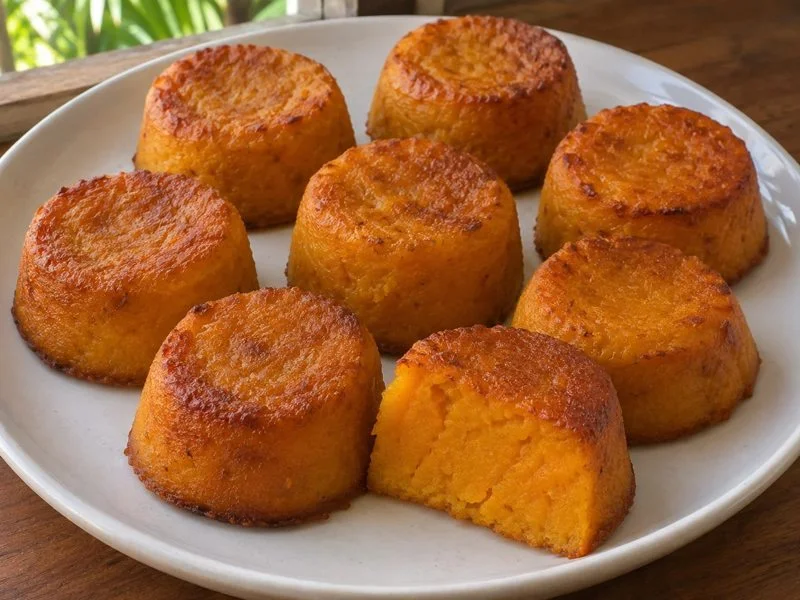
These small cakes bake in individual tins. A thick purée gives them a low, moist crumb. Sweet potato forms the body of each cake, while the ladob in recipe 25 uses it in cubes.
Ingredients
- 400 g cooked sweet potato purée, cold and weighed after draining
- 2 eggs
- 60 g wheat flour
- 45 g brown sugar
- 45 g melted unsalted butter
- ½ tsp vanilla
- 1 pinch salt
- A little butter for the moulds
Preparation
Heat oven to 170 °C and butter eight small moulds. Mash the purée or sieve it if fibrous.
Beat the eggs, sugar and salt. Add purée, vanilla and warm butter. Add flour last and stop mixing when it disappears.
Divide equally and bake on the middle shelf. Check after 25 minutes. Keep baking if the centre wobbles or a knife comes out coated with liquid batter.
Let the cakes cool in their moulds to firm up. Unmould with a thin knife and serve plain so the sweet potato and vanilla come through.
Introduction
These small cakes bake in individual tins. A thick purée gives them a low, moist crumb. Sweet potato forms the body of each cake, while the ladob in recipe 25 uses it in cubes.
Cultural context
Seychelles Nation mentions soft sweet potato cakes in its culinary heritage article. The individual tins and proportions are choices for this version.
https://www.nation.sc/articles/2740/living-heritage-project-banke-nwel-brings-back-a-long-lost-tradition
Planning
Making a thick, even purée
Weigh the sweet potatoes after cooking, peeling and draining. The specified amount is for mash ready to mix. Roasting usually makes a firmer purée than boiling. If boiled, let the steam escape before mashing and check the base of the bowl. If the purée spreads and releases visible liquid, drain it in a sieve. Remove fibrous ends or sieve the mash for a smooth result without strands in the small cakes.
Choose one type of sweet potato if you want consistent batches. Sweetness, moisture and colour vary. Firm orange flesh gives a neat cut. If using different types, mash them together before weighing. Taste the purée before adding sugar. The amount given is for home baking. Fruit or a sweet garnish can change the balance at the table without affecting the bake.
Mixing at the right temperatures
Butter eight identical tins before mixing. Check that the butter for the batter is lukewarm and the purée has cooled. Very hot mash is hard to judge and can start to set on contact with eggs. Whisk the eggs, sugar and salt, then add the purée in two batches. Press any remaining lumps against the bowl wall with a spatula. Add vanilla and butter and stir until even.
Sift flour if lumpy. Fold it in last and stop when the pale streaks disappear. The batter should be thick but easy to spoon. Adding a lot of flour now would dry the crumb and lose the soft texture. If the purée seems wet, record how it behaves before changing it. Adjusting the initial draining another time is more reliable than an unmeasured addition of flour.
Filling and baking the small tins
Set the tins on a tray and divide the batter into eight roughly equal amounts. Use scales if the moulds hide the depth or some portions look bigger. Level the tops so the rims of the cakes bake to a comparable height. Leave a little space below the rims. The batter holds better in a shallow layer. Bake on the middle shelf and check the tins that heat fastest first.
Towards the end, move the tray slightly to see how the centres behave. A blade may come out with moist crumbs. Thick liquid batter means the cakes need a few more minutes. Dark edges alone do not show that the centre has set. Remove the tins once stable and rest them as directed. If a hot tray keeps cooking the bases vigorously, move the tins to a rack to cool evenly.
Turning out, sharing and noting changes
Run a thin blade around each tin once lukewarm. Turn out or lift the cakes without pulling the crumb. If they still stick, wait a few minutes and go around the whole edge again. Set them on a rack if they have to wait so the bases stay firm. Serve one per person once they hold their shape. Cut one on the serving plate to show the sweet potato colour and crumb.
Record the capacity of the tins, net purée weight and actual baking time. A tall, narrow tin takes longer to cook in the centre than a broad one with the same amount. Keep the weight per tin as consistent as possible before comparing cooking times. Nutrition per cake assumes eight equal portions and excludes the little butter used to grease the tins. For ten smaller cakes, divide the batch figures by ten.
If cakes brown sooner in a new tin, record when the edges set and when the centre is ready separately. This prevents shortening the bake based on colour alone.
Nutrition notes
Nutrition and allergens
Sweet potato, flour and sugar supply carbohydrates. The recipe contains wheat, egg and milk.
Estimated nutrition per serving
Calculation based on 8 servings.
Energy 153 kcal
Protein 3.4 g
Fat 5.9 g
Carbohydrate excluding fibre 19.9 g
Fibre 1.9 g
Calcium 33 mg
Iron 0.7 mg
Potassium 272 mg
Vitamin C 10 mg
Salt Not quantified in the source
Values are per cake. Butter for greasing is excluded.