Vanilla pumpkin fritters
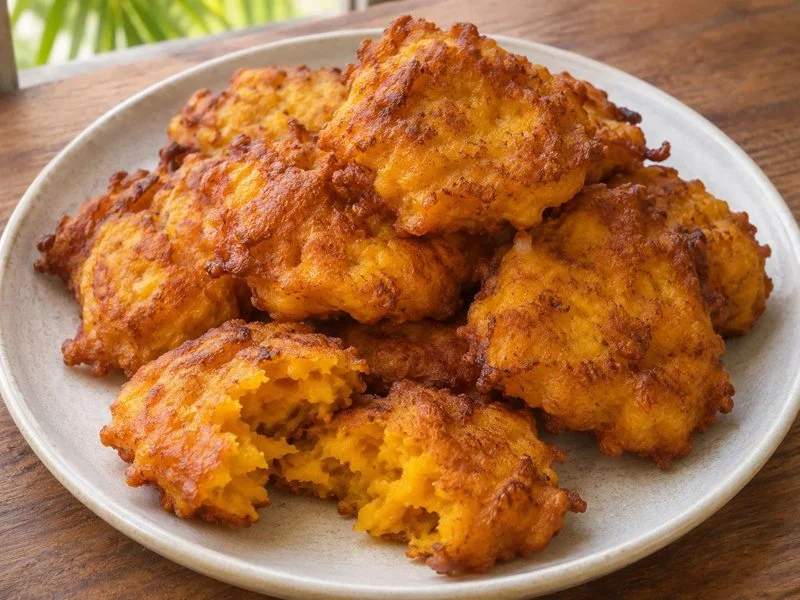
Small spoonfuls of pumpkin batter turn golden in oil. Their centres should stay soft. Recipe 43 is a baked pumpkin cake cut into slices.
Ingredients
- 230 g cold, well-drained roasted squash purée
- 145 g wheat flour
- 1 egg
- 25 g sugar
- 5 g baking powder
- 1 tsp vanilla
- 1 pinch salt
- Neutral frying oil
Preparation
Weigh the purée after draining. If liquid pools, drain in a fine sieve for a few more minutes and weigh again.
Whisk egg, sugar and vanilla. Add purée, then flour mixed with salt and baking powder. The batter should fall heavily from a spoon. Rest 5 minutes.
Heat oil to 170–175 °C in a suitable pan. Drop spoonfuls using two spoons. When golden underneath, turn and cook the other side.
Split the first fritter to check it has set. Make the rest smaller if the centre is doughy. Fry in small batches and drain on a rack.
Introduction
Small spoonfuls of pumpkin batter turn golden in oil. Their centres should stay soft. Recipe 43 is a baked pumpkin cake cut into slices.
Cultural context
Air Seychelles' magazine mentions pumpkin fritters among local sweets. This version uses a quick batter with baking powder.
https://www.airseychelles.com/portals/silhouette/2024/SilhouetteJul-Sep-2024.pdf
Planning
Draining and weighing the purée
The batter depends on the water in the pumpkin. Use cooked, cooled, drained purée. If a mound on a plate releases liquid, leave it in a fine sieve for a few minutes and weigh it again. A fork suffices for tender flesh. Sieve fibrous pumpkin or pick out the strands. The batter should fall from the spoon in a soft lump rather than a long stream. Checking the purée first avoids having to add much more flour later.
Gather the ingredients before mixing. Weigh the flour, sugar and baking powder separately. Beat the egg and vanilla in the mixing bowl if you like. Scrape the purée off the sides with a spatula and whisk the wet ingredients just enough to get an even colour. Check the purée against the specified weight. A little extra may look insignificant in the bowl but may require changing the cook time or amount of flour.
Mixing and spooning the batter
Distribute the salt and baking powder through the flour, then add it to the wet ingredients in two batches. Fold from the bottom up and stop when the flour streaks disappear. Rest as directed, then test a spoonful. If it spreads immediately on your test board, add a small measured amount of flour. If it drops in a stiff, dry lump, stir briefly with the spatula to distribute the moisture before changing the proportions.
Use two spoons to shape even fritters so they cook at the same rate. Slide the first into the oil close to the surface. It should round up with some irregular edges. A flat fritter can mean runny batter or cool oil. Check the temperature before adjusting the flour, since the two problems need different fixes. Use the first fritter as a trial before shaping the batch.
Checking the small batches
Choose a stable, deep pan with headroom above the oil. Set out a skimmer, rack and drip tray before turning on the heat. Check the oil and add only a few fritters at once. Turn them gently when the first side browns. If the temperature drops quickly, wait a few seconds between additions. If they brown while the centre is wet, make them smaller or bring the oil to the lower end of the range. If they stay pale after an extended cook, check the temperature.
Drain and open the first fritter on a plate. The crumb should be set and soft. A shiny pocket of sticky batter indicates that the frying time needs adjustment. Turn later fritters with the skimmer without pressing on them. Drain them in one layer so steam from the lower fritters does not soften the others. Keep the first batch off the oil-soaked part of the rack used for later batches.
Serving and measuring the batch
The batter makes about sixteen small fritters. Larger spoonfuls give fewer pieces and change the values per fritter. To compare results, record the number, the purée weight and any change in flour. Weigh a second batch after a comparable draining time if you wish. Weight differences tell you about portion sizes but cannot determine oil absorption alone, since the batter also loses water as it cooks.
Serve warm on two small plates if necessary to avoid crushing the fritters in a high pile. If serving several sweets, tell diners these contain pumpkin and vanilla so they can distinguish them from banana fritters or cakes. Keep the batter plain so the pumpkin comes through. If doubling for a snack and frying takes a long time, mix a second batch separately so it waits less and stays closer in texture to the first.
Use the same spoon and fill it the same way throughout frying for even pieces. If a thin layer of batter hardens on the bowl as it stands, remove it before shaping the last fritters.
Nutrition notes
Nutrition and allergens
Flour and sugar contribute carbohydrates. Fat varies with the oil absorbed during frying. The recipe contains wheat and egg.
Estimated nutrition per serving
Calculation based on 16 servings.
Energy 64 kcal
Protein 1.4 g
Fat 2.3 g
Carbohydrate excluding fibre 8.9 g
Fibre 0.4 g
Calcium 24 mg
Iron 0.3 mg
Potassium 48 mg
Vitamin C 1 mg
Salt Not quantified in the source
Values are per fritter. The estimate assumes 30 g of oil absorbed by the whole batch, which can be measured. Boiled pumpkin is the reference for the cooked purée.