Zi zoranz lokal, sour orange drink
A local bitter-type orange gives a fragrant drink diluted with cold water. This recipe is for juice. Recipe 80 covers kumquat marmalade.
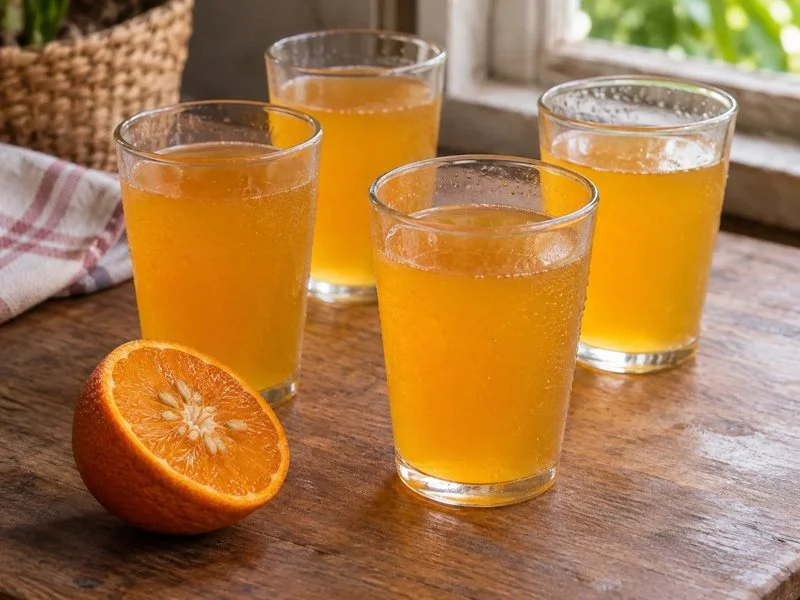
Ingredients
- 160–200 ml food-grade sour orange juice
- Cold drinking water to make 800 ml
- 20–40 g sugar, depending on acidity
Preparation
Wash and halve oranges. Squeeze without pressing the white pith excessively. Strain out the seeds.
Start with 160 ml juice. Dissolve 20 g sugar in a little water, add the juice and top up to 800 ml.
Taste cold. For a stronger flavour, replace some of the drink with additional juice. Adjust sugar in small increments.
Cover and refrigerate for 20 minutes. Stir before pouring into four glasses.
Introduction
A local bitter-type orange gives a fragrant drink diluted with cold water. This recipe is for juice. Recipe 80 covers kumquat marmalade.
Cultural context
Tourism Seychelles distinguishes zi zoranz lokal from bigarad juice. The water and sugar in this recipe are measured for home preparation.
https://seychelles.com/blog-details/15596/highlights/guide-seychelles-most-common-authentic-creole-recipes
Planning
Identifying the citrus and measuring the juice
Press the bitter orange used here as you would a sweet eating orange, but a small amount of juice can be enough for a whole jug. Buy fruit sold for culinary use and explain that you plan to make a drink. Recipe 146 covers zi bigarad made with calamondin. This preparation follows the source for zi zoranz lokal. The French name for the citrus can vary by supplier. Keep the strength of the juice in mind and taste it diluted before deciding how much to put in the jug.
How many oranges you need depends on their size and amount of pulp. Squeeze a few at a time and measure as you go. It is easier to track the volume by squeezing over a measuring jug or weighing the juice once strained. Set a few oranges aside until the first tasting. If the juice is especially strong, the lower amount given may already be enough and you can keep the whole fruit for another use.
Pressing and straining for the texture you want
Rinse and dry the fruits before cutting them. Use a citrus press and stop when most of the juice has been extracted. Pressing hard against the white pith for too long can make the drink more bitter. If there are lots of seeds, pour the juice through a strainer as you measure it. A fine sieve keeps back more pulp. A coarser strainer works if you want a little texture while removing seeds and membrane.
Some juice can remain in the pulp caught by the strainer. Let it drain briefly without pressing hard. For a smooth drink, discard the collected pulp. If you prefer a slightly cloudy jug, stir a little of the soft pulp back into the juice. This affects the look of the drink and what settles as it stands. If the drink will sit before serving, plan to stir it so the last glasses have the same strength as the first.
Finding the balance in a small glass
Start with the lower amounts of juice and sugar. Dissolve the sugar in a little water, stirring. You can taste a small sample before making the whole jug. For example, to check the starting dilution, pour 20 ml of juice into a glass and top up to 100 ml with the lightly sweetened base. Taste, then increase the juice in small amounts. You can easily add a few spoonfuls of juice to a cold base. Correcting an overly bitter jug takes more adjustment.
Once you choose the ratio, measure the volume in the jug. For four 200 ml glasses, pour in the ingredients and add water only to the 800 ml mark. If adjusting after filling the jug, take out a little liquid before adding more juice to keep the yield constant. Taste it well chilled. A first taste while warm may suggest adding sugar. Check again at serving temperature before deciding.
Serving at the right dilution
Stir the jug and divide the drink among the four glasses. Chill the jug first if serving with ice. Meltwater adds to the dilution and can weaken the flavour, especially in a glass that sits for some time. You can offer ice separately and let people add their own. Alternatively, refrigerate the glasses for a few minutes to keep the drink cool without changing its volume.
After a trial, note the amount of juice you used and the weight of the sugar added. Two bitter oranges of the same size can yield juice of different strengths. The nutritional estimate uses a midpoint and takes sweet orange juice as its reference. It will vary if you use more juice or make the drink less sweet. At a meal, serve small glasses with a snack or pour the stated amount alongside a spicy dish. Refrigerate any leftovers and stir again before serving.
For a large table, make a four-glass jug first and note the exact dilution. Scale the juice, sugar and final volume in the same proportion, then check again once you have combined the juice from the different fruits. Volume gives a better estimate of the yield than the number of oranges. For smaller glasses, keep the dilution and split the jug into more servings. If comparing two batches, serve them at the same temperature and with the same amount of ice. The difference in strength will be easier to identify before adjusting the sugar. If a final portion is too sharp, add cold water directly to the glass and note the adjustment if you want to reproduce it.
Nutrition notes
Nutrition and allergens
The carbohydrates come from the fruit and the added sugar. To calculate them, use the actual juice volume and weight of sugar once you have settled on the dilution.
Estimated nutrition per serving
Calculation based on 4 servings.
Energy 49 kcal
Protein 0.3 g
Fat 0.1 g
Carbohydrate excluding fibre 12.1 g
Fibre 0.1 g
Calcium 5 mg
Iron 0.1 mg
Potassium 90 mg
Vitamin C 22 mg
Salt Not quantified in the source
Values are for 200 ml. Sweet orange juice is used as a comparison for bitter orange. The juice and sugar amounts are the midpoints of their ranges.