Frisiter and mango salad
A sweet-tart salad of ambarella (June plum) and mango. It is a distinct preparation alongside the pineapple salad in recipe 42 and green mango satini in recipe 41.
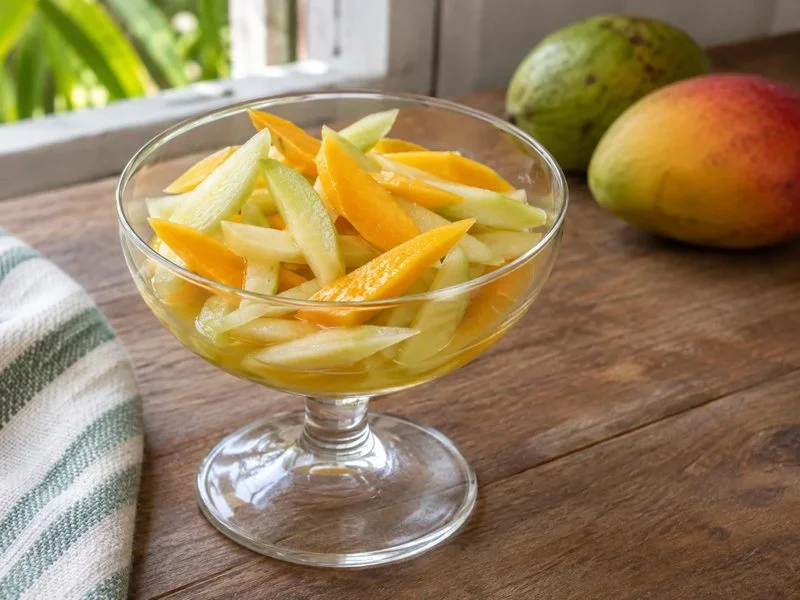
Ingredients
- 300 g semi-ripe ambarella flesh, weighed without peel or stone
- 240 g ripe but firm mango flesh
- 20 ml lime juice
- 5–10 g sugar, depending on the fruit’s acidity
- A pinch of salt
Preparation
Wash and peel ambarellas. Cut broad strips around the fibrous stone and trim off any tough fibres.
Slice the firm flesh finely. Cut the mango slices slightly thicker so they hold when tossed.
Dissolve salt and half the sugar in the lime juice. Toss with ambarella first, then fold in mango.
Chill for 15 minutes. Taste the fruits together before adding the remaining sugar. Share the juice among four bowls.
Introduction
A sweet-tart salad of ambarella (June plum) and mango. It is a distinct preparation alongside the pineapple salad in recipe 42 and green mango satini in recipe 41.
Cultural context
Seychelles Nation mentions tart mango and frisiter salads in its article on culinary heritage. These proportions are an adaptation.
https://www.nation.sc/articles/2740/living-heritage-project-banke-nwel-brings-back-a-long-lost-tradition
Planning
Buying fruit that will hold its shape
Ambarella, called frisiter in the Seychellois source, has a fibrous stone. Choose fruit with flesh firm enough to slice. Very soft ambarella gives a juicier salad and less regular slices. Weigh the 300 g once you have removed the skin, stone and tough fibres. The gross weight you need depends on the size of the stone. If the fruits vary in size, peel the larger ones first, then make up the weight with the smaller ones.
For the mango, look for ripe flesh that still holds when lifted with a knife. A fragrant, firm mango lets you use less sugar. Cut off the two broad cheeks first, then the strips next to the stone. Save very soft pieces for juice or compote. You want both textures in the same spoonful. Check each fruit before going further, especially if the ambarella has ripened more than you expected.
Cutting the fruit for a balanced bite
Set the peeled ambarella on the board, flat side down once you have cut one face. Cut fairly wide strips off the sides, then slice them. When you reach the fibres, make another shallow cut without pressing hard against the stone. This retrieves the flesh that still comes away without pulling out long fibres. Run the back of a finger over the pieces and trim any hard patches. Weigh after this final trimming.
Cut the ambarella into thinner slices than the mango. Lay a few pieces of mango flat on the board and slice straight down without pressing the flesh flat. Keep the slices bite-sized. If both fruits release a lot of juice, collect it in a small container and add only part of it when dressing. This keeps the slices distinct, with just enough liquid to blend the flavours without turning the salad into a cold soup.
Adding lime and sugar in stages
Taste a small piece of each fruit together. If the ambarella is very tart and the mango is less sweet, dilute the lime juice with a small spoonful of water before adding it. Stir the salt and half the sugar into the juice to dissolve them. Pour some over the ambarella and turn gently. Spoon in the mango and the rest of the dressing. Use the stated sugar range as a guide and adjust after resting.
Cover and refrigerate for fifteen minutes so the juice and sugar distribute. Taste again straight from the fridge. If the mango obscures the other fruit, put a few ambarella slices on top of each serving. If the salad is too acidic, mix the remaining sugar into a spoonful of the collected juice before adding it. The crystals dissolve more easily this way than when scattered over the entire salad. Stir as little as possible after this adjustment to keep the mango intact.
Sharing out the juice and serving chilled
Choose bowls wide enough to show both fruits. Lift the slices with a large spoon, then pour over the juice left at the bottom of the mixing bowl. If the salad accompanies a spicy meal, serve it well chilled and keep the lime light enough for the fruit to come through. At the end of a lighter meal, you can serve it with a little more mango. Recalculate the yield if the amount changes appreciably.
To compare two trials, note the fruit weights before and after trimming and how much sugar you actually used. Very ripe and barely ripe fruits have different firmness and flavour. This collection uses reference composition values and a midway amount of sugar. Serving a batch without sugar or with the top of the range mainly changes the added carbohydrates. Note the ripeness at purchase too. At the next trial, that will tell you more than the skin colour alone.
For a buffet, portion the salad first and keep the bowls chilled. If the juice separates while standing, share it out with a teaspoon instead of repeatedly turning the fruit. Leave a few intact slices in each portion if you like. A softer ambarella calls for thicker slices and gentler mixing. Check how much liquid there is when filling the bowls, as each variety releases a different amount of juice.
Nutrition notes
Nutrition and allergens
Fruit supplies carbohydrates and fibre. The added sugar can be adjusted to the ripeness of the fruit.
Estimated nutrition per serving
Calculation based on 4 servings.
Energy 69 kcal
Protein 1.0 g
Fat 0.3 g
Carbohydrate excluding fibre 15.6 g
Fibre 2.7 g
Calcium 20 mg
Iron 2.7 mg
Potassium 250 mg
Vitamin C 40 mg
Salt Not quantified in the source
The estimate uses the midpoint of the sugar range. ambarella values come from published data on Spondias dulcis.