Seychelles coconut tart
A thin shortcrust pastry shell filled with grated coconut and vanilla. The tart format gives it a different shape and texture from the cocada and nouga bites in the manuscript.
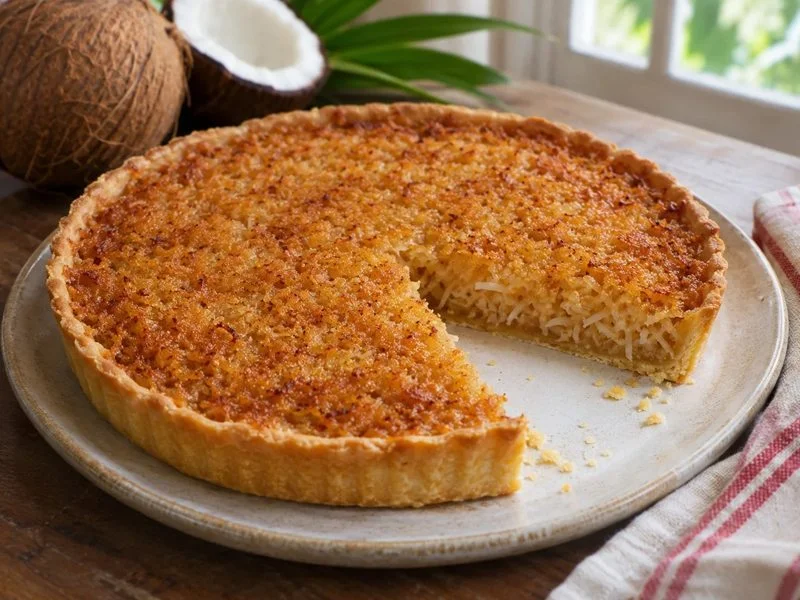
Ingredients
- 200 g wheat flour
- 100 g cold unsalted butter
- 45–55 ml cold water
- 2 g salt
- 200 g freshly grated coconut
- 110 g sugar
- 100 ml water for the filling
- 1 tsp vanilla
- 1 beaten egg
Preparation
Rub flour, salt and cold butter together. Add enough cold water for the dough to hold, flatten, cover and refrigerate for 30 minutes.
Bring filling water and sugar to a simmer. Add coconut and stir until a spatula briefly leaves a track. Add vanilla and cool.
Roll to 3 mm and line a 22 cm tin. Prick and blind-bake at 180 °C for about 15 minutes with weights, then 5 minutes without.
Mix the egg into the cool filling and spread it in the shell. Bake at 175 °C for about 20–25 minutes, until lightly browned and set in the centre.
Cool on a rack before cutting. Serve in thin slices.
Introduction
A thin shortcrust pastry shell filled with grated coconut and vanilla. The tart format gives it a different shape and texture from the cocada and nouga bites in the manuscript.
Cultural context
Air Seychelles' Silhouette magazine mentions coconut tart among local desserts. This pastry and filling are a version for home cooking.
https://www.airseychelles.com/portals/silhouette/2024/SilhouetteJul-Sep-2024.pdf
Planning
Keeping the pastry cold
For a thin base that slices neatly, use cold butter and weigh the water separately. Start with the lower amount given. Add the rest a little at a time if a handful of dough still falls completely apart when pressed. It should just come together. A wet dough seems easy to roll, but will need more flour later and may turn tough. Shape the dough into a disc before covering and chilling it. A flat disc cools and rolls more evenly than a large ball.
Give the disc a quarter turn every few passes of the rolling pin. Lightly flour the surface if the pastry sticks. If the edges crack, wait a few minutes and pinch the cracks together with your fingertips. Lay the pastry in the tin without pulling it towards the edges. Lift the overhang gently so the pastry settles into the corner at the base, then press without puncturing it. Stretched pastry tends to shrink, especially if it has had too little time to rest.
Adjusting the texture of the coconut
Weigh the coconut after removing the hard parts. Finely grate the fresh flesh so the filling slices without pulling apart into long shreds. One coconut may be moister than another. Reduce the mixture in a wide saucepan and use consistency as your guide. Draw a spatula across the bottom. If the filling parts and flows back fairly quickly, it is still pliable. If runny syrup pools in the gap, reduce it further over moderate heat before adding the vanilla.
Cooling keeps the egg from starting to cook when it meets hot syrup. Transfer the filling to a shallow dish or wide bowl and stir once or twice as it cools. Stir in the beaten egg only once the mixture is cool. If some filling has collected on the side of the pan, loosen it and check that it is still tender. Very dry, dark bits will change the flavour of the whole tart if they are mixed back in.
Blind-baking the crust
Lay baking paper over the pastry and spread the weights right up to the edges. A section of the rim can slide down if all the weights stay in the centre. After the first few minutes in the oven, open the door just long enough to remove the paper and weights. The pastry may look dry at the edges and still pale in the middle. Finish blind-baking until the base loses its damp appearance so it holds under the coconut filling. If the tin has a removable base, carry it on a baking tray.
When filling the tart, spread the coconut towards the edges first, then distribute the rest towards the centre. An even depth makes doneness easier to judge. Watch the top towards the end. If one area browns faster, turn the tin in the oven. The centre should hold when you move the tray gently. If the sides are browning before the centre has set, shield them with a strip of oven-safe paper and lower the heat a little while the tart finishes.
Slicing after cooling
Let the tin cool a little before turning out the tart. If it sticks in one place, run a thin blade along the edge and try again gently. Put the tart on a wire rack to keep condensation from softening the base. Cut it into eight slices when the filling has set. To make even portions, mark the halves and quarters with the knife, then divide each quarter. Wipe the blade after a cut if much coconut sticks to it.
Serve the tart plain or with a little fresh fruit. A piece of ripe mango gives a different texture. If serving the next day, refrigerate the tart once cool and take out only the slices you need a little ahead of the meal. In a trial, record the tin diameter and the net coconut weight. If the filling is too thick in the centre, spread it more evenly or use the same tin with slightly less filling, then adjust the yield and nutritional figures accordingly.
You can weigh the tart after it cools and before slicing. This helps you reproduce similar slices another time. A slightly higher weight loss may come from a moister coconut, a thicker base or a longer reduction of the syrup. Keep the cooking notes with the measured weight.
Nutrition notes
Nutrition and allergens
The pastry and sugar contribute carbohydrates. The butter and coconut contribute fat. The recipe contains wheat, milk and egg.
Estimated nutrition per serving
Calculation based on 8 servings.
Energy 333 kcal
Protein 4.3 g
Fat 19.4 g
Carbohydrate excluding fibre 33.8 g
Fibre 2.9 g
Calcium 14 mg
Iron 1.0 mg
Potassium 128 mg
Vitamin C 1 mg
Salt Not quantified in the source
The estimate divides the whole tart into eight slices.