Asi karang, flaked trevally with tomato
A spoonable mince of trevally, onions and aromatics. Its soft flakes distinguish it from the fish balls in recipe 31.
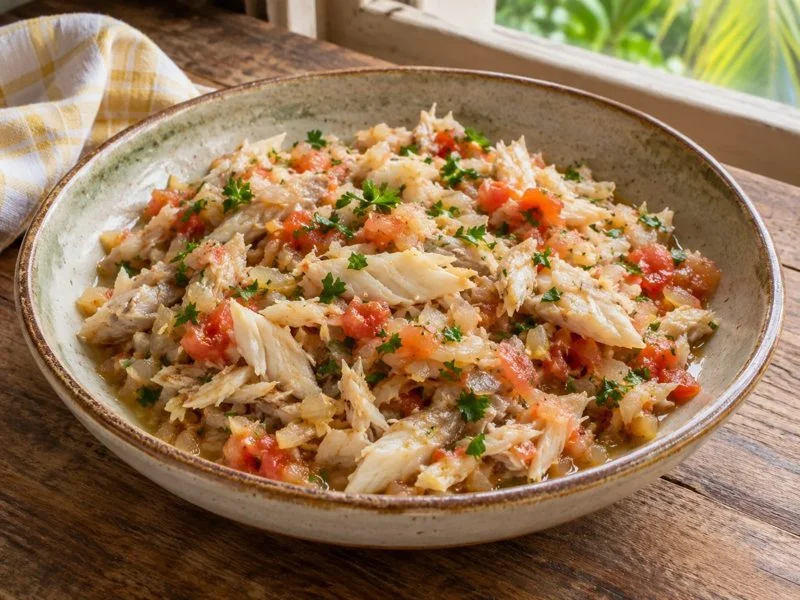
Ingredients
- 500 g boneless trevally fillets
- 120 g onion
- 150 g tomatoes
- 2 garlic cloves
- 10 g ginger
- 20 ml oil
- 3 sprigs thyme
- 10 g parsley
- 1 lime
- Salt, pepper and optional chilli
Preparation
Poach the fish in a little simmering water to 63 °C at the thickest point. Drain, cool enough to handle and check for bones.
Flake with a fork, leaving a few hazelnut-sized pieces.
Sauté finely sliced onion in oil. Add garlic, ginger and thyme. Add diced tomato and reduce over medium heat until thick.
Fold the fish gently into the pan. If dry, add a spoonful of water. Stop as soon as heated through.
Finish with lime and parsley. Serve with rice and salad or spoon a small portion over toast.
Introduction
A spoonable mince of trevally, onions and aromatics. Its soft flakes distinguish it from the fish balls in recipe 31.
Cultural context
The Creole Melting Pot presents asi karang as a trevally mince. The tomato base and serving suggestion with bread are part of this adaptation.
https://www.thecreolemeltingpot.com/recipes/
Planning
Preparing the fish in the right-sized flakes
The fish is easier to flake with a fork when the fillets are fairly thick. Choose trimmed fillets and ask for the net weight. Run your fingers along the centre line before cooking to feel for protruding bones. After poaching, check again as you separate the layers. Put a plate near the sink for the pieces and a small bowl beside it for the bones so the pieces ready to cook stay separate from the trimmings.
Keep some pieces a bit larger for texture. They should still be small enough to serve with a spoon. Press briefly with the back of a fork if a piece is too wide. The more you work the flesh, the finer it gets. Use a wide plate to work in one layer and see the size of the flakes before combining them with the tomato. Drain the fillets if they released liquid while poaching.
Reducing the tomato mixture before adding the fish
Dice the onion finely so it blends with the trevally. Fry it with the thyme until soft. In a wide pan, initially spread the onion across the base, then draw it toward the middle as the first pieces brown. Add the garlic and ginger at that point. Their fragrance spreads quickly in the hot oil. Add the diced tomato next to bring in moisture and stop the aromatics browning further.
Reduce the tomato enough for it to cling to the fish. Stir over medium heat and look at the trail left by the spatula. If a pool of liquid closes it immediately, carry on cooking for a little longer. If it stays dry or residue starts forming on the base, lower the heat. A spoonful of water will loosen a mixture made with a dry tomato without adding more oil. Remove the thyme before adding the fish. Distinct tomato pieces make the sauce easier to share out.
Combining the fish and tomato while preserving the flakes
Add the fish in two batches. Fold the sauce up over the first half with a spatula. Add the rest, lifting the already mixed portions up and over. Stop as soon as the flakes are coated. If the flesh is a little dry, add a tiny amount of hot water at the edge of the pan and tilt the pan. The liquid distributes without crushing the pieces.
Taste the mince while it is still hot. Add the lime juice gradually away from the hot base, then adjust the salt. Stir in any chopped herbs off the heat. If using chilli, mince a little very finely and mix it into a spoonful of the tomato mixture first. Distribute that spoonful around the pan so the chilli is not all in one bite. Keep the taste of fish distinct behind the lime and aromatics.
Serving the mince to suit the meal
With rice, spoon the mince onto one side of the plate. Some cucumber or a crunchy salad provides a different texture. To serve on bread, drain the mixture briefly and toast the slices at the last minute. A thin slice takes a small spoonful. For a larger slice, spread the mixture to the edges with a fork so it does not pile up in the centre. Count the serving bread separately if following the portions in the collection.
Alternatively, set the mince in the middle of the table with a spoon and a dish of lime. Choose a shallow bowl so diners can get fish and tomato in the same spoonful. In a trial, see whether liquid collects under the fish within a few minutes of serving. Use this to adjust the tomato reduction next time. If half the dish is dry and half wet, mix the tomato more evenly before returning the fish.
For a cold meal, keep excess liquid out of the tomato mixture and leave enough fish pieces visible to pick up easily with a fork. Plate it at the last moment. For a hot meal, reheat the tomato before adding the fish. This lets you adjust the reduction and avoid overcooking the fish. It also makes it easier to judge the lime because you can taste the sauce and fish together just before serving.
Nutrition notes
Nutrition and allergens
Fish supplies most of the protein. If you serve it with wheat bread, the bread adds gluten. The basic recipe contains fish.
Estimated nutrition per serving
Calculation based on 4 servings.
Energy 196 kcal
Protein 25.8 g
Fat 8.0 g
Carbohydrate excluding fibre 4.9 g
Fibre 1.3 g
Calcium 80 mg
Iron 1.4 mg
Potassium 695 mg
Vitamin C 15 mg
Salt Not quantified in the source
The estimate uses the Ciqual entry for raw trevally. Bread for serving is excluded.