Kari koko ton ek bred lanmar, coconut tuna curry with greens
A tuna and leafy greens curry with coconut milk. The generous amount of greens makes it a complete dish to serve over rice. Recipe 09 covers the basic tuna curry.
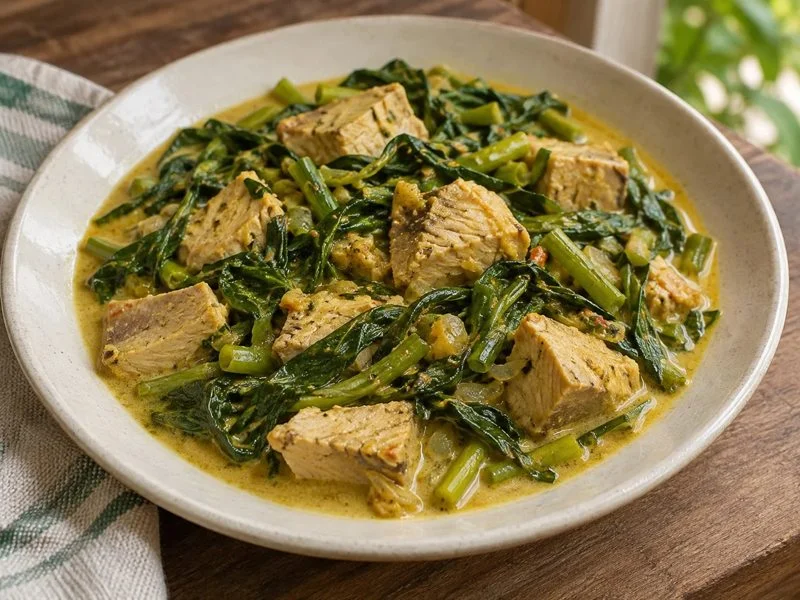
Ingredients
- 520 g fresh tuna in thick cubes
- 250 g edible water spinach leaves or spinach
- 300 ml coconut milk
- 120 ml water
- 120 g onion
- 1 tomato weighing 130 g
- 2 garlic cloves
- 10 g ginger
- 18 ml oil
- 1 tsp turmeric
- 1 tsp curry powder
- 1 lime
- Salt and chilli
Preparation
Rinse the greens in several changes of water. Discard tough parts, cut tender stems and set them apart from the leaves. Chill the fish.
Sauté sliced onion, then ginger and garlic. Add curry powder and turmeric with chopped tomato so the spices stay moist.
Stir in coconut milk, water and stems. Simmer for 8 minutes, then add the leaves and stir just enough to submerge them.
Lay tuna cubes in the sauce. Cook gently to 63 °C in the thickest pieces and remove from the heat immediately.
Add lime juice in small amounts. Serve with plain rice, sharing out the greens.
Introduction
A tuna and leafy greens curry with coconut milk. The generous amount of greens makes it a complete dish to serve over rice. Recipe 09 covers the basic tuna curry.
Cultural context
The Creole Melting Pot lists a tuna curry with coconut milk and greens that grow in wet conditions. Spinach is offered as a substitute.
https://www.thecreolemeltingpot.com/recipes/
Planning
Preparing the brèdes according to their texture
Choose edible brèdes with supple leaves. Open the bunches and inspect the stems before washing. Fine stems can stay. Remove thick ones that resist bending and discard damaged leaves. The recipe gives the leaf weight, but genuinely tender stems can be included. If you keep them, weigh the trimmed greens and make two piles. Cut the stems into short lengths and put the leaves in the other pile. Small leaves can stay whole.
Shake the rinsed greens dry or drain them in a wide colander. A wet pile of leaves can quickly add several spoonfuls of water to the sauce. Add the stems to the coconut base a few minutes before the leaves. If using spinach, check its size. Baby leaves need little cutting. Remove the tougher stalks from mature spinach and tear the large leaves by hand. Spinach cooks faster, so keep it aside until the sauce has reached the desired consistency.
Choosing and cutting the tuna
For four even servings, ask for a piece of tuna of fairly uniform width. Thin cuts cook quickly and break up easily among the greens. Cut thick cubes of similar size. Examine the piece before cutting and put small trimmings from the ends aside to add later than the large cubes. Keep the fish refrigerated while you make the sauce and clean the board before using it for vegetables or lime.
The cut of tuna affects how it eats. Lean tuna needs close attention in the hot sauce. Set out the plates, lime and rice before adding the fish so it can go straight to the table. If doubling the recipe, choose a pot wide enough for all the pieces to touch the sauce in one layer. Otherwise, cook two batches, dividing the ingredients equally and giving each batch a similar amount of sauce.
Giving the sauce body
Cook the onion until it softens. Stir the garlic and ginger into the moist base briefly. Add the tomato promptly so the curry powder and turmeric mix with its juice. Crush a few tomato pieces with the back of the spoon to help bind the sauce. With an especially hot curry powder, use less fresh chilli and taste the sauce before the final seasoning.
When the coconut milk and water are hot, let the stems soften. Test one with the tip of a knife. The leaves added next collapse and can hide the tuna by the end of cooking, so push them to the edge and place the fish pieces where you can see them in the centre. Add a spoonful of water if the base starts to dry out. If the sauce is runny, reduce it uncovered before adding the fish to avoid cooking the tuna for too long.
Checking the tuna and serving
Slide the probe into the thickest cube and check another piece if the pot heats unevenly. As soon as the fish reaches the specified core temperature, take the pot off the heat. To keep the plating neat, lift the cubes out with a wide spoon before sharing the greens and sauce, then reunite them on the plates. A shallow bowl keeps the sauce in contact with the rice and away from the rest of the meal.
Squeeze the lime in stages. Taste a spoonful of sauce with a few leaves before deciding whether to add more. Serve any condiment separately, especially a hot one. Mango asar adds crunch and acidity when the greens are very tender. To assess the yield after cooking, weigh the trimmed greens separately from the prepared fish. Also note the actual number of servings. The type of coconut milk and how many stems you kept account for some differences between trials even with the same purchase weights.
For people trying brèdes for the first time, arrange them around the tuna before pouring in the sauce. The leaves stay visible and each diner can adjust how much sauce they take. Check that there are no tough stem pieces mixed among the greens. Tender stems are easier to eat when cut short across the fibres.
Nutrition notes
Nutrition and allergens
Tuna is the main source of protein and the greens supply fibre. Check the ingredients of bought curry powder. The recipe contains fish.
Estimated nutrition per serving
Calculation based on 4 servings.
Energy 368 kcal
Protein 35.4 g
Fat 19.5 g
Carbohydrate excluding fibre 9.4 g
Fibre 3.2 g
Calcium 71 mg
Iron 5.0 mg
Potassium 1087 mg
Vitamin C 22 mg
Salt Not quantified in the source
The reference ingredients are yellowfin tuna and water spinach. Substituting ordinary spinach would change the estimate.