Krepinet, pork crépinettes
Seasoned pork crépinettes browned in a pan. Shaping the filling into individual portions and wrapping them in caul fat distinguishes them from the pastry-enclosed pâté in recipe 74.
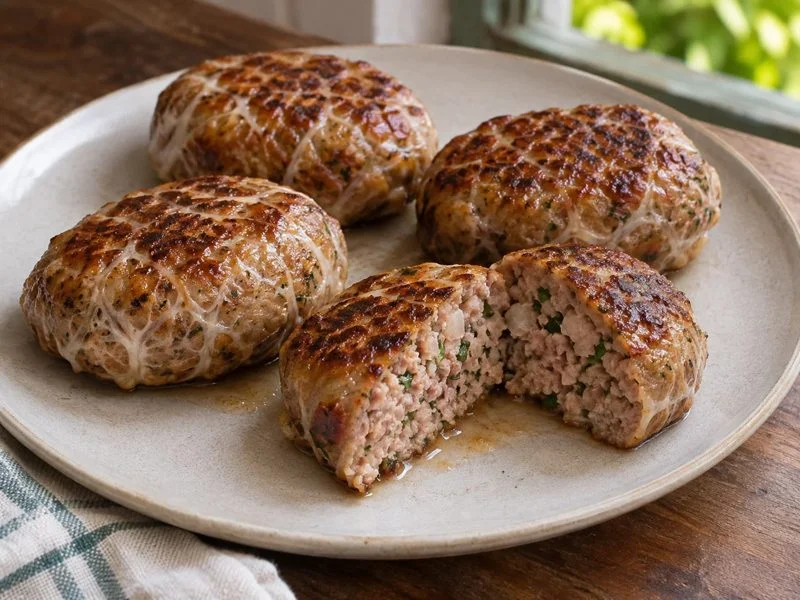
Ingredients
- 500 g minced pork
- 120 g butcher-prepared pork caul fat
- 60 g onion
- 2 garlic cloves
- 8 g ginger
- 10 g parsley
- 3 sprigs thyme
- 15 ml neutral oil
- 4 g salt
- Pepper
Preparation
Finely chop onion, garlic, ginger and parsley. Quickly combine with pork, thyme, salt and pepper. Keep chilled.
Spread out the drained caul fat and cut four large pieces. Divide filling into four and flatten each to about 2 cm.
Wrap each patty with minimal overlap and put the seam underneath.
Heat an oiled frying pan over medium heat. Put patties seam-side down, then turn when they release. Lower heat if the wrapping browns too quickly.
Cook to 71 °C at the centre of each patty. Drain briefly and serve with salad or a tangy relish.
Introduction
Seasoned pork crépinettes browned in a pan. Shaping the filling into individual portions and wrapping them in caul fat distinguishes them from the pastry-enclosed pâté in recipe 74.
Cultural context
Crépinettes appear in the Seychellois repertoire of The Creole Melting Pot. The seasoning is proposed for this version.
https://www.thecreolemeltingpot.com/recipes/
Planning
Asking the butcher for caul fat
Caul fat makes a thin wrapper around the minced pork. The butcher may be able to supply it ready to use. Ask for a piece you can cut into four sheets without piling up overlaps. The 120 g is the weight you will handle and includes possible trimmings. Some of the fat renders during cooking. How much reaches the table depends on trimming, folding and what remains in the pan. Drain the caul fat and identify the thickest areas before cutting. Save the large, even pieces for wrapping the crépinettes.
Keep the mince chilled until you season it and inspect its texture. A fatty mince shapes more easily when cold but may shrink more in the pan. Lean mince shrinks less and needs careful cooking to stay tender. Weigh out the filling if you want the portions to cook at the same rate. With 500 g of meat, each of the four portions starts at about 125 g before adding the aromatics and wrapper.
Making the filling and shaping four portions
Chop the onion finely so it fits into the filling without causing cracks. Cut the garlic, ginger and parsley finely enough to distribute them on the first mix. Keep large parsley stems out of the centre. Add the thyme leaves, pepper and measured salt. Mix briefly with the meat. A portion should hold together when pressed in your hand and still feel supple.
Spread the caul fat on a clean work surface and cut sheets wider than the portions. Place a portion of filling in the centre and flatten to the specified thickness. Keep the sides even so the meat stays inside the wrap. Fold the caul fat over like a small envelope. Trim the excess if the pieces overlap several times in the centre. Set the crépinettes seam side down on a plate so that side will be easy to identify when you start cooking.
Adjusting the cooking for the amount of fat
Choose a pan that leaves space around all four portions. If they touch, steam builds up between them and slows browning. Heat the oil over medium heat. Put the seam side against the pan first and leave the portions alone at first. A little browning helps the underside hold together. Turn them with a broad spatula that supports the edges. If the pan only fits two at a time, refrigerate the other two until the second batch.
If the caul releases a lot of fat, lower the heat slightly and watch the surface. It can darken before the inside is cooked. Insert the probe from the side into the centre to avoid taking a surface reading. Check each piece against the stated temperature, since a thicker one may take a few minutes longer. Drain the cooked portions on a rack or kitchen paper, keeping them side by side so their surface stays firm.
Plating and recording the yield
Serve a side that cuts through the richness of the pork. The cucumber salad in the collection works well with its vinegar and fresh onion. Mango asar is more tart, especially when made with very green fruit. If you also serve rice, keep the condiment separate so the dressing leaves the crust of the crépinettes crisp. A mild sauce can go in a small bowl, with the cooked portions kept dry as they wait for serving.
The nutritional estimate includes the pork and the measurable ingredients except for caul fat. For a trial, weigh the caul fat used after trimming and measure what is left in the pan after cooking. The cooking liquid may contain both fat and juices, so its whole weight cannot be counted as fat. These measurements are chiefly useful for comparing two trials with the same mince. Note the cooked portion weights too, to help you serve even portions when doubling the recipe.
Look at the four portions from the side before cooking. If the centres bulge, flatten them a little. If a tear exposes the meat, cover it with a loose flap and set that side against the pan first. After cooking, cut the first crépinette in half if you want to check how the mince holds and how thick the wrapper is. A thicker layer on one side suggests cutting shorter sheets next time. Keep the aromatic proportions the same while working on texture. If the portions distort when turned, slide the spatula farther underneath before lifting. The second side may brown faster.
Nutrition notes
Nutrition and allergens
Pork supplies protein. The fat content depends on the cut of pork used for the mince and the amount of caul fat actually eaten.
Partial nutrition estimate per serving
Calculation based on 4 servings.
Energy 371 kcal
Protein 21.5 g
Fat 30.1 g
Carbohydrate excluding fibre 2.1 g
Fibre 0.5 g
Calcium 30 mg
Iron 1.5 mg
Potassium 413 mg
Vitamin C 7 mg
Salt Not quantified in the source
The estimate excludes caul fat because the amount eaten is unknown. The fat and energy figures are partial.