Kari safran latet pwason, turmeric fish head curry
This fish head curry uses turmeric and young luffa. The word safran in its Creole name refers here to turmeric. Recipe 20, a clear pipangay broth, is a related preparation.
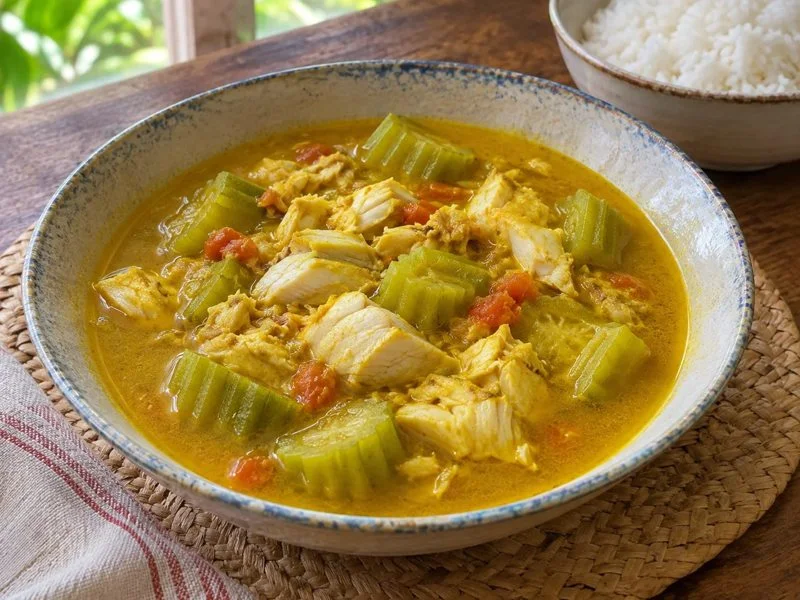
Ingredients
- 1 large split snapper head, about 600–800 g, prepared for cooking
- 250 g trimmed young edible luffa
- 150 g tomato
- 120 g onion
- 20 ml oil
- 1 tsp ground turmeric
- 2 garlic cloves
- 10 g ginger
- 250 ml water
- 2 sprigs thyme
- 15 ml lemon juice
- Salt and pepper
Preparation
Ask for a fish head with the gills removed and check both halves for loose bones.
Slice the onion, cut luffa into even pieces and peel if the ribs are tough. Chop the tomato.
Soften onion in oil for 5 minutes. Add garlic and ginger, then turmeric with tomato. Pour in water when tomato starts releasing juice.
Add thyme and the head. Cover and simmer for about 25 minutes, adding luffa halfway through. Check that the flesh reaches 63 °C.
Lift out the head. Pick the cheek and collar meat, checking for bones. Strain the sauce, return meat and luffa, add lemon and serve with rice.
Introduction
This fish head curry uses turmeric and young luffa. The word safran in its Creole name refers here to turmeric. Recipe 20, a clear pipangay broth, is a related preparation.
Cultural context
The Creole Melting Pot documents fish head curry with turmeric, luffa and acidity from bilimbi or lemon.
https://www.thecreolemeltingpot.com/fish-head-curried-in-turmeric-kari-safran-latet-pwason/
Planning
Preparing the head and deciding how much to make
A head split by the fishmonger fits more easily in the pot and lets you inspect the areas around the gills. Ask for a cleaned head that is ready to cook. The gross weight helps you choose the pot, while the yield depends on how much flesh there is around the cheeks and collar. If the upper part of the collar is left attached, you may get considerably more to serve. The four portions here are small servings of curry. For heartier appetites, round out the meal with rice and vegetables.
Before heating the pot, put the two halves in it to check that they can lie flat. A very wide pot requires more liquid to reach them. In a narrow saucepan they will overlap, slowing the cooking of the thicker half. Examine the cut edges under good light. Remove loose shards of bone with clean tweezers. Leave the larger parts that still hold the head together in place.
Preparing the pipangay and the curry base
The pipangay in this recipe is young edible luffa, chosen for its tender flesh. Look at it as you cut. If the skin is tough along the ridges, trim them away with a knife or a peeler and keep the tender flesh. Make pieces large enough to find easily in the pot. Thin slices can fall apart toward the end of cooking and blend into the crushed tomato.
Soften the onion, then add the chopped garlic and ginger. The turmeric colours the base very quickly. Add the tomato and stir to moisten the mixture, then pour in the water before the spices stick to the pot. The tomato should be ripe enough to break down without a long preliminary cook. Cut away any large hard parts around the stem before chopping it. Keep the lemon for the end so you can judge the acidity of the tomato base after it has reduced.
Cooking the head and retrieving the broth
Place both halves in the simmering base. If a fleshy area sits well above the liquid, spoon broth over it a few times during cooking before adding more water. The lid traps steam and helps cook the top. Leave the head in place and gently turn the pot to distribute the heat if needed. Add the luffa once the fish has started to cook and check when the tip of a knife slips into the flesh.
Have a clean plate, skimmer and sieve ready before taking the head out. Lift the two halves out separately, supporting each piece underneath. Take the cheek meat first, then check the collar and fleshy areas near the cut edge. Work in good light and flake the pieces with a fork to find bones. Remove the luffa as well and pass the liquid through a fine sieve. If it is thick with bits of tomato, let gravity do the work. Return the vegetables and the checked fish just before serving.
Keeping the character of the curry
The strained broth should still be distinctly yellow with a clear taste of fish behind the ginger. Taste it before adding the lemon. If the broth is too concentrated, loosen it with a little hot water. If it is very thin, reduce it for a few minutes with the fish set aside so the flesh does not break up. Add the lemon juice in small amounts. The luffa takes on the flavour of the broth and provides a different texture from the fish.
Serve the curry in bowls with rice so you can share out the sauce and pieces without losing the broth. The papaya satini in the collection can accompany the rice in a small separate dish. To record the yield after your first attempt, weigh the flesh you retrieve before returning it to the liquid. Also note the gross weight you bought and the actual number of servings. Those figures simplify your next purchase and refine the protein estimate for a cut with a highly variable edible yield.
If you are short of luffa, make a smaller batch instead of covering the head with other vegetables. Keep enough cooking liquid to baste the halves and check the final volume after straining. If you have little broth, give each bowl a smaller ladleful and serve extra rice on the side.
Nutrition notes
Nutrition and allergens
The gross weight of the head does not show how much protein each portion provides. Weigh the recovered flesh for a nutritional calculation. The recipe contains fish.
Estimated nutrition per serving
Calculation based on 4 servings.
Energy 130 kcal
Protein 12.2 g
Fat 5.5 g
Carbohydrate excluding fibre 6.8 g
Fibre 2.0 g
Calcium 46 mg
Iron 1.0 mg
Potassium 467 mg
Vitamin C 18 mg
Salt Not quantified in the source
The estimate uses 160 g of cooked edible flesh and trimmings. The amount recovered and the fat content of the trimmings vary with the head.