Asar mang green mango relish
Crunchy green mango sticks are coated with mustard, turmeric and a little vinegar. Recipes 41 and 52 cover mango satini and vegetable asar respectively. This version uses mango cut into sticks and tossed in a spiced dressing.
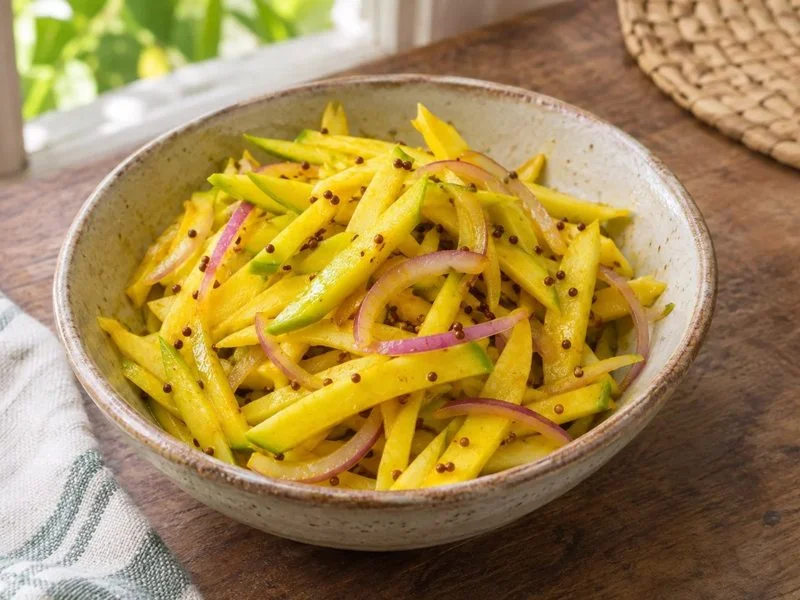
Ingredients
- 350 g firm green mango flesh
- 40 g onion
- 20 ml neutral oil
- 25 ml cider vinegar
- 1 tsp mustard seeds
- ½ tsp turmeric
- 5 g ginger
- Chilli and salt
Preparation
Peel the mango, remove the cheeks from the stone and cut the flesh into sticks 4–5 mm thick.
Heat the oil over medium heat. Add mustard seeds, then sliced onion when they start to crackle. Soften for about 3 minutes.
Add grated ginger and chilli. Take off the heat and stir turmeric into the oil. Add the vinegar once the oil has cooled slightly.
Pour over the mango, add a little salt and toss. Cover and refrigerate for 1 hour.
Toss again and serve by the spoonful with rice or fish. Keep this fresh relish refrigerated.
Introduction
Crunchy green mango sticks are coated with mustard, turmeric and a little vinegar. Recipes 41 and 52 cover mango satini and vegetable asar respectively. This version uses mango cut into sticks and tossed in a spiced dressing.
Cultural context
Tourism Seychelles lists mango asar among Creole condiments. This recipe is an adaptation for serving chilled.
https://seychelles.com/blog-details/15596/highlights/guide-seychelles-most-common-authentic-creole-recipes
Planning
Choosing a suitable mango
The mango should cut neatly into sticks and stay firm as it rests. Choose a fruit that feels heavy for its size and yields very little when you press near the stem. Skin colour varies by variety. Check the firmness by touch and look at the flesh after your first cut. Pale, dense flesh suits asar. A softer mango will release more juice and give you less regular sticks. If only part of the fruit is firm, use that for the asar and save the rest for another preparation.
The 350 g refers to the flesh. To get to the flesh around the stone, cut off the two broad cheeks first. Next cut off the side strips. Peel them separately if they are awkward to hold. Lay each piece flat before cutting it into sticks. Four to five millimetres gives the mango a distinct bite and allows the dressing to coat every side. If the fruit is very firm, slice it a little thinner and check a piece after it has rested.
Making the dressing in the pan
Use a small frying pan so the oil is deep enough to surround the mustard seeds. In a pan that is too broad, patches of the base will soon be bare and the spices may overheat in spots. Heat over medium heat with the sliced onion ready by the stove. Add it at the first crackles to introduce a little moisture and moderate the heat. If the seeds jump vigorously, lift the pan off the heat briefly. The onion can soften while retaining a little bite.
Grate the ginger just before adding it so you can collect the juice from the board or the bowl. Chop the chilli more finely than the onion so it is distributed between the servings. Take the pan off the heat and stir the turmeric into the warm oil. The colour should be even, with no small lumps of powder. Let the oil cool a little before pouring in the vinegar to reduce splattering. Stir again before transferring the dressing. If some turmeric is left in the bottom, scrape it up with the last spoonful of dressing.
Dressing the mango and adjusting after resting
Choose a bowl wide enough to turn the sticks with a spoon without crushing them. Add the cooled dressing in two batches, lifting the sticks from the bottom up. The salt starts drawing a little water out of the mango. Wait until the end of the resting time to adjust the seasoning. A bite taken immediately after mixing often tastes more vinegary than the finished asar. Cover the bowl and refrigerate. A single stir halfway through can help if liquid has pooled at the bottom.
After an hour, taste a stick with a little onion. If the dressing is too strong for the dish you are serving, let the spoonful drain slightly before serving and keep the liquid separate. If the mango overwhelms the spices, spoon some liquid from the bottom back over the portion. An especially tart mango calls for a small serving of condiment per person. It is easier to add some at the table than to rebalance rice already mixed with too much asar.
Serving as a condiment
Divide the batch into eight condiment portions or put it in a small bowl with a spoon. Two or three sticks may be enough for a first bite with grilled fish. With roasted bourgeois, place the asar alongside the rice to preserve the texture of the cooked vegetables. It also brightens a plate of lentils or a serving of breadfruit. For a sandwich, drain the sticks well before slipping them between the other ingredients so the bread holds together.
Make the asar for serving chilled. To halve the batch, weigh out 175 g of mango flesh and use a smaller pan so the mustard seeds still heat evenly. Start with a knife-tip of chilli and adjust whenever you change the mango or chilli. When serving several condiments at the same meal, offer small amounts of mango asar and let each person pair it with meat, fish or a starch.
Adjust the thickness of the sticks and the amount of dressing you serve to suit the meal. With a creamy curry, leave the sticks a little thicker so they remain distinct. To top a small bite, cut each stick again after resting and drain the mixture. In both cases, leave the mustard seeds whole on the surface so their texture comes through. If one portion seems too intense, adjust that portion rather than diluting the whole bowl.
Nutrition notes
Nutrition and allergens
The mango provides most of the carbohydrates and the oil supplies most of the fat. The recipe contains mustard.
Estimated nutrition per serving
Calculation based on 8 servings.
Energy 52 kcal
Protein 0.8 g
Fat 2.4 g
Carbohydrate excluding fibre 6.0 g
Fibre 1.7 g
Calcium 3 mg
Iron 0.2 mg
Potassium 20 mg
Vitamin C 8 mg
Salt Not quantified in the source
Partial estimate.
The estimate uses the Ciqual entry for green mango. Energy is calculated from the available macronutrient data.